


















Best Generator for 2000 Sq Ft Home: 2026 Expert Picks


Best Generator for 2000 Sq Ft Home: 2026 Expert Picks
🕑 13 min read Updated: June 2026 Table of Contents The Fast Answer: Best Generator for 2000 Sq Ft Home Why 18kW Is the Sweet Spot for 2000...

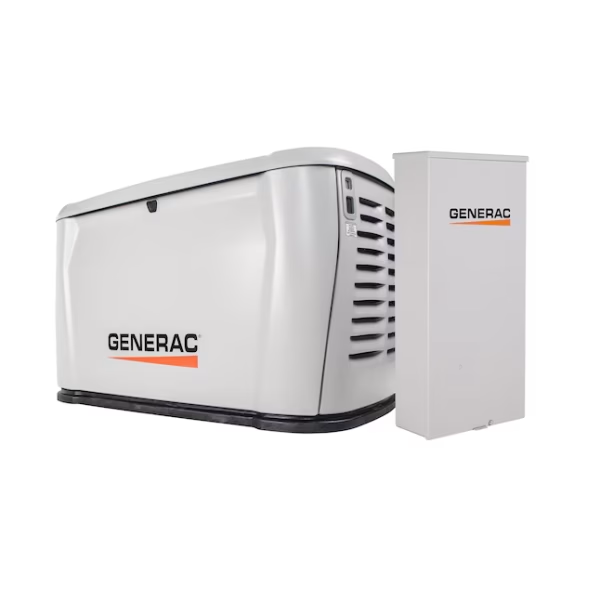
- The best generator for a 2000 sq ft home is the 18kW Generac 7259 for the vast majority of whole-home installs, delivering full whole-home backup coverage with margin for peak simultaneous loads.
- Gas-heated 2000 sq ft homes with 2-ton or 3-ton AC and no EV charging can downsize to the 14kW Generac 7258 for essential-circuit coverage with load management.
- All-electric 2000 sq ft homes with 4-ton AC, EV charging, or heat pump heating should upsize to the 22kW Generac 7260 for capacity margin.
- A home typically draws 10 to 16 kilowatts continuous during peak outage operation depending on appliance mix and HVAC load.
- Square footage alone is a starting point; the actual sizing decision depends on AC tonnage, heating fuel, and 240V appliance load stack.
- Sizing too small means load shedding during peak demand; sizing too large means unnecessary upfront cost with no operational benefit.
The best generator for a 2000 sq ft home is the 18kW Generac 7259 for the vast majority of whole-home installs. A home typically draws 10 to 16 kilowatts continuous during peak outage operation, and the 18kW Generac hits the sweet spot between capacity and cost. Gas-heated 2000 sq ft homes with 2-ton or 3-ton AC and no EV charging can downsize to the 14kW Generac 7258 for essential-circuit coverage. All-electric 2000 sq ft homes with 4-ton AC, EV charging, or heat pump heating should upsize to the 22kW Generac 7260 for capacity margin.
Across hundreds of Generac home standby generator orders shipped nationwide, IB Lighting’s electrician-led team consistently sizes the 18kW Generac as the right pick for home installs. Founded in 2013 by a licensed Master Electrician with field experience across DTE Energy and Consumers Energy projects in Michigan, IB Lighting walks every buyer through the load calculation before quoting an order. This article is that walkthrough for the home size, using load calculation methodology aligned with ASHRAE residential load standards and generator specifications verified against official Generac product documentation.
The Fast Answer: Best Generator for 2000 Sq Ft Home
The right generator depends on three honest factors: your heating fuel (gas vs electric), your central AC tonnage (2-ton, 3-ton, or 4-ton), and your future load plans (EV charging, pool equipment, or all-electric conversion). The table below shows the three most common Generac picks for homes and the profile each one fits.

| Generac Model | Best Fit | Home Profile Match |
|---|---|---|
| 14kW 7258 | Downsize pick | Gas-heated home with 2-ton or 3-ton AC, no EV, essential-circuit coverage with load management |
| 18kW 7259 | Sweet spot pick | Standard 2000 sq ft whole-home coverage across gas or mixed heating with 3-ton or 4-ton AC |
| 22kW 7260 | Upsize pick | All-electric home with 4-ton AC, EV charging, or heat pump heating |
The honest reading: the 18kW Generac 7259 handles the vast majority of home installs across the United States. The 14kW works when heating is gas and AC is 2-ton or 3-ton with load management. The 22kW works when the home is fully electric or has EV charging plans. Going larger than the 22kW on a home is nearly always over-buying capacity that will never be used.
Pro tip: The home is where load management modules become genuinely useful. The 14kW Generac 7258 paired with a Smart Management Module can deliver essential-circuit coverage for a gas-heated home at a lower upfront cost than the 18kW, while still handling the priority loads (refrigerator, sump pump, furnace blower, essential lighting) reliably during outages. This is often the right pick for cost-conscious buyers on smaller homes.
Why 18kW Is the Sweet Spot for 2000 Sq Ft Homes
Industry sizing guidance consistently places homes in the 10 kW to 18 kW range. Within that range, 18 kW hits the sweet spot for three practical reasons: it handles peak load with true whole-home coverage (not just essential circuits), it accommodates future load growth, and it costs only modestly more than the 14kW in the lineup while delivering meaningful capacity margin.

The typical home load profile
A typical home during outage operation runs the following loads simultaneously: central AC compressor (3,500 to 6,000 watts running load with 18,000 to 28,000 watts surge during startup), refrigerator and freezer (1,500 watts continuous), sump pump or well pump (750 to 1,500 watts), lighting throughout the home (300 to 700 watts), electronics and small appliances (400 to 800 watts), and either a gas furnace blower (400 to 800 watts) or electric heat backup (4,000 to 8,000 watts). This baseline stack alone reaches 6,000 to 10,500 watts before adding electric water heater, electric range cycling, or 240V appliances.
Why 18kW covers this load with margin
The 18kW Generac 7259 provides 18,000 watts continuous output on liquid propane and 17,000 watts on natural gas. This covers the typical home peak load with 2,000 to 8,000 watts of continuous margin, which is enough headroom to handle simultaneous compressor cycling, appliance startup transients, and modest 240V load stacking. The Power Zone 200 Controller and True Power Technology deliver less than 5% Total Harmonic Distortion, which matters for modern variable-speed AC compressors and ECM blower motors common in 2000 sq ft residential HVAC systems. The 18kW is also officially advertised as 5-ton AC compressor starting capable, which provides future-proofing if the home upgrades to a larger AC system.
Why not go bigger by default
The 22kW Generac 7260 provides an additional 4 kW of continuous capacity beyond the 18kW, which matters for all-electric homes with EV charging but adds cost without operational benefit for gas-heated homes with mainstream AC. The 24kW and 26kW stretch even further with diminishing returns for typical residential profiles. Sizing correctly at 18 kW for a standard configuration saves upfront cost with no compromise in outage coverage.
Our Top Pick: Generac 18kW 7259 for 2000 Sq Ft Homes
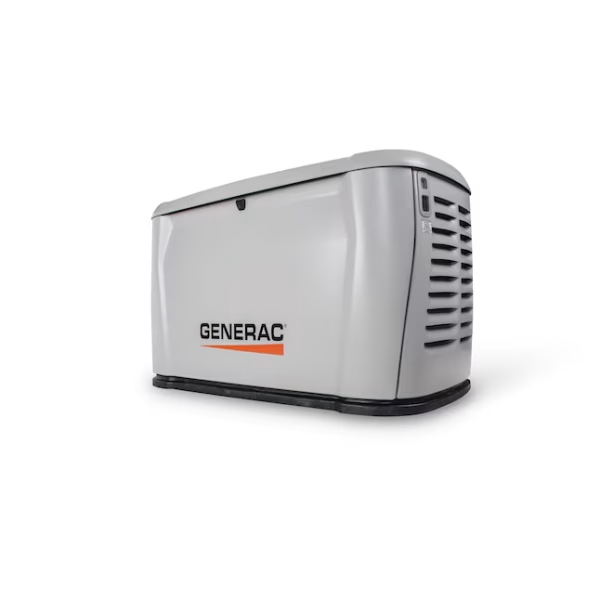
The Generac 7259 18kW is the top pick for homes across the vast majority of configurations. It delivers true whole-home backup coverage with margin for peak simultaneous loads, integrates with the full Generac ecosystem (PWRCell battery storage and ecobee smart thermostat), and provides an upgrade path if future loads grow.

Generac 7259 18kW specifications
| Specification | Value |
|---|---|
| Model | 7259 Next Generation |
| Continuous output (LP) | 18,000 W (18 kW) |
| Continuous output (NG) | 17,000 W (17 kW) |
| Continuous current | 75 A at 240 V |
| Surge capacity | Sufficient for 5-ton AC compressor starting |
| Voltage | 120/240 V single phase |
| Engine | Generac G-Force purpose-built OHV |
| Controller | Power Zone 200 with True Power Technology |
| Enclosure | All-aluminum, wind-rated 150 mph |
| Connectivity | Mobile Link cellular monitoring included |
| PWRCell compatibility | Yes (seamless integration) |
| ecobee compatibility | Yes (smart thermostat integration) |
| Sound level | ~65 dB at 23 feet |
| Warranty | 5-year limited standard |
Why the 18kW fits homes
The 18kW output covers whole-home backup for gas-heated 2000 sq ft homes with any residential AC configuration up to and including 4-ton, and provides enough margin for mixed-fuel homes with 3-ton AC. Generac officially advertises the 7259 as 5-ton AC compressor starting capable, which matters because it means the same generator can handle a future AC upgrade without replacement. The 75 A continuous current at 240 V is sized appropriately for the 100 A automatic transfer switch that is standard on whole-home Generac installs of this size.
Considering the Generac 7259 18kW for your 2000 sq ft home?
IB Lighting’s electrician-led team confirms sizing, generator-controller matching, and transfer switch sizing before every order ships. View the Generac 7259 18kW or call (800) 674-9019.
The Downsize Pick: Generac 14kW 7258 for Gas-Heated 2000 Sq Ft Homes
The Generac 7258 14kW is the correct downsize pick for gas-heated homes with modest electrical load, particularly when paired with a Smart Management Module for essential-circuit coverage. When the primary heating fuel is natural gas, the water heater is gas, the range is gas, and the central AC is 2-ton or 3-ton, the 14kW covers essential-circuit backup with load management and saves several hundred dollars over the 18kW.
When the 14kW fits a home
The 14kW Generac 7258 handles a 2000 sq ft home when the load profile keeps peak simultaneous demand under 12 kW and the buyer accepts essential-circuit coverage with a Smart Management Module rather than pure whole-home backup. This is achievable in gas-heated homes because gas furnaces, gas water heaters, and gas ranges have modest electrical draws (blower motors, ignition, and controls) rather than the heavy 240V draws of electric equivalents. A gas-heated home with 2-ton or 3-ton AC and standard 120V appliances runs comfortably on the 14kW with a load management module handling any non-critical circuits.
When the 14kW is not enough for a home
If the 2000 sq ft home has 4-ton or 5-ton AC, electric water heater, electric range, EV charging, or an electric heat pump, the 14kW is too tight for reliable coverage even with load management. Peak simultaneous load can exceed the 14 kW continuous output during coordinated appliance cycling. Buyers with any of these load stackers should step up to the 18kW as the whole-home default. The 14kW also does not deliver true whole-home coverage without load management, so buyers who want every circuit backed up without shedding should go straight to the 18kW.
Fuel efficiency and cost advantages of the 14kW
The 14kW Generac burns approximately 1.1 gallons of propane per hour at half load, roughly 27 percent less than the 18kW at the same load percentage. On a 500-gallon propane tank, this translates to 2 to 3 extra days of runtime versus the same tank on an 18kW. For home installs where fuel reserve matters and load stacking is modest, the 14kW’s fuel efficiency plus lower upfront cost make it a legitimate option worth considering.
The Upsize Pick: Generac 22kW 7260 for All-Electric 2000 Sq Ft Homes
The Generac 7260 22kW is the correct upsize pick for all-electric homes and any home with EV charging plans or heat pump heating. The 22kW provides meaningful capacity margin for higher-load residential configurations where the 18kW would run tight during peak demand.
When the 22kW fits a home
The 22kW Generac 7260 is the right pick for 2000 sq ft homes with any of the following load stackers: all-electric heating (heat pump or resistance backup), electric water heater plus electric range, Level 2 EV charging (11.5 kW continuous at 48A), 4-ton AC as the primary cooling load, or pool equipment on the same electrical service. In these configurations, peak simultaneous load can approach or exceed 18 kW, which pushes the 18kW Generac closer to its envelope than most homeowners want during long-duration outages.
What the 22kW unlocks for homes
Beyond raw capacity margin, the 22kW carries the same Power Zone 200 Controller and True Power Technology as the 18kW, plus PWRCell battery storage integration and ecobee smart thermostat compatibility. For homes planning full home electrification within the next 10 years (heat pump conversion, EV charger install, electric water heater upgrade), the 22kW provides future-proofing that avoids generator replacement down the road.
When the 22kW is overkill
The 22kW is overkill for gas-heated 2000 sq ft homes with modest AC and no future electrification plans. The 18kW handles this configuration with more than enough margin, and the extra cost of the 22kW does not deliver operational benefit for lower-load residential profiles. Going above 22kW on a home is almost always over-buying capacity.
Factors That Push You Up or Down From 18kW
The 18kW default for 2000 sq ft homes shifts up or down based on specific home characteristics. Understanding which factors push in which direction lets you arrive at the correct sizing decision quickly.

Factors that push you up to 22kW
All-electric heating (heat pump, resistance heat, or electric backup). Electric water heater. Electric range or induction cooktop. Level 2 EV charger (existing or planned within 10 years). 4-ton central AC as primary cooling. Pool equipment (pump, heater, salt system). Workshop with welder or heavy 240V tools. Any two or more of these factors combined make the 22kW the safer default over the 18kW for home installs.
Factors that push you down to 14kW
Natural gas heating (furnace or boiler). Gas water heater. Gas range or cooktop. Central AC of 2-ton or 3-ton maximum. No EV charging plans within 10 years. Standard residential lighting and appliance load without heavy 240V stackers. Willingness to accept essential-circuit coverage with a Smart Management Module rather than pure whole-home backup. Gas-heated homes with these characteristics run comfortably on the 14kW with meaningful upfront cost savings.
Factors that keep you at 18kW
Mixed fuel heating (gas heat plus electric water heater or electric range). Central AC of 3-ton or 4-ton. Occasional light 240V load stacking (electric dryer alongside AC and refrigerator). Moderate electrification plans but no EV charging within 10 years. Preference for true whole-home coverage without load management modules. This mid-range profile is the most common home configuration in the US, which is why the 18kW is the sweet spot default recommendation.
The 3-Factor 2000 Sq Ft Home Sizing Framework
Confirming the right generator for your specific 2000 sq ft home comes out of three honest answers. IB Lighting’s electrician-led team walks every buyer through this framework before quoting an order.
Factor 1: Heating fuel and hot water fuel
Gas heating with gas water heater keeps baseline load low, which lets the 14kW Generac cover essential circuits on a home with a load management module. Electric heating (heat pump or resistance) plus electric water heater adds 4,000 to 10,000 watts of continuous load during winter operation, which pushes the sizing decision toward the 22kW. Mixed configurations (gas heat with electric water heater or electric range) usually land at the 18kW default.
Factor 2: Central AC tonnage and LRA
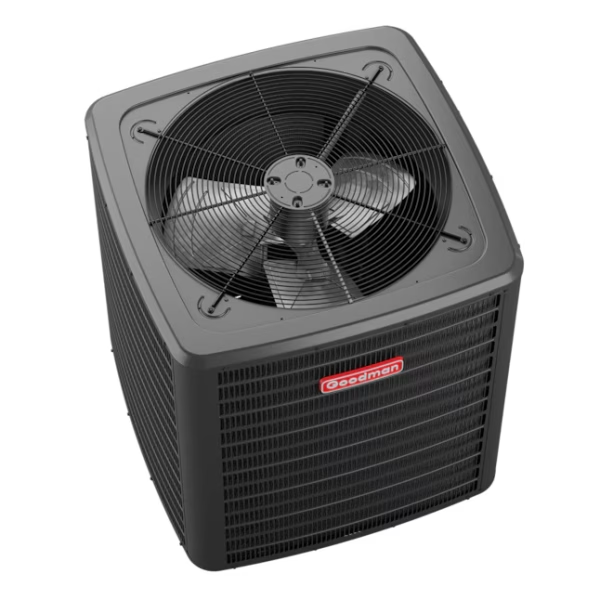
Read the AC tonnage from the condenser nameplate or the model number (the digits after the dash divide by 12 to give tonnage). A 048 model is 4-ton, a 036 is 3-ton, a 024 is 2-ton. Then read the LRA value on the same nameplate. A 4-ton AC pulls 100 to 130 LRA during compressor startup, which requires the 18kW or larger Generac to start reliably alongside baseline load. A 2-ton AC pulls 50 to 80 LRA, which fits comfortably within the 14kW envelope on a gas-heated home. Load calculation methodology aligns with NEMA motor standards for compressor starting.
Factor 3: 10-year future load plans
Adding an EV charger, converting to a heat pump, installing a pool, or adding a workshop within the next 10 years all push the sizing decision toward the 22kW Generac. These load additions can push peak simultaneous demand above the 18kW envelope on a home, and installing a properly-sized generator on day one is far cheaper than replacing an undersized unit five years later.
5 Mistakes Buyers Make Sizing for 2000 Sq Ft
The mistakes below show up repeatedly in 2000 sq ft home generator sizing conversations. Each one is preventable with the framework above.

Mistake 1: Under-sizing to a 10kW or smaller unit
Some buyers see 2000 sq ft as a small home and default to the smallest generator in the lineup for maximum cost savings. The 10kW Generac can cover essential circuits with load management, but it does not provide reliable AC compressor starting for anything larger than a 2-ton central AC. Most homes have 3-ton AC, which pushes the sizing decision to the 14kW as the practical minimum. Under-sizing to 10kW creates load-shedding issues during hot-weather outages when AC operation matters most.
Mistake 2: Defaulting to essential-circuit coverage when whole-home is affordable
The cost difference between the 14kW (essential circuits with load management) and the 18kW (true whole-home coverage) is modest relative to total install cost. Buyers who default to the smaller unit for cost reasons sometimes end up with load-shedding scenarios during peak demand that could have been avoided with the whole-home unit. On a home, the 18kW is nearly always worth the incremental cost for the whole-home coverage upgrade.
Mistake 3: Ignoring future electrification plans
Homes typically add electrical load over time. EV chargers, heat pump conversions, pool installations, and workshop upgrades all push consumption higher over a 10-year window. Buyers who size for today’s load on a home without accounting for likely additions end up with an undersized generator within 5 to 7 years. Generator replacement costs are two to three times the original install cost when factoring in disposal, gas line modifications, and pad rework.
Mistake 4: Mismatching generator to AC tonnage
The home with 4-ton AC has a fundamentally different sizing requirement than the home with 2-ton AC. Buyers who default to the 14kW without checking their AC tonnage sometimes end up undersized for reliable compressor starting during peak demand. Match the generator to the actual AC compressor rating first, then adjust for home load stack.
Mistake 5: Skipping the load calculation
Rule-of-thumb sizing works for typical configurations but fails when the home has unusual load profiles. Homes with well pumps, sump pumps, air compressors, or heavy 240V equipment need a real load calculation rather than a square-footage estimate. A licensed electrician can perform this calculation during a home visit, and IB Lighting provides free sizing review on every order.
Not sure which Generac fits your 2000 sq ft home configuration?
IB Lighting’s electrician-led team runs a free LRA-based load calculation on every order. Call (800) 674-9019 or send your AC nameplate photo.
Frequently Asked Questions
What size Generac generator do I need for a home this size house?
The right size Generac for a home this size house is the 18kW Generac 7259 for most whole-home installs. Gas-heated 2000 sq ft homes with 2-ton or 3-ton AC and no EV charging can downsize to the 14kW 7258 with load management. All-electric 2000 sq ft homes with 4-ton AC, EV charging, or heat pump heating should upsize to the 22kW 7260 for capacity margin.
Will a 14kW Generac run a home this size house?
Yes, with load management. The 14kW Generac 7258 covers essential circuits on a home this size house when paired with a Smart Management Module that sheds non-critical loads during peak demand. For true whole-home backup without load shedding, the 18kW Generac 7259 is the safer pick. Gas-heated homes with 2-ton or 3-ton AC are the most common configurations where the 14kW works reliably.
Is an 18kW Generac enough for a home this size house?
Yes. The 18kW Generac 7259 runs a home this size house with true whole-home coverage across the vast majority of residential configurations, including gas-heated homes with 4-ton AC and mixed-fuel homes with 3-ton AC. The 18kW is officially advertised as 5-ton AC compressor starting capable and provides 2,000 to 8,000 watts of continuous margin above the typical home peak load.
Is a 10kW Generac enough for a home this size house?
The 10kW Generac can cover essential circuits on a home this size house with load management, but it does not provide reliable AC compressor starting for anything larger than a 2-ton central AC. Most 2000 sq ft houses have 3-ton AC, which pushes the practical minimum to the 14kW. For reliable whole-home backup, the 18kW is the safer default.
How much does a Generac generator for a home cost?
Total install cost for a Generac generator on a home varies by model, transfer switch size, gas line requirements, and local labor rates. Typical whole-home installs including the generator, automatic transfer switch, permit, and install labor run in the mid-five-figure range. Contact IB Lighting at (800) 674-9019 for a specific quote with free freight and freight insurance included.
Does square footage alone determine generator size?
No. Square footage is a useful starting point but does not determine the correct generator size. Two homes can have completely different electrical load profiles depending on heating fuel, central AC tonnage, water heating fuel, EV charging, and other 240V load stackers. Use the 3-factor sizing framework (heating fuel, AC tonnage, future plans) for an accurate answer.
What about a 22kW Generac for a home?
The 22kW Generac is the correct upsize pick for homes with all-electric heating, EV charging plans, 4-ton AC, or heat pump systems. For standard gas-heated residential configurations, the 22kW is over-buying capacity. Going above 22kW on a home is almost always over-buying and does not deliver operational benefit.
Where can I buy a Generac generator for my home?
Generac home standby generators are available through resellers nationwide including IB Lighting. IB Lighting resells the full Generac Guardian Series lineup from 14kW through 26kW with free freight and freight insurance included. Contact IB Lighting at (800) 674-9019 or through the contact page for a sizing consultation.
Conclusion
The best generator for a 2000 sq ft home is the 18kW Generac 7259 for the vast majority of whole-home installs. Gas-heated 2000 sq ft homes with 2-ton or 3-ton AC and no EV charging can downsize to the 14kW Generac 7258 with a Smart Management Module for essential-circuit coverage at meaningful upfront savings. All-electric 2000 sq ft homes with 4-ton AC, EV charging, or heat pump heating should upsize to the 22kW Generac 7260 for capacity margin and future-proofing. Square footage alone does not determine the correct answer; the 3-factor framework (heating fuel, AC tonnage, future load plans) delivers accurate sizing that covers your peak simultaneous load with margin without over-buying capacity.
Ready to order the right Generac for your 2000 sq ft home?
IB Lighting resells the full Generac Guardian Series lineup with free freight and freight insurance included. Call (800) 674-9019 or browse the Generac home standby collection.
A one-page printable card with the 3-factor sizing framework, the 14kW/18kW/22kW Generac comparison chart, and the load calculation worksheet. Send it to your electrician before the install date.
Request the free card →This article was last reviewed and updated in June 2026 to reflect current Generac Guardian Series Next Generation product specifications and ASHRAE residential load calculation methodology.