















Best Generator for Cold Weather: 2026 Expert Picks


Best Generator for Cold Weather: 2026 Expert Picks
🕑 14 min read Updated: June 2026 Table of Contents The Fast Answer: Best Generator for Cold Weather Why Automatic Standby Is the Correct Category for Cold Weather...
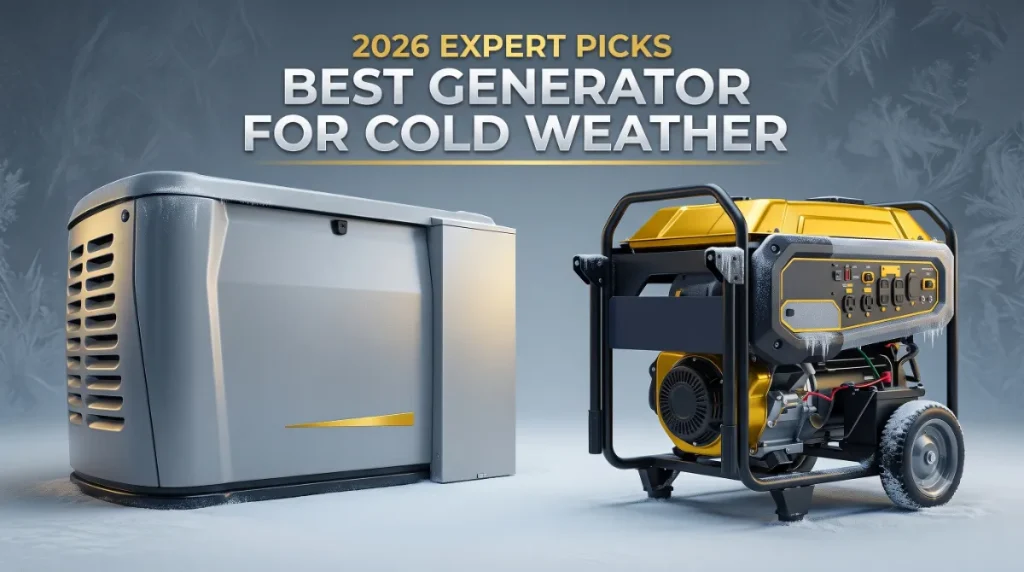
- The best generator for cold weather is the 22kW Generac 7260 for whole-home coverage on standard 2500-3500 sq ft homes in Northeast, Midwest, and Mountain West regions, with winter kit accessories for reliable sub-freezing starting.
- All-electric homes with heat pump or electric backup heating should upsize to the 24kW Generac 7261 for capacity margin during peak winter heating demand.
- Smaller homes, cabins, and rural properties fit the 18kW Generac 7259 for whole-home winter backup coverage.
- Cold weather kit accessories (battery warmer, oil heater, engine block heater) are essential for reliable starting at temperatures below 32 degrees Fahrenheit and should be specified at order time.
- Natural gas and propane fuel supplies remain reliable during winter storms and ice storms, while gasoline availability collapses similar to hurricane scenarios.
- Winter storm and ice storm outages can extend 5 to 10 days in impacted regions, which makes automatic operation and stored fuel supply the deciding factors for winter backup planning.
The best generator for cold weather is the 22kW Generac 7260 for whole-home coverage on standard 2500-3500 sq ft homes across Northeast, Midwest, Mountain West, and Northern regions. Winter sizing prioritizes different factors than standard whole-home sizing: reliable starting at sub-freezing temperatures, extended runtime during multi-day winter storms, whole-home coverage including furnace blower and any electric heating backup, and snow-rated enclosure design. The 22kW Generac hits the sweet spot when paired with winter kit accessories. Larger all-electric homes step up to the 24kW Generac 7261, and smaller cabins or rural homes fit the 18kW Generac 7259.
Across hundreds of Generac home standby generator orders shipped to Northeast, Midwest, and Mountain West buyers, IB Lighting’s electrician-led team consistently specifies winter kit accessories alongside the base generator to ensure reliable sub-freezing operation. Founded in 2013 by a licensed Master Electrician with field experience across DTE Energy and Consumers Energy projects in Michigan (which has some of the most demanding winter operating conditions in the United States), IB Lighting walks every cold-region buyer through the accessory selection, fuel strategy, and winter storm runtime calculation before quoting an order. This article is that walkthrough for winter sizing, using load calculation methodology aligned with ASHRAE residential load standards and generator specifications verified against official Generac product documentation.
The Fast Answer: Best Generator for Cold Weather
The right generator depends on four honest factors: your home size and heating fuel, your winter storm exposure region (moderate vs extreme cold), your critical load list during winter outages (furnace blower, sump pumps, medical equipment, well pumps), and your expected outage duration during winter storms and ice storms. The table below shows the three most common Generac picks for winter backup and the profile each one fits.

| Generac Model | Best Fit | Cold Weather Profile Match |
|---|---|---|
| 18kW 7259 | Smaller-home pick | Cabins, rural homes, and 2000 sq ft or smaller homes with gas heat |
| 22kW 7260 | Sweet spot pick | Standard 2500-3500 sq ft cold-region homes with gas heat or mixed-fuel heating |
| 24kW 7261 | Larger-home pick | Larger 3500-4500 sq ft homes with heat pump, electric backup heat, or all-electric |
The honest reading: the 22kW Generac 7260 handles the vast majority of winter backup installs across the Northeast, Midwest, and Northern regions. The 18kW fits cabins and smaller homes. The 24kW is the right pick for all-electric or heat pump homes where winter heating adds substantial 240V load. Every cold-region install should include the winter kit accessories regardless of generator size.
Pro tip: Winter sizing differs from standard whole-home sizing in two critical ways. First, winter loads include heating equipment that adds substantial baseline demand (furnace blower motors, heat pump compressors, or electric resistance heat backup). Second, the generator itself must reliably start at temperatures well below freezing, which requires winter kit accessories: battery warmer, oil heater, and engine block heater. Skipping the cold weather kit is the single most common cold-region sizing mistake.
Why Automatic Standby Is the Correct Category for Cold Weather
Understanding why automatic standby generators are the correct product category for winter backup matters because the failure modes for portable generators in winter conditions are different than in hurricane conditions, but equally severe. The category decision drives every subsequent sizing question.
What automatic operation delivers during winter storm events
Automatic standby generators are permanently installed on a concrete pad beside the home, connected to natural gas or propane fuel supply, and wired to an automatic transfer switch that constantly monitors utility power. When a winter storm or ice storm knocks out grid power, the transfer switch signals the generator to start within 10 to 30 seconds. Power restoration happens automatically. When utility power returns, the switch reverses and the generator shuts down. The homeowner does nothing during the entire outage, which matters during winter storms when going outside in sub-zero temperatures and heavy snow is dangerous.
Why portable generators fail cold weather scenarios
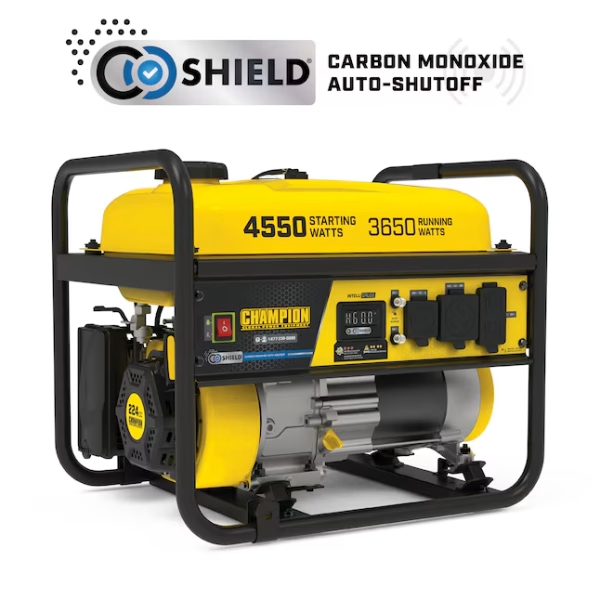
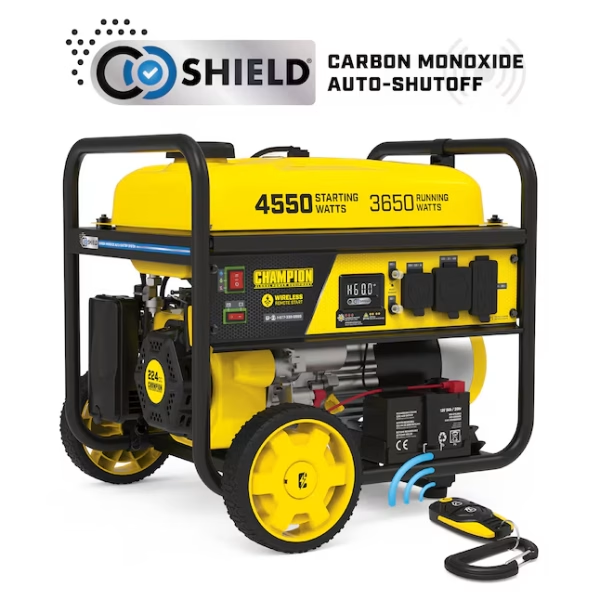
Portable generators require manual startup and physical positioning during every outage. In cold weather, this means the homeowner must physically go outside in freezing temperatures, snow, or ice storm conditions, wheel a heavy generator through snow drifts to a safe outdoor position, connect fuel and transfer switch cables with cold-numb fingers, and start the engine. Recoil pull-start becomes extremely difficult in cold weather, and electric start batteries lose 30 to 50 percent of their capacity below freezing. Portable generators also run on gasoline, which develops moisture through condensation cycles during winter storage and can gel or freeze in extreme cold.
Why the Generac Guardian Series is engineered for cold weather
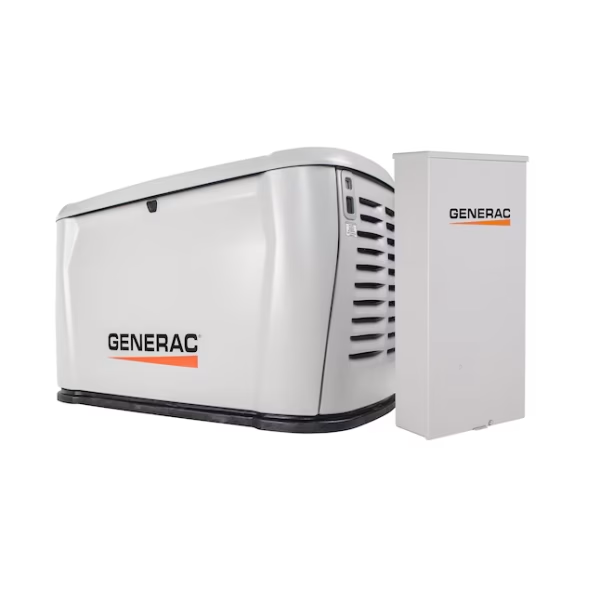
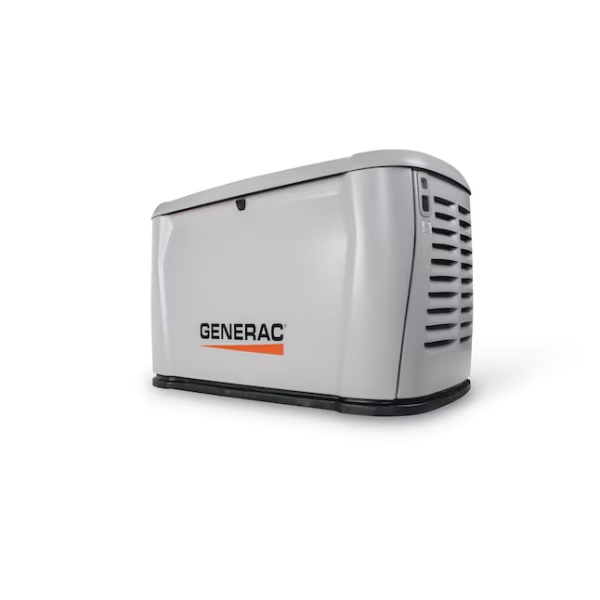
The Generac Guardian Series aluminum enclosure resists corrosion from road salt and de-icing chemicals common in cold-region residential installs. The permanent install allows for winter kit accessories (battery warmer, oil heater, engine block heater) that maintain critical components at operating temperature even when ambient temperatures drop well below freezing. The natural gas or propane fuel supply eliminates the gasoline gelling and moisture issues that plague portable generators in winter. NEMA 3R outdoor rating covers continuous exposure to snow, ice, and winter precipitation.
Our Top Pick: Generac 22kW 7260 for Winter Backup
The Generac 7260 22kW is the top pick for winter backup across the vast majority of standard Northeast, Midwest, and Northern region home configurations. It delivers true whole-home backup coverage including winter critical loads (furnace blower, sump pumps to prevent basement flooding from ice-dam meltwater, refrigeration, and any electric heat backup), provides meaningful fuel efficiency for extended winter storm runtime, and pairs well with winter kit accessories.

Generac 7260 22kW cold weather specifications
| Specification | Value |
|---|---|
| Model | 7260 Next Generation |
| Continuous output (LP) | 22,000 W (22 kW) |
| Continuous output (NG) | 19,500 W (19.5 kW) |
| Fuel consumption (LP, half load) | Approximately 1.8 gallons per hour |
| Runtime on 500-gal tank (winter loads) | Approximately 72 hours (3 days) |
| Runtime on 1000-gal tank (winter loads) | Approximately 144 hours (6 days) |
| Cold weather operating range | Down to -20 degrees F with cold weather kit |
| Enclosure | All-aluminum, corrosion-resistant for road salt exposure |
| Weather rating | NEMA 3R outdoor, snow and ice rated |
| Cold weather kit compatibility | Yes (battery warmer, oil heater, block heater) |
| Controller | Power Zone 200 with True Power Technology |
| Connectivity | Mobile Link cellular monitoring included |
| Warranty | 5-year limited standard |
Why the 22kW fits winter backup for most buyers
The 22kW output covers whole-home backup for standard 2500-3500 sq ft cold-region homes including all winter critical loads simultaneously: furnace blower motor, refrigerator plus freezer, sump pump for basement flood prevention, well pump, home electronics, lighting throughout the home, and HVAC air handlers. Winter loads run higher than summer baseline because heating equipment operates continuously in sub-freezing conditions and lighting demand increases with shorter daylight hours. The 22kW is officially rated for 5-ton AC compressor starting, which covers heat pump compressor startup for homes with electric heating backup. Fuel efficiency matters during multi-day winter storm outages because it directly translates to extended runtime on stored propane.
Considering the Generac 7260 22kW for winter backup?
IB Lighting’s electrician-led team confirms sizing, winter kit selection, and propane tank capacity before every order ships to Northeast, Midwest, and Northern region buyers. View the Generac 7260 22kW or call (800) 674-9019.
The Larger-Home Pick: Generac 24kW 7261 for All-Electric Cold Weather
The Generac 7261 24kW is the correct larger-home pick for winter backup on all-electric homes with heat pump heating, homes with electric resistance backup heat, larger 3500-4500 sq ft homes with mixed-fuel heating, or homes with heavy 240V winter loads (electric water heater, electric range operating simultaneously with heating). The 24kW is the largest air-cooled unit in the Guardian Series lineup and provides meaningful capacity margin for winter heating loads.
When the 24kW fits winter backup
The 24kW Generac 7261 is the right pick for winter backup when the home has heat pump heating (with compressor loads of 3,500 to 6,000 watts continuous plus starting surges), when the home has electric resistance backup heat (adding 5,000 to 15,000 watts during coldest temperatures when heat pump efficiency drops), when the home is 3500 sq ft or larger with mixed-fuel electrification, or when winter simultaneously stacks water heater cycling with heating loads. In these configurations, peak winter simultaneous demand can approach or exceed 22 kW, and the 24kW provides margin the 22kW cannot deliver reliably during extended cold snaps.
Heat pump considerations for winter sizing
Modern heat pumps deliver excellent efficiency down to about 20 degrees F but shift to electric resistance backup heat at temperatures below that threshold. During the coldest winter storm periods (single-digit or sub-zero temperatures), electric resistance backup runs continuously and adds substantial load. Buyers with heat pumps in Northern regions should size for the worst-case scenario when resistance backup runs alongside baseline home load, which typically pushes into 24kW territory. This is why the 24kW is the right pick for all-electric cold-region installs rather than the 22kW.
The Smaller-Home Pick: Generac 18kW 7259 for Cabins and Smaller Homes
The Generac 7259 18kW is the correct smaller-home pick for winter backup on cabins, rural homes, seasonal properties, and 2000 sq ft or smaller homes with gas heating. The 18kW provides true whole-home coverage without load management modules and represents the entry point for genuine winter preparedness without under-sizing for winter heating demand.
When the 18kW fits winter backup
The 18kW Generac 7259 handles winter backup for smaller homes when the load profile keeps peak winter simultaneous demand under 15 kW. This is achievable in gas-heated cabins and smaller homes because gas furnaces run their blower motors on 500-1000 watts (rather than the 3,500-6,000 watts of heat pump compressors), and gas water heaters do not add electric load beyond ignition and controls. A gas-heated 2000 sq ft or smaller cold-region home with standard 120V appliances runs comfortably on the 18kW with margin during winter storm outages.
Rural and cabin considerations
Rural cold-weather properties often include well pumps (1,000 to 1,500 watts continuous with high starting surge), septic system pumps, and outbuilding lighting or heating. These loads should be included in the sizing calculation. The 18kW handles typical rural cold-weather load profiles when the home is gas or propane heated. For rural properties with electric heating or electric water heating, step up to the 22kW as the safer default. Cabins and seasonal properties should still include the cold weather kit for reliable starting after periods of non-use during winter months.
Cold Weather Kit: Essential Accessories for Reliable Sub-Freezing Starting
Every cold-region Generac install should include the winter kit accessories. Skipping the cold weather kit is the single most common cold-region sizing mistake and leads directly to failed startups during actual winter storm events when the generator is needed most.

Battery warmer
Automotive-style batteries lose 30 to 50 percent of their starting capacity at temperatures below 32 degrees F, and up to 60 percent below zero degrees F. Without a battery warmer, the generator battery may lack sufficient cranking amperage to start the engine during the coldest winter conditions when the generator is most needed. The battery warmer is a low-wattage thermostat-controlled heating pad that maintains battery temperature during standby operation, ensuring full cranking capacity when the transfer switch signals a start.
Oil heater
Engine oil viscosity increases dramatically as temperatures drop. Cold engine oil creates internal friction that requires substantially more starter motor cranking effort, which combines with reduced battery capacity to prevent reliable starts. The oil heater is a low-wattage element that keeps the engine oil pan at operating temperature during standby, allowing the engine to crank freely and reach operating conditions quickly when starting during winter conditions.
Engine block heater
The engine block heater maintains coolant temperature in the engine block, which allows the fuel and ignition system to operate correctly during the initial startup sequence. Without a block heater, extremely cold engines can require multiple crank attempts to fire, which drains the battery further and can result in complete startup failure during winter storm conditions. The block heater draws slightly more power than the battery or oil heater but is essential for temperatures below zero degrees F.
Cold weather kit cost consideration
The winter kit accessories add several hundred dollars to the total install cost but are essential for reliable operation in cold-region installs. Buyers who skip the cold weather kit to save on upfront cost frequently discover during the first hard winter that their generator will not start when needed, which requires an emergency service call plus retrofit installation of the accessories, at total cost usually higher than including them in the original order.
Fuel Strategy: Why Natural Gas and Propane Beat Gasoline in Winter
The fuel strategy decision for winter backup follows similar logic to hurricane preparedness but with different failure modes. Understanding why gasoline-powered portable generators fail winter scenarios and how natural gas and propane deliver reliable cold-weather runtime confirms the automatic standby category decision.
Why gasoline fails winter backup
Gasoline develops moisture through condensation cycles during winter storage as temperatures fluctuate between daytime and nighttime lows. This moisture accumulates in fuel tanks and lines and can freeze in extreme cold, blocking fuel delivery to the engine. Gasoline also gels at very low temperatures (typically below -20 degrees F for winter blend, higher for summer blend), which prevents starting even when moisture is not present. Gas station availability during winter storms mirrors hurricane availability: pre-storm demand spikes empty local supplies, power outages disable pumps, and delivery trucks may not reach stations for days.
Why natural gas utility connections work in winter
Natural gas is distributed through underground pipelines that are protected from surface weather and continue to operate through winter storms and ice storms in most cases. Natural gas pressure at residential connections is maintained by utility distribution systems independent of the electrical grid, which means a natural gas-fueled Generac standby can run continuously throughout a winter storm outage without any fuel management concern. This is the strongest fuel strategy for winter backup where natural gas service is available.
Why residential propane tanks work in winter
Residential propane tanks (typically 500-gallon or 1000-gallon installations) hold multiple days of generator fuel that is not dependent on utility restoration or delivery access. Propane remains liquid down to approximately -44 degrees F, which covers virtually all residential cold-weather conditions in the continental United States. Best practice is to keep the propane tank at 80 percent fill (400 gallons usable per NFPA 58) during winter months, which provides a full multi-day fuel reserve without waiting for pre-storm delivery.
The 4-Factor Cold Weather Sizing Framework
Confirming the right generator for your specific winter backup install comes out of four honest answers. IB Lighting’s electrician-led team walks every cold-region buyer through this framework before quoting an order.
Factor 1: Home size and winter load profile
Standard 2500-3500 sq ft cold-region homes fit the 22kW Generac. Smaller homes and cabins (2000 sq ft or less) fit the 18kW. Larger homes (3500-4500 sq ft) or homes with heat pump heating fit the 24kW. Homes above 4500 sq ft or with dual-zone electric heating should evaluate against the 5000 sq ft home sizing framework and may benefit from liquid-cooled residential units for the sustained heating loads typical of extended cold snaps.
Factor 2: Heating fuel and winter heating load
Gas heating (natural gas or propane furnace) keeps winter baseline load moderate, which lets the 22kW cover standard homes. Heat pump heating adds compressor loads plus electric resistance backup during coldest temperatures, which pushes toward the 24kW. Electric resistance heating (baseboard or forced-air) adds substantial 240V load and typically requires the 24kW even on medium-sized homes. Match generator size to actual winter heating load, not just square footage.
Factor 3: Cold weather kit specification
Every cold-region install should include the cold weather kit regardless of generator size. Battery warmer, oil heater, and engine block heater together ensure reliable starting at sub-freezing temperatures. Buyers in Northern regions (Michigan, Wisconsin, Minnesota, Maine, Vermont, upstate New York, Mountain West states) where temperatures routinely drop below zero degrees F absolutely require all three accessories. Milder cold-region installs (Mid-Atlantic, lower Midwest) can typically operate reliably with battery warmer alone but should include the full kit for defense in depth. Load calculation methodology aligns with NEMA motor standards for winter heating equipment starting.
Factor 4: Expected outage duration during winter storms
Winter storm and ice storm outages can extend 3 to 10 days in impacted regions depending on damage severity and utility restoration priority in cold conditions. Ice storms in particular cause extended outages because ice-loaded trees continue falling on power lines for days after the initial event. Buyers in ice-storm-prone regions (Northeast, Great Lakes states, Ohio Valley) should size the propane tank at 1000 gallons rather than 500 gallons to cover extended outage windows. Natural gas utility connections eliminate this concern entirely.
5 Mistakes Buyers Make Sizing for Cold Weather
The mistakes below show up repeatedly in winter backup sizing conversations. Each one is preventable with the framework above.

Mistake 1: Skipping the winter kit accessories
The single most common cold-region sizing mistake is ordering the base generator without the cold weather kit to save several hundred dollars upfront. Cold weather kit accessories (battery warmer, oil heater, engine block heater) ensure reliable starting at sub-freezing temperatures. Without them, the generator can fail to start during the coldest winter storm periods when it is most needed, which triggers emergency service calls plus retrofit installation at higher total cost than including them originally.
Mistake 2: Under-sizing for heat pump and electric resistance backup loads
Heat pumps deliver excellent efficiency at moderate winter temperatures but shift to electric resistance backup during the coldest periods (typically below 20 degrees F). Electric resistance backup adds 5,000 to 15,000 watts of continuous load exactly during the cold snaps when the generator is most likely to be running. Buyers who size for typical winter operation without accounting for the coldest-day resistance backup end up under-sized when it matters most.
Mistake 3: Choosing a portable generator for winter backup
Portable generators fail cold weather scenarios because they require manual startup in freezing conditions, run on gasoline that develops moisture and can gel in extreme cold, and use pull-start or electric-start systems that struggle at low temperatures. Automatic standby generators with cold weather kits are the correct product category for cold-region backup because they start reliably without homeowner intervention and run on natural gas or propane that performs well in winter.
Mistake 4: Ignoring ice storm outage duration
Ice storms cause the longest outages of any winter weather event because ice-loaded trees continue falling on power lines for days after the initial ice accumulation. Utility crews cannot safely restore lines until the ice melts and trees stop falling. Ice storm outages in the Northeast, Great Lakes, and Ohio Valley regions frequently extend 5 to 10 days. Buyers who size their propane tank based on typical 24-48 hour outage assumptions run out of fuel during actual ice storm events.
Mistake 5: Installing the generator without snow-safe clearance
Cold weather generator installs require snow-safe clearance around the enclosure to prevent snowdrift accumulation from blocking vents or drifting against the air intake. Best practice is 4-foot clearance on the vent side and 3-foot clearance on other sides, with a raised concrete pad that keeps the generator above expected snow accumulation depths. Buyers who install too close to the home or without adequate pad height can experience shutdown from blocked vents during heavy snowfall events.
Ready to prepare for winter with a Generac winter backup generator?
IB Lighting resells the full Generac Guardian Series lineup with free freight and freight insurance included, and ships nationwide to Northeast, Midwest, Mountain West, and Northern region buyers. Call (800) 674-9019 or request a winter sizing consultation.
Frequently Asked Questions
What size Generac generator do I need for cold weather backup?
The right size Generac for cold weather backup is the 22kW Generac 7260 for standard 2500-3500 sq ft gas-heated cold-region homes with whole-home coverage. Cabins and smaller homes fit the 18kW Generac 7259. Larger homes with heat pump heating, electric resistance backup, or all-electric configurations fit the 24kW Generac 7261. Include the winter kit accessories regardless of generator size.
Do I need a cold weather kit for a Generac generator?
Yes, if you are in any cold-region install. Cold weather kit accessories (battery warmer, oil heater, engine block heater) ensure reliable starting at temperatures below 32 degrees F. Automotive batteries lose 30 to 50 percent of starting capacity below freezing, and cold engine oil creates internal friction that prevents reliable cranking. Skipping the cold weather kit is the single most common cold-region sizing mistake.
How cold can a Generac generator start?
Generac Guardian Series generators with the cold weather kit reliably start at temperatures down to approximately -20 degrees F. Without the cold weather kit, reliable starting drops off below 32 degrees F because battery cranking capacity decreases and engine oil viscosity increases. For Northern regions where temperatures routinely drop below zero degrees F, the full cold weather kit (all three accessories) is essential.
Will a Generac run during an ice storm?
Yes. Generac Guardian Series generators are engineered to operate through ice storms and winter storms when installed with proper snow-safe clearance and winter kit accessories. The natural gas or propane fuel supply continues to deliver reliably during ice storms because underground gas distribution is protected from surface weather. The NEMA 3R outdoor rating covers continuous exposure to ice, snow, and freezing precipitation.
Is a portable generator good for cold weather backup?
No. Portable generators fail winter conditions because they require manual startup in freezing conditions, run on gasoline that develops moisture and can gel in extreme cold, and use starting systems that struggle at low temperatures. Automatic standby generators with cold weather kits are the correct product category for cold-region backup because they operate automatically and reliably in winter conditions.
How long can a Generac run during a winter storm?
Runtime depends on fuel supply. Natural gas utility connections deliver essentially unlimited runtime during winter storm outages. A 500-gallon propane tank at 80 percent safe fill delivers approximately 3 days for a 22kW Generac running winter loads. A 1000-gallon tank delivers approximately 6 days. For ice storm exposure regions where outages extend 5 to 10 days, size the propane tank at 1000 gallons.
Do heat pump homes need a larger generator for cold weather?
Yes. Heat pumps deliver excellent efficiency at moderate winter temperatures but shift to electric resistance backup heat during the coldest periods (typically below 20 degrees F). Electric resistance backup adds 5,000 to 15,000 watts of continuous load exactly when the generator is running during winter storms. Heat pump homes should size to the 24kW Generac 7261 rather than the 22kW as the safer default.
Where can I buy a Generac generator for cold weather backup?
Generac home standby generators are available through resellers nationwide including IB Lighting. IB Lighting resells the full Generac Guardian Series lineup from 14kW through 26kW with free freight and freight insurance included, and ships to Northeast, Midwest, Mountain West, and Northern region buyers. Contact IB Lighting at (800) 674-9019 or through the contact page.
Conclusion
The best generator for winter backup is the 22kW Generac 7260 for standard cold-region homes, with the 24kW Generac 7261 for larger homes or heat pump heating, and the 18kW Generac 7259 for cabins and smaller homes. Every cold-region install should include the winter kit accessories (battery warmer, oil heater, engine block heater) for reliable sub-freezing starting. Natural gas or propane fuel supply is the correct choice because gasoline fails during winter conditions. Size the propane tank at 500 gallons for moderate exposure or 1000 gallons for ice-storm-prone regions. Install ahead of winter to ensure delivery and commissioning before the first hard freeze.
Ready to order the right Generac for winter backup?
IB Lighting resells the full Generac Guardian Series lineup with free freight and freight insurance included. Call (800) 674-9019 or browse the Generac home standby collection.
This article was last reviewed and updated in June 2026 to reflect current Generac Guardian Series Next Generation product specifications, cold weather kit accessory compatibility, and NFPA 58 propane tank sizing methodology.