















Best Generator for Hurricane Preparedness: 2026 Expert Picks


Best Generator for Hurricane Preparedness: 2026 Expert Picks
🕑 14 min read Updated: June 2026 Table of Contents The Fast Answer: Best Generator for Hurricane Preparedness Why Automatic Standby Is the Correct Category for Hurricane Preparedness...
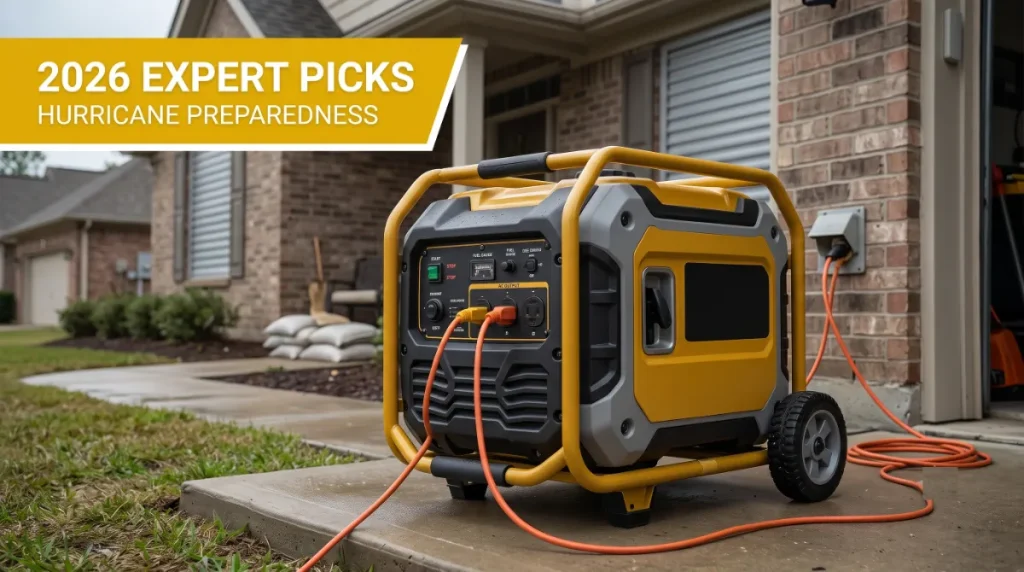
- The best generator for hurricane preparedness is the 22kW Generac 7260 for whole-home coverage on standard 2500-3500 sq ft homes, with the 24kW Generac 7261 for larger homes and the 18kW Generac 7259 for smaller coastal cottages.
- Automatic standby generators are the correct product category for hurricane preparedness because they start within seconds of an outage without homeowner intervention, unlike portable generators that require physical positioning in storm conditions.
- Natural gas or propane fuel supply is critical for hurricane preparedness because gasoline availability collapses during storm events and evacuation orders often precede outages by 24-48 hours.
- A properly sized 500-gallon or 1000-gallon propane tank delivers 3 to 7 days of runtime for a 22kW Generac operating a whole home during a hurricane outage.
- The Generac Guardian Series aluminum enclosure carries a 150 mph wind rating, which covers most Atlantic and Gulf Coast hurricane exposure below Category 4 sustained winds.
- Hurricane preparedness sizing requires accounting for extended runtime, whole-home critical loads (medical equipment, refrigeration, sump pumps), and post-storm recovery periods when utility restoration takes days.
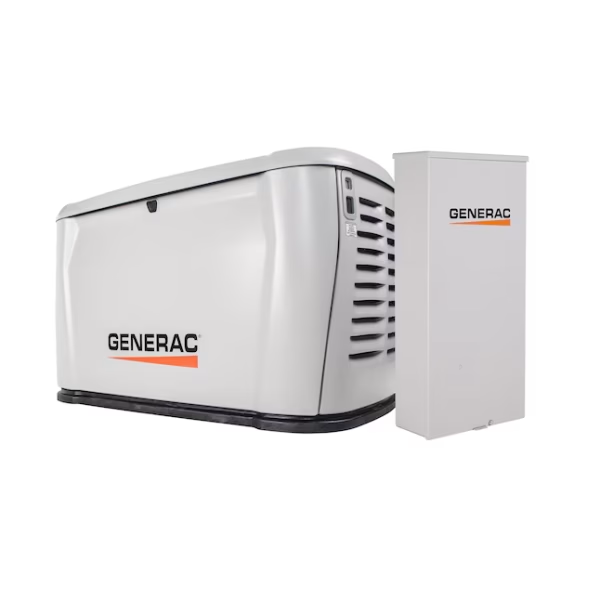
The best generator for hurricane preparedness is the 22kW Generac 7260 for whole-home coverage on standard 2500-3500 sq ft homes across the Gulf Coast and Atlantic Coast hurricane exposure regions. Hurricane preparedness sizing prioritizes different factors than standard whole-home sizing: automatic operation during storm conditions, extended runtime on stored fuel, whole-home coverage including critical loads, and reliable startup after utility power fails without homeowner intervention. The 22kW Generac hits the sweet spot between capacity, fuel efficiency, and cost for the typical storm-season buyer. Larger homes step up to the 24kW Generac 7261, and smaller coastal cottages or condos fit the 18kW Generac 7259.
Across hundreds of Generac home standby generator orders shipped to Gulf Coast, Atlantic Coast, and Florida buyers, IB Lighting’s electrician-led team consistently sizes automatic standby units for hurricane preparedness rather than portable backup. Founded in 2013 by a licensed Master Electrician with field experience across DTE Energy and Consumers Energy projects in Michigan, IB Lighting walks every hurricane-region buyer through the fuel strategy, runtime calculation, and whole-home critical load review before quoting an order. This article is that walkthrough for storm-season sizing, using load calculation methodology aligned with ASHRAE residential load standards and generator specifications verified against official Generac product documentation.
The Fast Answer: Best Generator for Hurricane Preparedness
The right generator depends on four honest factors: your home size and whole-home load profile, your fuel supply strategy (natural gas utility connection or propane tank), your critical load list (medical equipment, sump pumps, refrigeration), and your expected outage duration (24-48 hours for Category 1-2 storms, 3-7 days for Category 3+ events). The table below shows the three most common Generac picks for hurricane preparedness and the profile each one fits.

| Generac Model | Best Fit | Hurricane Preparedness Profile Match |
|---|---|---|
| 18kW 7259 | Smaller-home pick | Coastal cottages, condos, and 2000 sq ft or smaller homes with 3-ton AC |
| 22kW 7260 | Sweet spot pick | Standard 2500-3500 sq ft coastal or hurricane-region homes with whole-home coverage |
| 24kW 7261 | Larger-home pick | Larger 3500-4500 sq ft homes with 5-ton AC or mixed-fuel electrification |
The honest reading: the 22kW Generac 7260 handles the vast majority of coastal installs across the Gulf Coast, Atlantic Coast, and Florida hurricane exposure regions. The 18kW fits smaller coastal homes and condos. The 24kW is the right pick for larger homes with 5-ton AC. Above 24kW, buyers should evaluate their specific load profile against the framework in this article to determine whether the 26kW or a liquid-cooled residential unit is appropriate.
Pro tip: Hurricane preparedness sizing differs from standard whole-home sizing in one critical way: the generator must operate reliably for 3 to 7 days on stored fuel during and after the storm, often without any possibility of refueling. This makes fuel supply strategy (natural gas utility connection versus propane tank size) as important as generator kW rating. A properly sized 22kW Generac on a 500-gallon propane tank delivers approximately 3-5 days of continuous operation depending on load.
Why Automatic Standby Is the Correct Category for Hurricane Preparedness
Understanding why automatic standby generators are the correct product category for hurricane preparedness matters because many buyers researching this topic have not made this decision yet and may be comparing portable and standby options. The category decision drives every subsequent sizing question.
What automatic operation delivers during hurricane events
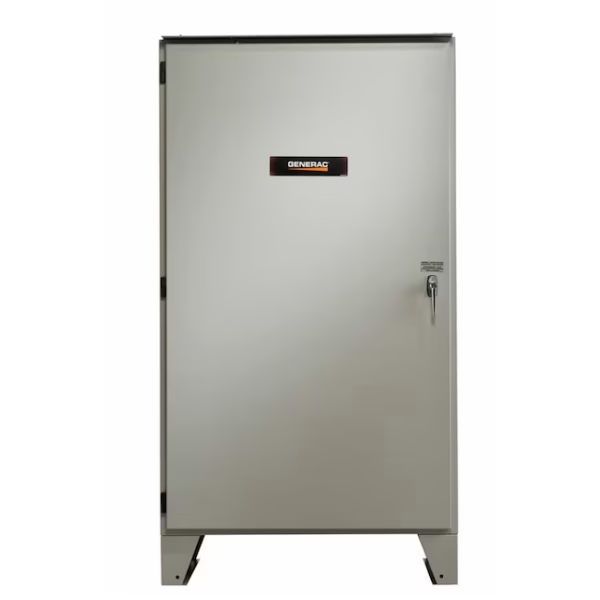
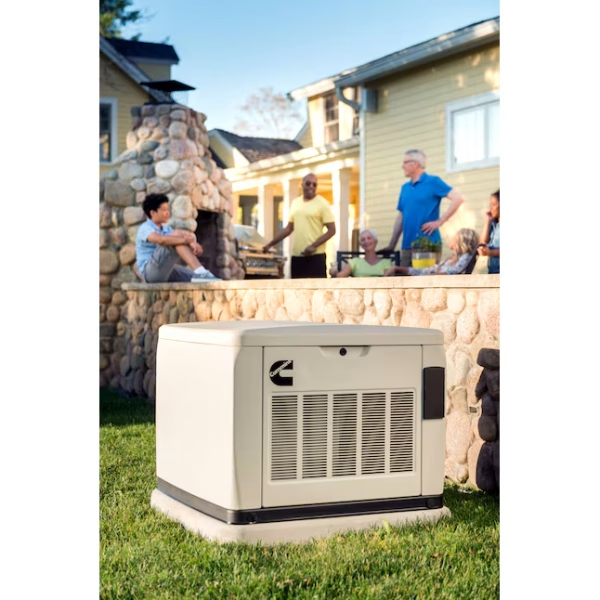
Automatic standby generators are permanently installed on a concrete pad beside the home, connected to your natural gas or propane fuel supply, and wired to an automatic transfer switch (ATS) that constantly monitors utility power. When the hurricane knocks out grid power, the ATS signals the generator to start within 10 to 30 seconds. Power restoration through the transfer switch happens automatically. When utility power returns after the storm, the ATS switches back and signals the generator to shut down. The homeowner does nothing during the entire outage cycle, which is exactly what matters during a hurricane when evacuation orders may prevent physical access to the home.
Why portable generators fail hurricane scenarios
Portable generators require manual startup and physical positioning during every outage. During a hurricane, this means the homeowner must physically go outside in storm conditions (which is dangerous and often prohibited under civil authority orders), wheel a heavy generator into position outdoors, connect fuel and transfer switch cables, and start the engine. If the homeowner has evacuated ahead of the storm, portable generators cannot operate at all because no one is present to start them. Portable generators also run on gasoline, which becomes unavailable during hurricane events because gas stations close, evacuate, or run out of fuel.
Why the Generac Guardian Series is engineered for hurricane exposure
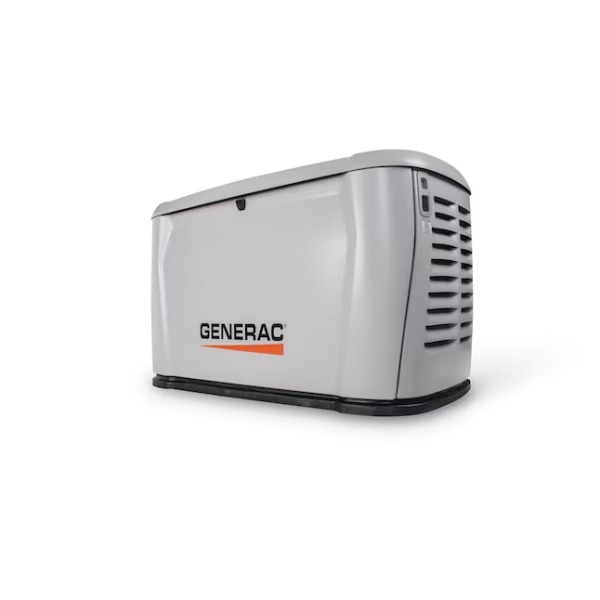
The Generac Guardian Series aluminum enclosure carries a 150 mph wind rating, which covers most Atlantic and Gulf Coast hurricane exposure below Category 4 sustained winds. The NEMA 3R outdoor rating covers rain, wind-driven precipitation, and continuous outdoor exposure during extended storm events. Natural gas and propane fuel connections continue to operate throughout hurricane events (unlike gasoline supply chains) because underground gas distribution and residential propane tanks are protected from wind damage.
Our Top Pick: Generac 22kW 7260 for Hurricane Preparedness
The Generac 7260 22kW is the top pick for hurricane preparedness across the vast majority of standard coastal and hurricane-region home configurations. It delivers true whole-home backup coverage including critical loads (refrigeration, medical equipment, sump pumps, HVAC), provides meaningful fuel efficiency for extended runtime, and represents the sweet spot between capacity and cost for storm-season buyers.

Generac 7260 22kW hurricane specifications
| Specification | Value |
|---|---|
| Model | 7260 Next Generation |
| Continuous output (LP) | 22,000 W (22 kW) |
| Continuous output (NG) | 19,500 W (19.5 kW) |
| Fuel consumption (LP, half load) | ~1.8 gallons per hour |
| Runtime on 500-gal tank (half load) | ~90 hours (approximately 3.75 days) |
| Runtime on 1000-gal tank (half load) | ~180 hours (approximately 7.5 days) |
| Wind rating | 150 mph |
| Enclosure | All-aluminum, corrosion-resistant for coastal exposure |
| Weather rating | NEMA 3R outdoor |
| Controller | Power Zone 200 with True Power Technology |
| Connectivity | Mobile Link cellular monitoring included |
| Transfer switch response | Automatic within 10-30 seconds |
| Warranty | 5-year limited standard |
Why the 22kW fits hurricane preparedness for most buyers
The 22kW output covers whole-home backup for standard 2500-3500 sq ft coastal and hurricane-region homes including all critical loads simultaneously: central AC compressor (up to 5-ton officially rated), refrigerator plus freezer, sump pump or well pump, home electronics, lighting throughout the home, and HVAC air handlers. The fuel efficiency of the 22kW versus larger units matters for hurricane preparedness because it directly translates to extended runtime on the same propane tank. A 500-gallon propane tank at 80 percent safe fill (400 gallons usable per NFPA 58) delivers approximately 90 hours of runtime at half load, which covers a typical Category 1-2 hurricane outage window.
Considering the Generac 7260 22kW for hurricane preparedness?
IB Lighting’s electrician-led team confirms sizing, propane tank capacity, and transfer switch selection before every order ships to hurricane-region buyers. View the Generac 7260 22kW or call (800) 674-9019.
The Larger-Home Pick: Generac 24kW 7261 for Whole-Home Hurricane Backup
The Generac 7261 24kW is the correct larger-home pick for hurricane preparedness on 3500-4500 sq ft homes, homes with 5-ton central AC, or homes with mixed-fuel electrification (electric water heater or range on gas heat). The 24kW is the largest air-cooled unit in the Guardian Series lineup and provides meaningful capacity margin for higher-load hurricane preparedness configurations.
When the 24kW fits hurricane preparedness
The 24kW Generac 7261 is the right pick for hurricane preparedness when the home is 3500 sq ft or larger with 5-ton central AC, when the home has dual HVAC zones or two AC condensers running simultaneously, when the home has mixed-fuel electrification (gas heat with electric water heater or range), or when the home has EV charging plans that may need to operate during extended outages. In these configurations, peak simultaneous load can approach or exceed 22 kW, and the 24kW provides margin that the 22kW cannot deliver during long-duration storm outages.
Fuel consumption tradeoffs for hurricane runtime
The 24kW Generac burns approximately 2.0 gallons per hour at half load, roughly 10 percent more than the 22kW. On a 500-gallon propane tank, this translates to approximately 3 days of continuous runtime (compared to 3.75 days on the 22kW). For hurricane preparedness where extended runtime matters, buyers with 24kW installs should typically size their propane tank at 1000 gallons rather than 500 gallons to deliver equivalent storm-duration coverage. Natural gas utility connections eliminate this tradeoff entirely because runtime is limited only by fuel line availability.
The Smaller-Home Pick: Generac 18kW 7259 for Coastal Cottages and Condos
The Generac 7259 18kW is the correct smaller-home pick for hurricane preparedness on coastal cottages, condos, and 2000 sq ft or smaller homes with 3-ton central AC. The 18kW provides true whole-home coverage without load management modules and represents the entry point for genuine hurricane preparedness without under-sizing.
When the 18kW fits hurricane preparedness
The 18kW Generac 7259 handles coastal backup for smaller homes when the load profile keeps peak simultaneous demand under 15 kW. This is achievable in gas-heated coastal cottages and condos with 3-ton or smaller central AC, standard 120V appliances, and no heavy 240V electrification. The 18kW is officially advertised as 5-ton AC compressor starting capable, which means it can handle future AC upgrades without generator replacement, an important consideration for coastal properties where AC systems tend to be replaced every 10-15 years due to salt air exposure.
Fuel efficiency for extended coastal outages
The 18kW Generac burns approximately 1.5 gallons of propane per hour at half load, roughly 17 percent less than the 22kW. On a 500-gallon propane tank, this delivers approximately 4 to 4.5 days of continuous runtime, which covers most Category 1-2 hurricane outage windows for smaller coastal homes. The 18kW’s fuel efficiency plus lower upfront cost make it a legitimate storm-season pick for buyers with smaller home footprints who prioritize extended runtime over capacity margin.
Fuel Strategy: Why Natural Gas or Propane Matters for Hurricanes
The fuel strategy decision for hurricane preparedness is often more important than the generator kW rating. Understanding why gasoline-powered portable generators fail hurricane scenarios and how natural gas and propane deliver reliable extended runtime clarifies the automatic standby category decision entirely.

Why gasoline fails hurricane preparedness
Gasoline supply chains collapse during hurricane events. Gas stations close ahead of storms as workers evacuate, run out of fuel due to pre-storm demand spikes, or lose power (gasoline pumps require electricity). Even after the storm, gas station reopening depends on utility restoration, delivery truck access through damaged infrastructure, and worker return from evacuation. Portable generator owners frequently discover during actual hurricane events that their fuel reserve runs out on day 2 or 3 with no way to refill until the storm response is well underway.
Why natural gas utility connections work during hurricanes
Natural gas is distributed through underground pipelines that are protected from wind damage and continue to operate through and after hurricane events in most cases. Natural gas pressure at residential connections is maintained by utility distribution systems that operate independently of the electrical grid. This means a natural gas-fueled Generac standby generator can run continuously for the entire duration of a hurricane outage without any fuel management concern. This is the strongest fuel strategy for hurricane preparedness where natural gas service is available.
Why residential propane tanks work during hurricanes
Residential propane tanks (typically 500-gallon or 1000-gallon underground or above-ground installations) hold multiple days of generator fuel that is not dependent on utility restoration, delivery access, or evacuation logistics. Once the tank is filled ahead of a storm, the propane is available on-site for the entire outage window. Best practice for hurricane preparedness is to keep the propane tank at 80 percent fill (400 gallons usable per NFPA 58) during hurricane season, which provides a full storm-duration fuel reserve without waiting for pre-storm delivery.
Extended Runtime: Sizing Your Propane Tank for 3-to-7 Day Outages
Propane tank sizing for hurricane preparedness follows a different calculation than standard whole-home backup because the runtime target is 3 to 7 days rather than the 24-48 hours typical for standard outages. Understanding the math lets you size the propane tank correctly for your specific generator model and hurricane exposure risk.
Propane consumption at half load by generator size
| Generac Model | Half Load Consumption | 500-gal Runtime (400 gal usable) | 1000-gal Runtime (800 gal usable) |
|---|---|---|---|
| 18kW 7259 | ~1.5 gph | ~4.4 days | ~8.9 days |
| 22kW 7260 | ~1.8 gph | ~3.7 days | ~7.4 days |
| 24kW 7261 | ~2.0 gph | ~3.3 days | ~6.7 days |
500-gallon tank for standard hurricane preparedness
The 500-gallon propane tank is the standard sizing for hurricane preparedness in most residential installs. It delivers 3.3 to 4.4 days of continuous runtime depending on generator size at half load, which covers Category 1-2 hurricane outage windows for most coastal and hurricane-region homes. For buyers with the 18kW or 22kW Generac in moderate-exposure regions, the 500-gallon tank is sufficient. Refer to the individual propane tank sizing articles for detailed generator-specific calculations.
1000-gallon tank for Category 3+ exposure regions
The 1000-gallon propane tank is the correct sizing for hurricane preparedness in high-exposure regions (Gulf Coast, Florida Atlantic Coast, Category 3+ zones) where outages can extend 5 to 10 days after major storms. It delivers 6.7 to 8.9 days of continuous runtime depending on generator size at half load, which covers extended outage windows including secondary damage response and utility restoration delays. Buyers with the 24kW Generac or larger, or buyers in high-exposure regions, should size the tank at 1000 gallons rather than 500 gallons.
The 4-Factor Hurricane Preparedness Sizing Framework
Confirming the right generator for your specific coastal install comes out of four honest answers. IB Lighting’s electrician-led team walks every hurricane-region buyer through this framework before quoting an order.
Factor 1: Home size and whole-home load profile
Standard 2500-3500 sq ft coastal homes fit the 22kW Generac for hurricane preparedness. Smaller homes (2000 sq ft or less) fit the 18kW. Larger homes (3500-4500 sq ft) fit the 24kW. Homes above 4500 sq ft or with dual AC condensers should evaluate against the 5000 sq ft home sizing framework and may benefit from liquid-cooled residential units for extended-duration duty cycles typical of major hurricane events.
Factor 2: Fuel supply strategy
Natural gas utility connection is the strongest fuel strategy for hurricane preparedness where available because runtime is unlimited during storm outages. Propane is the second-strongest strategy because storage is on-site and independent of utility restoration. Gasoline is the weakest strategy and fails during actual hurricane events. If your home does not have natural gas utility service, plan for a properly-sized propane tank based on the runtime calculations above.
Factor 3: Critical load list and extended-duration coverage
Hurricane preparedness sizing must account for critical loads that cannot tolerate the 15-60 minute manual startup delay of a portable generator: medical equipment (CPAP machines, oxygen concentrators, dialysis equipment), sump pumps for basement flood prevention, refrigeration and freezer contents, HVAC for temperature control in extreme heat or cold, and communication equipment for storm updates. All of these run continuously through the outage on an automatic standby generator without any intervention.
Factor 4: Expected outage duration and regional hurricane exposure
Category 1-2 hurricane outages typically last 24-72 hours. Category 3-4 events can extend to 5-10 days depending on damage severity and utility restoration priority. Category 5 events in impacted regions have caused outages exceeding 2 weeks. Regional exposure varies: Florida Atlantic Coast, Louisiana Gulf Coast, and Texas Gulf Coast face the highest exposure, while Carolinas and mid-Atlantic regions face moderate exposure. Match propane tank size to expected outage duration for your specific regional exposure. Load calculation methodology aligns with NEMA motor standards for compressor starting during extended duty cycles.
5 Mistakes Buyers Make Sizing for Hurricane Preparedness
The mistakes below show up repeatedly in storm-season sizing conversations. Each one is preventable with the framework above.

Mistake 1: Choosing a portable generator for hurricane preparedness
Portable generators fail hurricane scenarios because they require manual startup and physical positioning during storm conditions. If you have evacuated ahead of a storm, the portable generator cannot operate at all. If you are sheltering in place, going outside during a hurricane to start a portable generator is dangerous and often prohibited under civil authority orders. Portable generators also fail on fuel supply because gasoline availability collapses during hurricane events. Automatic standby is the correct product category for hurricane preparedness.
Mistake 2: Under-sizing the propane tank for extended outages
Standard whole-home backup sizing typically assumes 24-48 hour outages. Hurricane outages can extend to 3-10 days or longer depending on storm severity and utility restoration priority. Buyers who size their propane tank at 100-gallon or 250-gallon capacity for cost savings run out of fuel on day 2 or 3 of a major hurricane outage, with no way to refill until the storm response is well underway. Size the propane tank based on hurricane runtime calculations, not standard outage assumptions.
Mistake 3: Skipping the critical load review
Hurricane preparedness sizing requires an honest review of critical loads that must operate throughout the outage: medical equipment, sump pumps, refrigeration, HVAC (especially in Florida and Gulf Coast heat exposure), communication equipment, and well pumps. Buyers who focus only on general whole-home coverage without confirming their critical loads can end up with a generator that technically covers the home but drops critical circuits during peak simultaneous demand.
Mistake 4: Ignoring wind rating and coastal enclosure requirements
Not all generators have the same wind rating or corrosion resistance for coastal exposure. The Generac Guardian Series aluminum enclosure carries a 150 mph wind rating and is designed for coastal salt-air exposure. Some competing brands use steel enclosures that corrode faster in coastal environments or have lower wind ratings that may not meet local hurricane-zone code requirements. Verify enclosure wind rating and material against your regional hurricane exposure.
Mistake 5: Waiting until hurricane season to install
Generator installation timelines can extend to 6-12 weeks or longer during hurricane season as demand spikes ahead of forecasted storms. Buyers who wait until a specific storm is forecasted to order and install a standby generator frequently miss the delivery and install window entirely, leaving them exposed for that season and often for the following year. Best practice is to order and install ahead of hurricane season (typically November through April for Atlantic and Gulf Coast regions).
Ready to prepare for hurricane season with a Generac standby generator?
IB Lighting resells the full Generac Guardian Series lineup with free freight and freight insurance included, and ships nationwide to Atlantic Coast, Gulf Coast, and Florida hurricane-region buyers. Call (800) 674-9019 or request a storm-season sizing consultation.
Frequently Asked Questions
What size Generac generator do I need for hurricane preparedness?
The right size Generac for hurricane preparedness is the 22kW Generac 7260 for standard 2500-3500 sq ft coastal homes with whole-home coverage. Smaller cottages and condos fit the 18kW Generac 7259. Larger 3500-4500 sq ft homes with 5-ton AC fit the 24kW Generac 7261. Match generator size to home load profile and propane tank capacity to expected outage duration.
Is a portable generator good for hurricane preparedness?
No. Portable generators fail hurricane scenarios because they require manual startup and physical positioning during storm conditions, and cannot operate at all if the homeowner has evacuated. Portable generators also run on gasoline, which becomes unavailable during hurricane events. Automatic standby generators are the correct product category for hurricane preparedness because they operate automatically without homeowner intervention.
How long can a Generac run during a hurricane?
Runtime depends on fuel supply strategy. Natural gas utility connections deliver essentially unlimited runtime during hurricane outages. A 500-gallon propane tank at 80 percent safe fill delivers approximately 3.7 days for a 22kW Generac at half load, or 4.4 days for an 18kW Generac. A 1000-gallon tank delivers 6.7 to 8.9 days depending on generator size. Size the tank based on expected hurricane outage duration for your region.
What wind rating does the Generac Guardian Series have?
The Generac Guardian Series aluminum enclosure carries a 150 mph wind rating, which covers most Atlantic and Gulf Coast hurricane exposure below Category 4 sustained winds. The NEMA 3R outdoor rating covers rain, wind-driven precipitation, and continuous outdoor exposure during extended storm events. The aluminum construction resists coastal salt-air corrosion for long-term reliability in coastal install environments.
Should I choose natural gas or propane for hurricane preparedness?
Natural gas utility connection is the strongest fuel strategy for hurricane preparedness where available because runtime is unlimited during storm outages and underground gas distribution is protected from wind damage. Propane is the second-strongest strategy because storage is on-site and independent of utility restoration. Both are significantly better than gasoline, which fails during hurricane events due to supply chain collapse.
How much propane do I need for hurricane preparedness?
For standard hurricane preparedness in moderate-exposure regions, a 500-gallon propane tank at 80 percent safe fill (400 gallons usable per NFPA 58) delivers 3 to 5 days of continuous runtime depending on generator size at half load. For high-exposure regions (Gulf Coast, Florida) or Category 3+ outage scenarios, upgrade to a 1000-gallon tank that delivers 7 to 9 days of runtime.
When should I install a hurricane preparedness generator?
Install ahead of hurricane season, which runs June 1 through November 30 for Atlantic and Gulf Coast regions. Best practice is to order between November and April to avoid the demand spike that occurs when specific storms are forecasted. Installation timelines can extend to 6-12 weeks during peak season as demand surges, so buyers who wait until a specific storm is forecasted often miss the delivery window.
Where can I buy a Generac generator for hurricane preparedness?
Generac home standby generators are available through resellers nationwide including IB Lighting. IB Lighting resells the full Generac Guardian Series lineup from 14kW through 26kW with free freight and freight insurance included, and ships to Atlantic Coast, Gulf Coast, and Florida buyers. Contact IB Lighting at (800) 674-9019 or through the contact page.
Conclusion
The best generator for hurricane preparedness is the 22kW Generac 7260 for standard coastal homes, with the 24kW Generac 7261 for larger homes and the 18kW Generac 7259 for smaller cottages and condos. Automatic standby is the correct product category because it operates without homeowner intervention during storm conditions, unlike portable generators that require manual startup. Natural gas or propane fuel supply is critical because gasoline availability collapses during hurricane events. Size the propane tank at 500 gallons for standard exposure or 1000 gallons for high-exposure regions. Install ahead of hurricane season to avoid the demand spike that occurs when storms are forecasted.
Ready to order the right Generac for hurricane preparedness?
IB Lighting resells the full Generac Guardian Series lineup with free freight and freight insurance included. Call (800) 674-9019 or browse the Generac home standby collection.
A one-page printable card with the 4-factor storm-season sizing framework, propane tank runtime calculations, critical load checklist, and pre-storm install timeline. Send it to your electrician before hurricane season.
Request the free card →This article was last reviewed and updated in June 2026 to reflect current Generac Guardian Series Next Generation product specifications and NFPA 58 propane tank sizing methodology.