
























EMT vs PVC Conduit Cost: Complete 2026 Comparison Guide


EMT vs PVC Conduit Cost: Complete 2026 Comparison Guide
🕑 13 min read Updated: June 2026 Table of Contents The Fast Answer: EMT vs PVC Conduit Cost What Is EMT (Electrical Metallic Tubing)? What Is PVC Conduit?...

- The EMT vs PVC conduit cost comparison depends on more than just material price per foot: EMT typically costs approximately 2 to 3 times more per foot than equivalent PVC Schedule 40, but EMT provides equipment grounding per NEC 250.118 eliminating the need for a separate ground conductor while PVC installations require this additional conductor cost added to the total installation.
- Total installed cost analysis shows EMT often wins for short indoor runs with few fittings due to the grounding conductor savings and faster installation without cement curing time, while PVC typically wins for long outdoor or underground runs where lower material cost overcomes the additional grounding conductor requirement and longer overall installation time.
- NEC 358 governs EMT installations with restrictions to indoor dry locations primarily (outdoor above-ground with rain-tight fittings permitted) and prohibition on direct burial per NEC 358.10, while NEC 352 governs PVC conduit which is rated for indoor, outdoor, wet locations, and direct burial applications when listed for those specific environments.
- Material cost per foot for typical 1 inch trade size shows PVC Schedule 40 significantly lower than EMT galvanized steel, with PVC fittings including couplings, elbows, and connectors also typically lower cost than equivalent EMT fittings, giving PVC a clear material cost advantage before considering the grounding conductor requirement.
- Installation labor differs significantly between EMT vs PVC conduit cost calculations: EMT installations require no curing time and use set-screw or compression fittings for immediate handling, while PVC installations require solvent-cement joint curing typically 15 to 30 minutes before handling, adding installation time particularly for complex routing with multiple joints.
- The interactive EMT vs PVC cost decision tool below evaluates installation environment, total run length, and cost priority factors to recommend the appropriate conduit type for your specific installation with the rationale explaining why that choice provides the best cost outcome for your scenario.
EMT vs PVC conduit cost comparison requires more than just comparing material prices per foot. EMT typically costs approximately 2 to 3 times more per foot than equivalent PVC Schedule 40 but provides equipment grounding through the metallic tubing per NEC 250.118, eliminating the need for a separate ground conductor. PVC has lower material cost but requires additional grounding conductor and longer installation time due to cement curing. This article covers the complete EMT vs PVC conduit cost analysis including material costs, fitting costs, labor considerations, grounding requirements, total installed cost scenarios, and application-specific recommendations to help you make the right cost decision for your specific installation.
Across thousands of Southwire and Cerrowire orders shipped from IB Lighting nationwide, our electrician-led team helps buyers make the EMT vs PVC conduit cost decision for residential and commercial installations. Founded in 2013 by a licensed Master Electrician with field experience across DTE Energy and Consumers Energy projects in Michigan, IB Lighting resells electrical wire and cable including individual THHN and THWN-2 conductors that install inside both EMT and PVC conduit systems for various applications.
This article covers the complete EMT vs PVC conduit cost comparison that we regularly discuss with buyers planning conduit installations, using citations from the current National Electrical Code (NFPA 70) and industry practice from the International Association of Electrical Inspectors.
The Fast Answer: EMT vs PVC Conduit Cost
The EMT vs PVC conduit cost comparison typically shows PVC Schedule 40 material cost significantly lower per foot than EMT galvanized steel, with PVC fittings also lower cost than equivalent EMT fittings. However, EMT provides equipment grounding through the metallic tubing per NEC 250.118 while PVC requires a separate grounding conductor inside the conduit adding wire cost. Total installed cost depends on run length, number of fittings, grounding conductor requirement, and installation labor time. EMT often wins for short indoor runs while PVC typically wins for long outdoor or underground runs.
Material cost quick reference
EMT typically costs approximately 2 to 3 times more per foot than equivalent PVC Schedule 40 for common residential trade sizes (1/2 inch through 2 inch). PVC Schedule 80 is heavier wall PVC costing more than Schedule 40 but still typically less than equivalent EMT. Actual pricing varies by market conditions, quantity purchased, and retailer, with current pricing shown on individual product pages.
Grounding conductor factor
The often-overlooked cost factor is grounding. EMT provides equipment grounding path per NEC 250.118 eliminating the need for a separate ground conductor inside the conduit. PVC installations require a separate grounding conductor (typically green THHN or bare copper) inside the conduit adding wire cost. For long runs, the grounding conductor cost partially offsets the PVC material savings.
Labor time consideration
EMT installations use set-screw or compression fittings requiring no curing time. PVC installations use solvent-cement joints requiring typically 15 to 30 minutes curing before handling. For installations with many joints, the PVC curing time adds up significantly, potentially offsetting the material cost savings when labor is a significant cost factor.
What Is EMT (Electrical Metallic Tubing)?
Understanding EMT construction and characteristics establishes the baseline for the EMT vs PVC conduit cost comparison.
EMT construction
EMT (Electrical Metallic Tubing) is thin-wall galvanized steel tubing manufactured for electrical installations. The steel provides excellent physical protection for the conductors inside while the galvanized coating provides corrosion resistance for typical installations. EMT is significantly thinner walled than Rigid Metal Conduit (RMC), making it lighter and easier to work with than RMC while still providing substantial protection.
EMT sizes and lengths
EMT is available in common trade sizes from 1/2 inch through 4 inch, with 1/2 inch, 3/4 inch, and 1 inch being most common for residential applications. Standard length is 10 feet per stick. Larger trade sizes (2-1/2 inch through 4 inch) are more common in commercial installations for larger feeder circuits and service applications.
EMT fitting types
EMT connects using two primary fitting types: set-screw fittings that clamp to the EMT with tightening screws, and compression fittings that use a compression ring to grip the EMT. Set-screw fittings are less expensive and adequate for dry indoor installations. Compression fittings provide better weather protection and are required for outdoor and damp location installations.
EMT applications
EMT is primarily used for indoor above-ground installations including basement circuits, utility rooms, workshop wiring, commercial building interiors, and industrial installations. EMT can be used outdoors above ground with appropriate rain-tight fittings and physical protection, but cannot be direct buried per NEC 358.10. The steel construction and grounding capability make EMT particularly popular for commercial and industrial installations.
What Is PVC Conduit?
Understanding PVC conduit construction and characteristics completes the baseline for comparing EMT vs PVC conduit cost.
PVC conduit construction
PVC (Polyvinyl Chloride) conduit, also called rigid nonmetallic conduit per NEC 352, is a plastic tubing manufactured specifically for electrical installations. PVC provides good physical protection for internal conductors while being non-corrosive in essentially all soil and environmental conditions. The plastic construction eliminates any galvanic corrosion concerns and provides excellent moisture resistance.
Schedule 40 vs Schedule 80
PVC conduit is available in two primary wall thicknesses: Schedule 40 (standard wall) and Schedule 80 (heavy wall). Schedule 40 is adequate for typical residential installations including direct burial when listed for that purpose. Schedule 80 has thicker walls providing significantly more physical protection, used for installations subject to physical damage or in areas with vehicle traffic exposure.
PVC sizes and lengths
PVC conduit is available in trade sizes from 1/2 inch through 6 inch with 1/2 inch through 2 inch being most common for residential applications. Standard length is 10 feet per stick with 20 foot lengths sometimes available for large installations. The full size range makes PVC suitable for essentially any residential or commercial application.
PVC fitting types and applications
PVC connects using solvent-cement joints where PVC primer and cement chemically weld the fitting to the pipe. This creates a permanent bond that provides both mechanical connection and moisture seal. PVC is used for outdoor above-ground installations, underground installations (when listed for direct burial), wet locations, corrosive environments, and any installation where the versatility of PVC provides value.
NEC Requirements: EMT vs PVC Applications
NEC requirements determine where each conduit type can be used, directly affecting the EMT vs PVC conduit cost decision through application restrictions.
NEC 358 EMT restrictions
NEC 358 governs EMT installations with several key restrictions. EMT is not permitted in cinder concrete or fill where subject to permanent moisture unless corrosion protected. EMT cannot be direct buried per NEC 358.10 (must be in raceway or protected). Where used in wet locations, all fittings must be listed for wet locations. EMT provides equipment grounding per NEC 250.118 when properly installed with listed fittings.
NEC 352 PVC coverage
NEC 352 governs rigid PVC conduit installations. PVC is permitted in most locations including indoor, outdoor above ground, direct burial when listed, wet locations, corrosive environments, and locations with severe moisture. PVC does not provide equipment grounding, so a separate grounding conductor must be run inside the PVC per NEC 250.118 for the circuit.
The grounding path difference
The fundamental NEC difference between EMT and PVC for cost analysis is the equipment grounding. EMT is listed as an acceptable equipment grounding conductor per NEC 250.118 when properly installed. This means the metal tubing itself provides the grounding path back to the panel, eliminating the need for a separate ground conductor. PVC is not conductive and cannot provide grounding, requiring a separate green or bare copper conductor sized per NEC Table 250.122.
Applications where only one type is permitted
Some applications are limited to one conduit type. Direct burial installations require PVC listed for direct burial (or metallic conduit like RMC/IMC, but not EMT). Severe corrosive environments favor PVC. Concealed indoor installations in commercial construction often use EMT. Understanding these application restrictions clarifies when the cost comparison is even relevant versus when the choice is dictated by installation requirements.
Material Cost Comparison: Tube Per Foot
Material cost per foot is the most visible factor in the EMT vs PVC conduit cost comparison, but it is only one component of the total installed cost.
EMT material cost characteristics
EMT galvanized steel tubing typically costs more per foot than equivalent PVC Schedule 40 due to the raw material cost of steel and the galvanizing process. Common residential trade sizes (1/2 inch through 1 inch) show EMT at approximately 2 to 3 times the per-foot cost of equivalent PVC Schedule 40. Actual pricing varies by market conditions and quantity purchased.
PVC Schedule 40 material cost
PVC Schedule 40 conduit provides the lowest material cost among common conduit options. The plastic construction and simpler manufacturing process result in significantly lower per-foot cost than metal alternatives. Schedule 40 PVC is adequate for most residential installations including direct burial when listed for that application.
PVC Schedule 80 cost premium
PVC Schedule 80 has thicker walls than Schedule 40 for enhanced physical protection. Schedule 80 typically costs approximately 30 to 50 percent more per foot than equivalent Schedule 40 due to the additional PVC material. Schedule 80 is still typically less expensive than equivalent EMT while providing significant physical protection improvement over Schedule 40.
Size scaling factors
Cost differences between EMT and PVC scale with conduit size but not linearly. For 1/2 inch trade size, the absolute cost difference per foot is small. For larger sizes (1-1/2 inch and larger), the absolute cost difference per foot becomes significant. Longer runs of larger conduit show the largest total cost differences between the two materials.
Fitting Cost Comparison: Couplings, Connectors, Elbows
Fittings often represent a significant portion of total conduit installation cost, and the fitting cost comparison follows a similar pattern to tube material cost.
EMT fitting costs
EMT fittings including couplings, connectors, elbows, and LB fittings typically cost more than equivalent PVC fittings. Set-screw fittings are less expensive than compression fittings. Common residential installations use set-screw fittings for indoor dry locations and compression fittings for damp or outdoor above-ground locations.
PVC fitting costs
PVC fittings including couplings, elbows, LB fittings, and adapters are generally lower cost than equivalent EMT fittings. The plastic construction and simpler manufacturing keep fitting costs low. Bulk pack fittings are commonly available for larger installations, providing additional cost savings.
Fitting quantity per installation
Typical residential installations use one coupling per 10 foot section of conduit at joints. Direction changes require appropriate elbows or LB fittings. Complex routing with multiple direction changes uses more fittings than straight runs, amplifying the cost difference between EMT and PVC for complex installations.
Specialty fitting considerations
Some installations require specialty fittings including expansion fittings for long straight runs (particularly important for PVC due to thermal expansion), weatherproof fittings for outdoor applications, and rain-tight fittings for wet locations. Specialty fittings are typically more expensive than standard fittings for both EMT and PVC.
Labor and Installation Time Comparison
Installation labor is often the largest cost component of a conduit installation, making labor time a critical factor in the EMT vs PVC conduit cost comparison.
EMT installation speed
EMT installations are typically faster than PVC installations because set-screw and compression fittings provide immediate mechanical connection without curing time. Cut the EMT to length, deburr the ends, install the fitting, tighten, and the joint is complete and ready for handling. This immediate handling capability allows continuous installation without waiting periods.
PVC installation curing time
PVC installations require solvent-cement joints where PVC primer is applied to both surfaces, PVC cement is applied, and the joint is assembled with a slight twist for even distribution. The cement chemically welds the surfaces together, but curing time typically requires 15 to 30 minutes before handling and longer before pressure testing or backfilling.
Labor cost impact
The labor cost impact of installation speed depends on the specific installation and labor cost per hour. For professional installations where labor is billed at $75 to $150 per hour, the time savings from EMT can offset a significant portion of the higher material cost. For DIY installations where labor cost is effectively zero, the material cost difference typically dominates the decision.
Complex routing installations
Complex routing with multiple direction changes amplifies the labor difference between EMT and PVC. Each PVC joint requires the cement curing time, adding up quickly across many joints. EMT with multiple joints installs continuously without waiting periods, providing significant labor advantage on complex routing.
The Hidden Grounding Cost Factor (NEC 250.118)
The equipment grounding requirement is often overlooked in EMT vs PVC conduit cost comparisons but can significantly change the total installed cost calculation.
NEC 250.118 requirement
NEC 250.118 lists acceptable equipment grounding conductors including metallic raceways like EMT, RMC, and IMC when properly installed with listed fittings. PVC and other nonmetallic raceways are not listed as acceptable equipment grounding paths, requiring a separate grounding conductor inside the conduit.
EMT grounding cost savings
EMT installations do not require a separate grounding conductor inside the conduit because the metallic tubing itself provides the equipment grounding path back to the panel. This eliminates the cost of the additional conductor (typically green THHN or bare copper) sized per NEC Table 250.122 based on the overcurrent protection rating.
PVC grounding conductor cost
PVC installations require a separate equipment grounding conductor inside the conduit sized per NEC Table 250.122. For a 20 amp circuit, the grounding conductor is 12 AWG copper. For a 100 amp feeder, the grounding conductor is 8 AWG copper. For larger circuits, the grounding conductor size increases with the overcurrent protection rating.
Total cost impact
The grounding conductor cost for PVC installations partially offsets the PVC material savings. For a typical 20 amp circuit with 100 foot run, the grounding conductor cost (100 feet of 12 AWG green THHN) partially reduces the PVC total cost advantage. For larger circuits with larger grounding conductors, the offset is more significant. This is why total installed cost analysis must include grounding for accurate comparison.
Total Installed Cost Analysis
Total installed cost analysis brings together material, fittings, labor, and grounding to provide the complete EMT vs PVC conduit cost comparison.
Short run cost analysis (under 25 feet)
For short runs of typical residential 1 inch trade size, EMT total installed cost is often competitive with PVC despite higher material cost. The grounding conductor savings and faster installation time offset most of the material cost difference. Short EMT installations may cost approximately the same or slightly more than equivalent PVC when total cost is calculated.
Medium run cost analysis (25-100 feet)
For medium runs, the material cost advantage of PVC becomes more significant. Even with the grounding conductor addition, PVC total installed cost is typically lower than EMT for medium runs. The specific crossover point depends on trade size, number of fittings, and labor cost rates.
Long run cost analysis (over 100 feet)
For long runs, PVC provides substantial total installed cost savings. The material cost per foot difference multiplied by long lengths creates significant savings that easily overcome the grounding conductor addition. Long runs are the clearest scenario where PVC wins the total cost comparison.
Application-specific analysis
Application-specific factors affect the general cost analysis. Direct burial requires PVC (or metallic conduit other than EMT), making the choice mandatory rather than cost-based. Wet locations favor PVC. Indoor residential installations often favor EMT for the grounding capability. Commercial installations often favor EMT for consistency and speed of installation.
Application Scenarios Where EMT Wins on Cost
Several specific application scenarios consistently show EMT winning the total cost comparison against PVC.
Short indoor residential runs
Short indoor residential runs (under 25 feet) with typical residential circuits are the most common scenario where EMT wins on cost. The grounding conductor savings and faster installation time offset the higher material cost. Common applications include basement circuit routing, utility room installations, and workshop wiring in home garages.
Commercial installations with heavy conduit routing
Commercial installations often use extensive EMT routing for consistency, speed, and the grounding capability. In commercial construction where labor cost is a significant factor, EMT installation speed provides substantial project time savings that translate to cost savings even with higher material cost.
Installations requiring maximum physical protection above ground
EMT provides significantly more physical protection than PVC above ground. In installations where the conduit is exposed to potential impact (workshop areas, warehouse installations, mechanical rooms), the physical protection value of EMT may justify the higher cost even beyond the grounding cost consideration.
Retrofit installations with existing metallic ground path
Retrofit installations that connect to existing metallic conduit systems benefit from EMT for grounding continuity. The complete metallic ground path back to the panel maintains grounding integrity throughout the installation. Adding PVC to an existing metallic ground path adds complexity that may not be worth the material cost savings.
Application Scenarios Where PVC Wins on Cost
Other application scenarios consistently show PVC winning the total cost comparison against EMT.
Long outdoor and underground installations
Long outdoor and underground installations are the clearest PVC wins. The lower material cost per foot multiplied by long lengths creates significant savings. Direct burial installations essentially require PVC because EMT cannot be direct buried per NEC 358.10. Long outdoor above-ground runs benefit from PVC weather resistance and lower cost.
Wet locations and damp environments
Wet locations and damp environments favor PVC due to the non-corrosive plastic construction. EMT in wet locations requires special fittings and may experience corrosion over time even with galvanized coating. PVC eliminates all corrosion concerns while providing lower material cost, making it the clear choice for wet installations.
DIY installations where labor equals zero
DIY installations where labor cost is effectively zero shift the cost calculation heavily toward material cost. Without labor factored in, the PVC material cost advantage dominates the decision. DIY homeowners installing their own outdoor lighting, EV chargers, or feeder circuits typically save significant money using PVC even accounting for the added grounding conductor.
Corrosive environments
Corrosive environments including coastal installations, industrial locations, and areas with chemical exposure favor PVC for long-term reliability. The non-corrosive plastic construction eliminates corrosion-related maintenance and replacement costs. Even where EMT could technically be used with special protection, PVC provides better long-term cost outcome in corrosive environments.
Long-Term Cost Considerations: Durability and Maintenance
Long-term cost considerations extend the EMT vs PVC conduit cost comparison beyond initial installation to include durability and maintenance factors.
EMT long-term durability
EMT in typical indoor dry locations provides excellent long-term durability with minimal maintenance requirements. The galvanized coating protects against typical corrosion for decades. Physical damage to EMT is rare in typical installations due to the strong metal construction. Long-term EMT installations often outlast the buildings they serve.
PVC long-term durability
PVC in typical residential and outdoor applications provides good long-term durability. UV exposure can degrade PVC over decades of direct sunlight exposure, though sunlight-resistant PVC formulations extend outdoor life significantly. Underground PVC installations typically provide excellent long-term durability with essentially no maintenance requirements.
Maintenance cost considerations
Both EMT and PVC installations require minimal maintenance in typical residential applications. Any conduit maintenance is typically driven by external factors like landscape damage, building modifications, or circuit changes rather than the conduit material itself. Long-term maintenance costs are essentially equal between the two options for most residential installations.
Replacement cost considerations
Circuit modifications or upgrades that require replacing conduit favor whichever material is easier to work with in the specific installation environment. Underground PVC replacement requires excavation for either material choice. Indoor conduit replacement is easier when the original conduit is accessible. Overall, the initial installation choice rarely creates significant replacement cost differences.
Product Selection for Both Conduit Types
Product selection for both EMT and PVC installations requires understanding the conductor and fitting compatibility for each system.
Individual conductors for both conduit types
Both EMT and PVC installations use individual insulated conductors (typically THHN in dry locations or THWN-2 for versatility across wet and dry applications). Southwire and Cerrowire manufacture individual THHN and THWN-2 conductors in all common sizes for both conduit types. The conductor selection depends on the specific circuit requirements rather than the conduit type.
Grounding conductor considerations
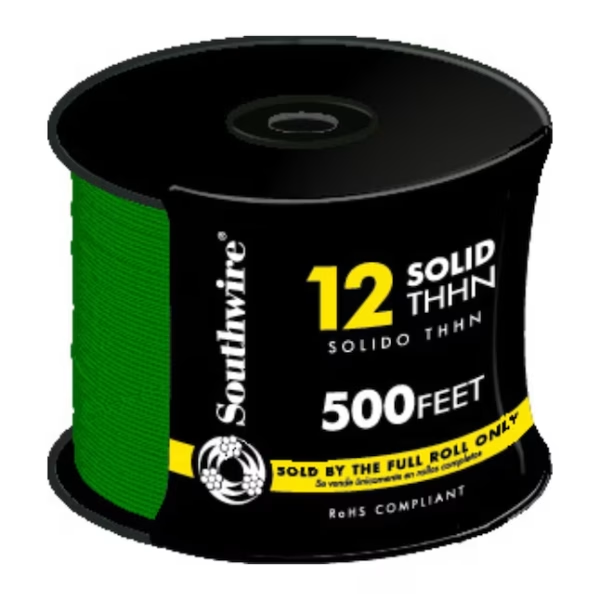
PVC installations require a separate equipment grounding conductor (typically green THHN or bare copper) inside the conduit sized per NEC Table 250.122. EMT installations do not require this separate conductor because the metallic conduit provides the grounding path. Include the grounding conductor cost when calculating total PVC installation cost.
Wire and cable ordering strategy
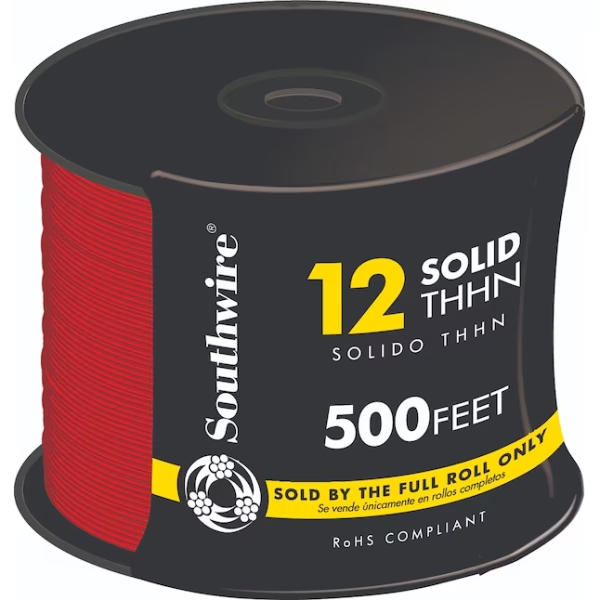
When ordering wire and cable for conduit installations from IB Lighting, calculate the total conductor length needed including all circuit conductors plus the grounding conductor (for PVC installations). Ordering slightly more than calculated allows for pull losses and minor waste. Standard reel lengths include 500 ft and 1000 ft rolls with cost efficiency improving with larger quantities.
Conduit installation considerations
Both EMT and PVC installations must comply with NEC Chapter 9 Table 1 conduit fill requirements limiting fill to 40 percent for 3 or more conductors. NEC bend radius requirements per NEC 344 for RMC and equivalent requirements for EMT and PVC must be met. See our conduit fill 40 percent rule article and NEC wire bend radius article for complete conduit installation requirements.
5 Common Mistakes with EMT vs PVC Conduit Cost Decisions
The mistakes below cause the most frequent problems when installers make the EMT vs PVC conduit cost decision based on incomplete cost analysis.

Mistake 1: Forgetting the grounding conductor cost for PVC installations
The most common mistake is comparing only the conduit material cost between EMT and PVC without including the equipment grounding conductor cost required for PVC per NEC 250.118. For large circuits with substantial grounding conductor sizes, this omission can significantly change the total cost calculation and lead to selecting PVC when EMT would actually be cheaper.
Mistake 2: Attempting to use EMT for direct burial
Some installers attempt to use EMT for direct burial applications despite NEC 358.10 prohibition. This is not permitted and will fail inspection regardless of any cost consideration. Direct burial installations must use PVC listed for direct burial, RMC, or IMC. Attempting EMT for direct burial creates code violations and requires rework at additional cost.
Mistake 3: Ignoring labor cost differences in professional installations
Some installers focus only on material cost without accounting for labor time differences. EMT installation speed can provide significant labor cost savings on complex installations that offset the higher material cost. Complete cost analysis should include labor cost at the actual billing rate for accurate comparison.
Mistake 4: Using Schedule 40 PVC in high-impact locations
Some installers use Schedule 40 PVC where Schedule 80 or EMT would be more appropriate for physical protection. If damage occurs to Schedule 40 PVC in high-impact areas, the replacement cost far exceeds the initial cost savings compared to using Schedule 80 or EMT. Physical protection requirements should influence the selection beyond just cost.
Mistake 5: Undersized conduit selection for cost savings
Some installers select smaller conduit trade sizes to save on material cost, then discover the selected size violates NEC Chapter 9 conduit fill requirements. Undersized conduit requires replacement, negating any initial cost savings. Always verify conduit fill compliance before finalizing the trade size selection.
Ready to order THHN or THWN-2 conductors for your EMT or PVC conduit installation?
IB Lighting resells the full Southwire and Cerrowire electrical wire and cable lineup including individual THHN and THWN-2 conductors for both EMT and PVC conduit systems. Call (800) 674-9019 or browse electrical wire and cable products.
Frequently Asked Questions
Is EMT or PVC conduit cheaper?
PVC conduit material cost is typically lower per foot than EMT (approximately 2 to 3 times lower for common residential trade sizes). However, EMT provides equipment grounding per NEC 250.118 eliminating the need for a separate ground conductor while PVC requires this additional conductor. Total installed cost depends on run length, fittings, labor, and grounding conductor requirement.
Can EMT be used for direct burial?
No. EMT cannot be direct buried per NEC 358.10. Direct burial installations must use PVC listed for direct burial (18 inch minimum cover per NEC Table 300.5(A) Column 3), Rigid Metal Conduit (RMC), or Intermediate Metal Conduit (IMC). Attempting to use EMT for direct burial creates code violations that will fail inspection.
Do I need a ground wire inside PVC conduit?
Yes. PVC conduit is not conductive and cannot provide equipment grounding per NEC 250.118. A separate equipment grounding conductor (typically green THHN or bare copper) must be installed inside the PVC conduit sized per NEC Table 250.122 based on the overcurrent protection rating. EMT installations do not require this separate conductor because the metal provides grounding.
Is PVC Schedule 40 or Schedule 80 better for cost?
PVC Schedule 40 has lower material cost than Schedule 80 (approximately 30 to 50 percent lower). Schedule 40 is adequate for most residential applications including direct burial when listed for that purpose. Schedule 80 provides significantly more physical protection for installations subject to impact or vehicle traffic, justifying the additional cost in those specific applications.
How much faster is EMT installation than PVC?
EMT installation is faster than PVC primarily because set-screw and compression fittings require no curing time compared to PVC solvent-cement joints requiring typically 15 to 30 minutes curing. On complex installations with multiple joints, the cumulative time savings can be significant. For simple straight runs, the time difference is less pronounced.
Can I use PVC conduit indoors?
Yes. PVC conduit can be used indoors including in residential basement, utility room, and workshop installations. PVC in indoor applications does not benefit from the wet location and direct burial advantages but provides good physical protection at low material cost. EMT is more common in indoor commercial installations while PVC is more common in indoor residential installations.
Does EMT provide better protection than PVC?
Yes, EMT galvanized steel provides significantly more physical protection than PVC Schedule 40. EMT resists impact from tools and objects that could damage PVC. Schedule 80 PVC provides significantly more protection than Schedule 40 but still less than equivalent EMT. Physical protection requirements should influence the conduit selection beyond just cost considerations.
Where can I buy conductors for EMT or PVC installations?
Individual THHN and THWN-2 conductors from Southwire and Cerrowire are available for both EMT and PVC installations through resellers nationwide including IB Lighting. Standard color coding includes black, red, blue, white, and green in all common sizes. Contact IB Lighting at (800) 674-9019 or through the electrical wire and cable collection.
Conclusion
The EMT vs PVC conduit cost comparison depends on more than just material price per foot. PVC Schedule 40 typically costs significantly less per foot than EMT but requires a separate equipment grounding conductor per NEC 250.118 while EMT provides grounding through the metallic tubing. Installation labor differs due to EMT set-screw and compression fittings versus PVC solvent-cement joints requiring curing time. Total installed cost analysis must include material cost, fitting cost, grounding conductor requirement, and labor time for accurate comparison.
EMT typically wins on total cost for short indoor runs with few fittings where the grounding savings and faster installation offset the higher material cost. PVC typically wins on total cost for long outdoor or underground runs where the material cost advantage overcomes the grounding conductor addition. Application requirements sometimes dictate the choice regardless of cost: direct burial requires PVC (EMT prohibited per NEC 358.10), while some commercial installations essentially require EMT for consistency with other systems. Use the interactive EMT vs PVC cost decision tool above to identify the recommended conduit type for your specific installation scenario based on environment, run length, and cost priority factors.
Ready to order Southwire or Cerrowire THHN or THWN-2 conductors for your EMT or PVC conduit installation?
IB Lighting resells the full electrical wire and cable lineup nationwide with free freight insurance included. Call (800) 674-9019 or browse electrical wire and cable products.
This article was last reviewed and updated in June 2026 to reflect current National Electrical Code requirements for EMT installations (NEC 358) and PVC conduit installations (NEC 352). Specific cost characteristics discussed represent general market conditions and may vary by location, quantity, market conditions, and specific manufacturer. Current pricing on specific products is shown on individual product pages. For complex installations or when in doubt about the appropriate conduit type selection, consult a licensed electrician. Both EMT and PVC conduit are valid installation approaches for residential and commercial applications when properly matched to the specific installation requirements.