




















EV Charger Wire Size and Circuit Requirements
Most Level 2 home EV chargers require 6 AWG copper wire on a 50-amp or 60-amp dedicated circuit. The exact wire and breaker size depends on the charger amperage rating. Because EV charging is classified as a continuous load under the National Electrical Code (NEC), the circuit breaker must be rated at 125% of the charger draw, which affects both breaker sizing and wire selection.
The 80% Rule for Continuous Loads
EV chargers run for hours at a time, which the NEC classifies as a continuous load (any load expected to run for 3 hours or more). For continuous loads, the circuit breaker can only be loaded to 80% of its rated capacity. This means a 40-amp charger requires a 50-amp breaker (40 / 0.80 = 50). A 48-amp charger requires a 60-amp breaker (48 / 0.80 = 60). A 32-amp charger requires a 40-amp breaker (32 / 0.80 = 40). Ignoring this rule is a code violation and creates an overheating risk on the circuit breaker.
Wire Sizes by Charger Amperage
For a 16-amp Level 2 charger on a 20-amp breaker, use 12 AWG copper. For a 24-amp charger on a 30-amp breaker, use 10 AWG copper. For a 32-amp charger on a 40-amp breaker, use 8 AWG copper. For a 40-amp charger on a 50-amp breaker, use 8 AWG copper (for short runs under 50 feet) or 6 AWG copper (recommended for longer runs). For a 48-amp charger on a 60-amp breaker, use 6 AWG copper. These sizes are based on NEC Table 310.16 for 60-degree Celsius rated copper conductors at standard residential installation conditions.
Most Popular Home EV Charger Configurations
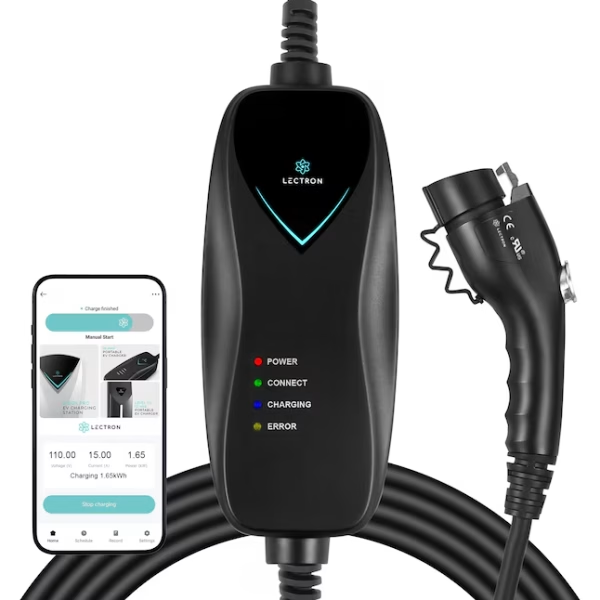
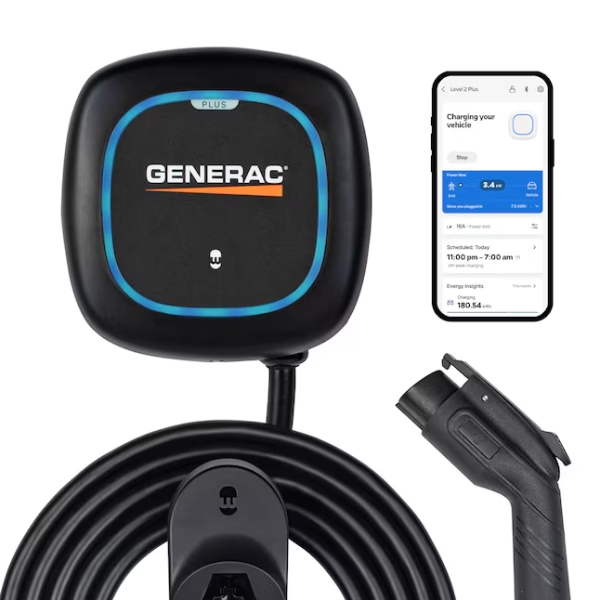
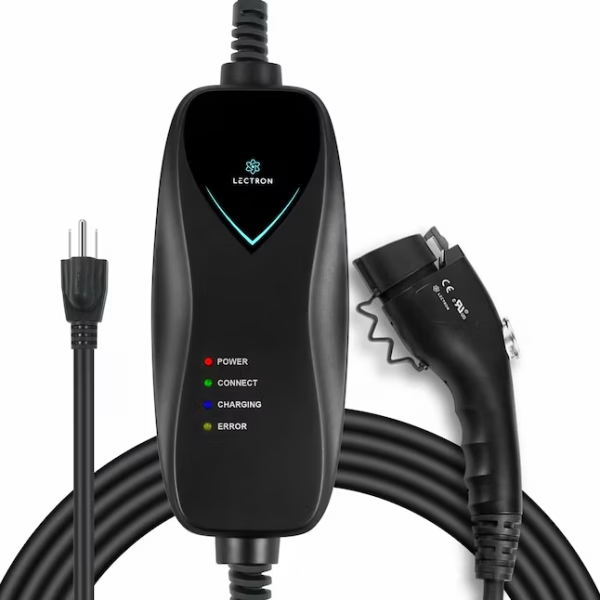
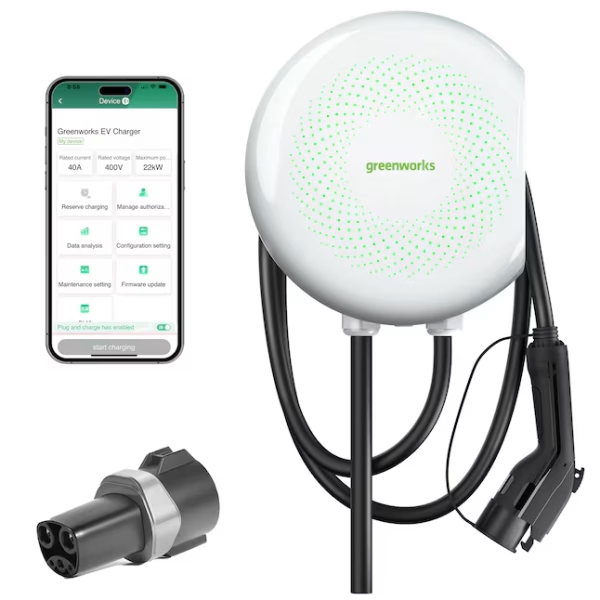
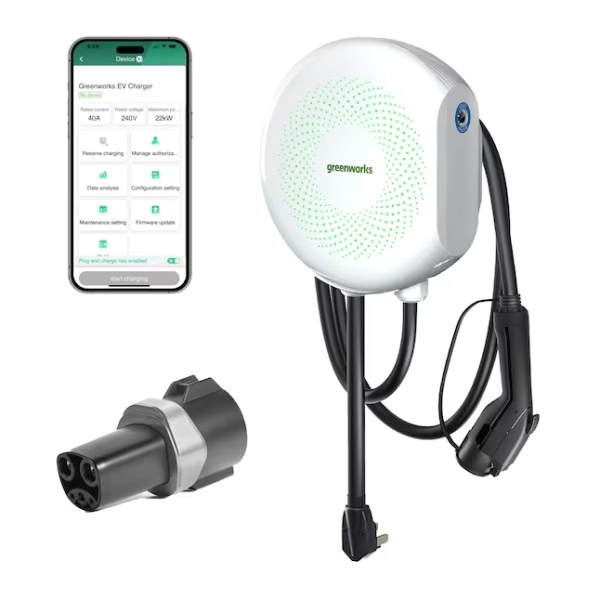
The majority of home EV chargers sold today (including Tesla Wall Connector, ChargePoint Home Flex, Grizzl-E, and JuiceBox) are rated at 48 amps, which is the maximum allowed on a 60-amp circuit under the 80% rule. This configuration provides the fastest Level 2 home charging speed and is the setup we see most frequently. The recommended wiring for this configuration is 6 AWG copper wire (NM-B for indoor, UF-B for underground, THHN in conduit), a 60-amp double-pole breaker, and a dedicated circuit with no other loads.
Wire Type Selection
For indoor runs from the panel to a garage-mounted charger, use 6/2 NM-B with ground (for hardwired 240V-only chargers) or 6/3 NM-B with ground if the charger requires a neutral conductor. For runs through conduit (common for exposed garage installations), use individual 6 AWG THHN/THWN-2 conductors. For underground runs to a detached garage or outdoor charging post, use 6 AWG UF-B cable for direct burial or 6 AWG THWN-2 in PVC conduit.
Voltage Drop for Garage and Outdoor Installations
EV charger circuits are particularly susceptible to voltage drop issues because they draw high amperage continuously and are often located in garages that can be 50 to 100+ feet from the main electrical panel. At 48 amps on 6 AWG copper, voltage drop reaches 3% at approximately 65 feet (one way). For runs beyond 65 feet, upgrade to 4 AWG copper to keep voltage drop within NEC recommendations. Low voltage at the charger can reduce charging speed, trigger charger faults, and potentially shorten the charging equipment lifespan.
Panel Capacity
A 60-amp EV charger circuit represents a significant load on your electrical panel. Verify that your panel has capacity for the additional breaker and the additional load. In some homes, especially older properties with 100-amp or 150-amp service, adding a 60-amp EV circuit may require a panel upgrade or a load management device. Your electrician can perform a load calculation to determine if your existing panel can support the charger without exceeding the service capacity.
IB Lighting stocks 6 AWG and 8 AWG wire in NM-B, UF-B, and THHN configurations for EV charger installations. Call (800) 674-9019 for pricing and bulk availability, or shop our electrical wire selection online.