
















Generac vs Cummins Home Standby: Honest 2026 Expert Guide


Generac vs Cummins Home Standby: Honest 2026 Expert Guide
🕑 {{READ_TIME}} min read Updated: {{UPDATED}} Table of Contents Generac vs Cummins Home Standby: The Quick Verdict How Do the Generac and Cummins Lineups Compare? Air-Cooled Size Ladders...

- Generac vs Cummins home standby comes down to size range, warranty structure, climate, and how close an authorized service provider sits.
- Cummins air-cooled models stop at 20kW, while Generac’s Next Generation air-cooled lineup runs from 10kW to 28kW.
- Both brands use roughly 1,000cc air-cooled twins at 3,600 rpm in their residential models, so engine claims deserve scrutiny.
- Cummins covers generator parts for five full years, while Generac narrows to engine and alternator parts in years four and five.
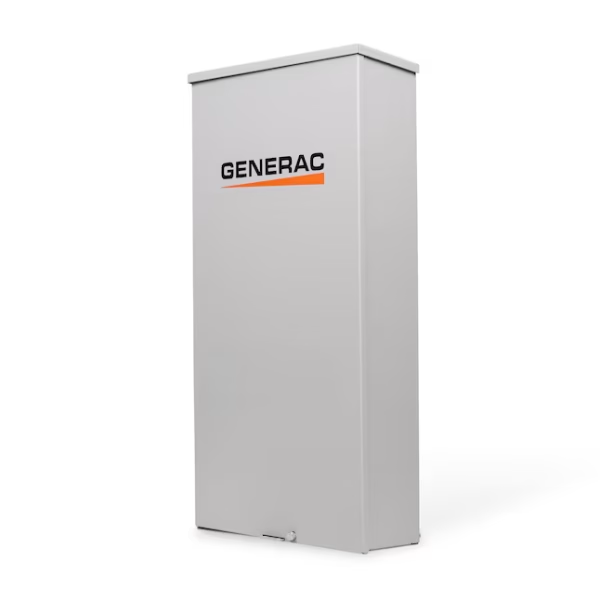
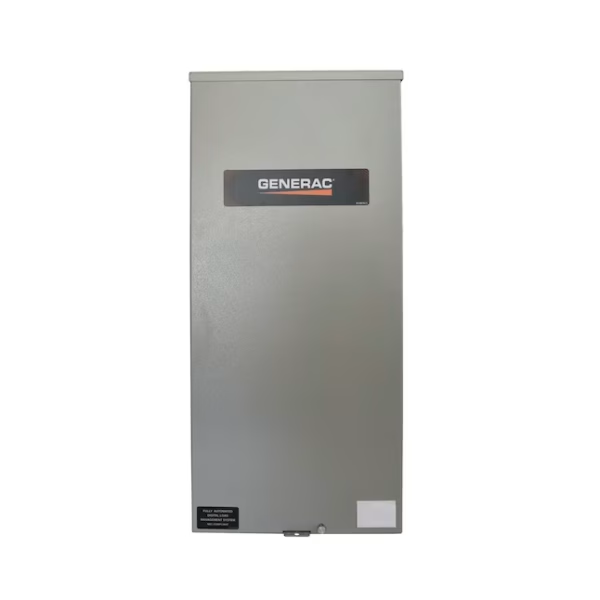
- Generac’s bundled transfer switch carries a 5-year limited warranty, compared with a 2-year limited warranty on Cummins RA switches.
Generac vs Cummins home standby is a closer contest than most guides suggest. Cummins wins on rated quiet, cold-weather models, and five-year parts coverage. Generac wins on size range, transfer switch warranty, built-in cellular monitoring, and service access. The right pick depends on your home’s size, climate, and nearest authorized service provider.
Founded in 2013 by a licensed Master Electrician, IB Lighting carries both brands, so this comparison has no single-brand agenda. We ship Generac Next Generation units and Cummins Quiet Connect models nationwide. The category is still young: Generac estimates only about 6.5 percent of its addressable U.S. homes have a standby generator. (Generac 10-Q, 2025) That means most buyers are choosing for the first time. Below, we compare published specifications and warranty documents, not marketing claims.
Generac vs Cummins Home Standby: The Quick Verdict
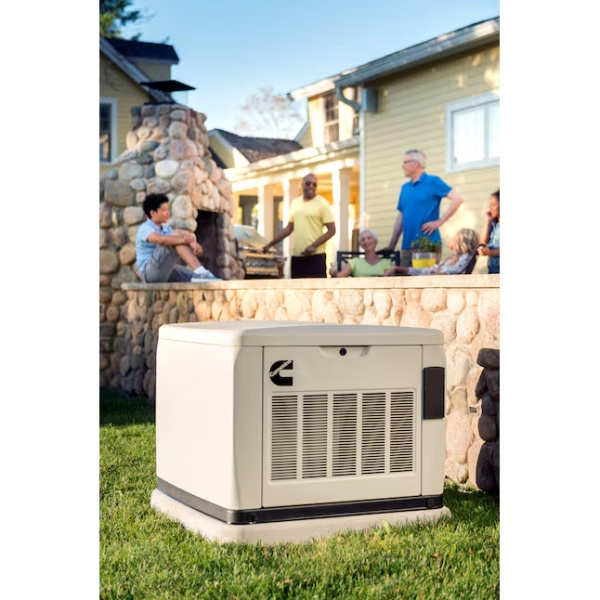
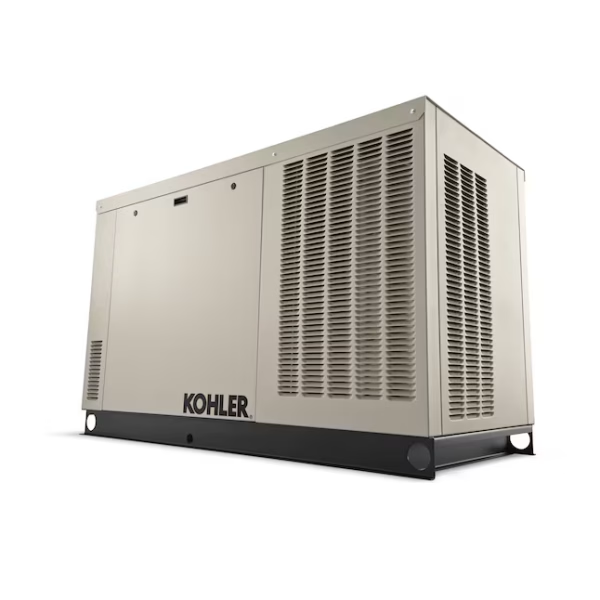
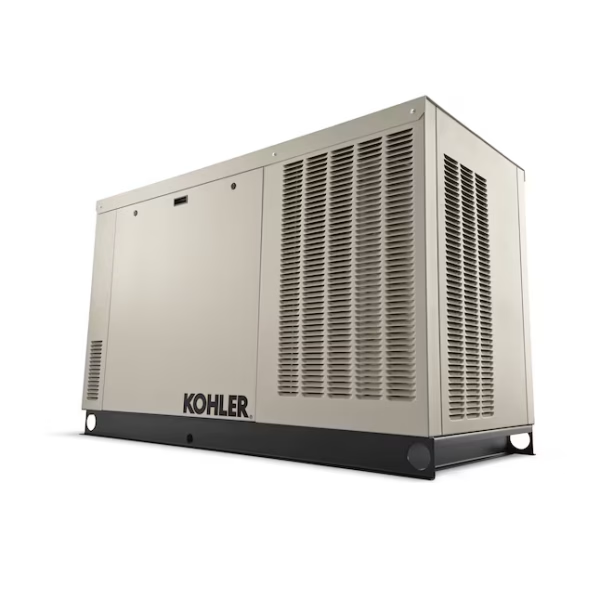
The Generac vs Cummins home standby decision usually lands this way: Cummins for quiet, cold climates, and longer parts coverage, Generac for size choice and easier ownership. Cummins rates its RS20A at 65 dB(A) at 23 feet under normal load, while Generac rates its 22 to 28kW Next Generation units at 67 dB(A). Cummins also sells extreme-weather versions rated to -40°F. However, Cummins air-cooled models top out at 20kW, which shapes every Generac vs Cummins home standby choice above that size.
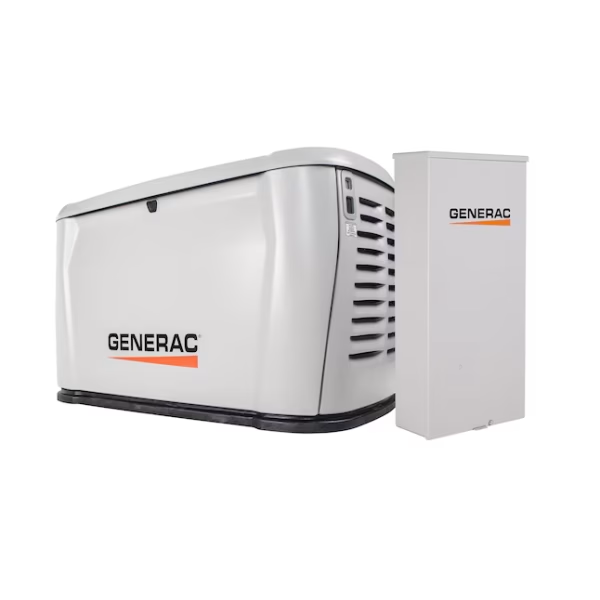
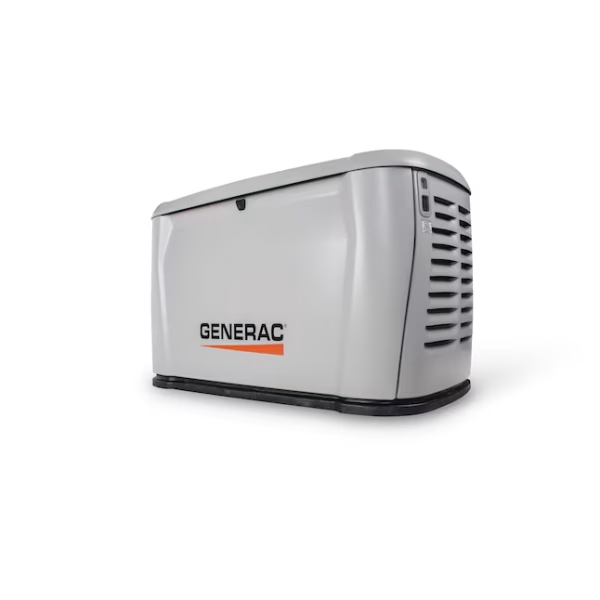
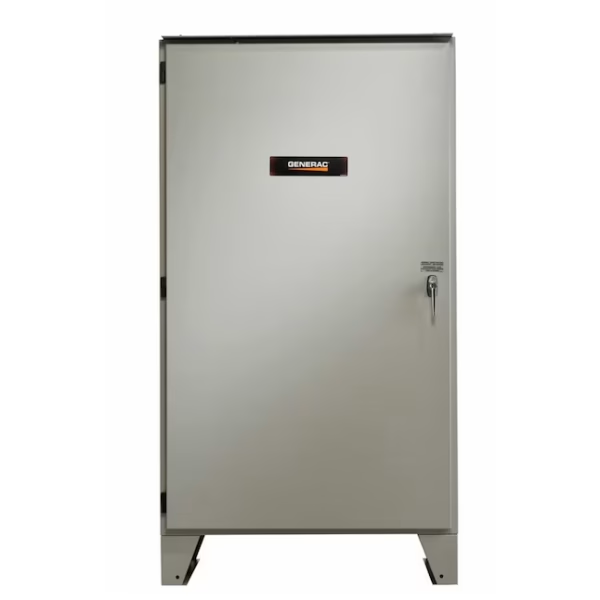
Generac covers more ground. Its Next Generation air-cooled line runs from 10kW to 28kW, includes cellular monitoring as standard, and bundles a 200-amp transfer switch under the same 5-year limited warranty. In contrast, Cummins RA transfer switches carry a 2-year limited warranty. So neither brand wins everywhere. The table below compares the most commonly cross-shopped pair: the Generac 22kW and the Cummins RS20A.
| Specification | Generac 22kW (7260) | Cummins RS20A |
|---|---|---|
| Rated output, LP / NG | 22kW / 21kW | 20kW / 18kW |
| Rated amps at 240V, LP / NG | 92 / 88 A | 83.3 / 75 A |
| Engine | G-Force 1000, 997cc twin, 3,600 rpm | QSJ999G, 999cc V-twin, 3,600 rpm |
| Sound at 23 ft, normal load | 67 dB(A) | 65 dB(A) |
| Cold weather | Battery and oil heaters recommended below 32°F | 0°F standard; RS20AE rated to -40°F |
| Generator warranty | 5-year limited, tiered coverage | 5-year or 2,000-hour limited |
| Transfer switch warranty | 5-year limited (bundled 200A) | 2-year limited (RA series) |
| Remote monitoring | Cellular standard, plus Wi-Fi and Bluetooth | Cloud Connect app |
| Clearance to home | 18 inches | 18 inches |
Next, the lineups themselves explain why size alone can settle the choice.
How Do the Generac and Cummins Lineups Compare?
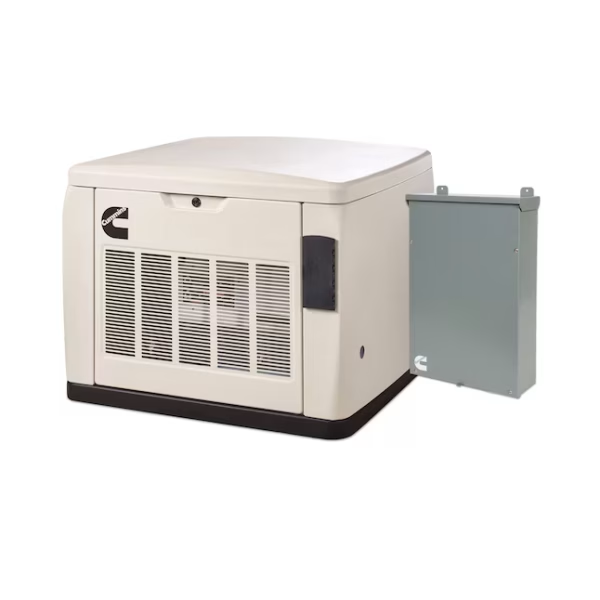
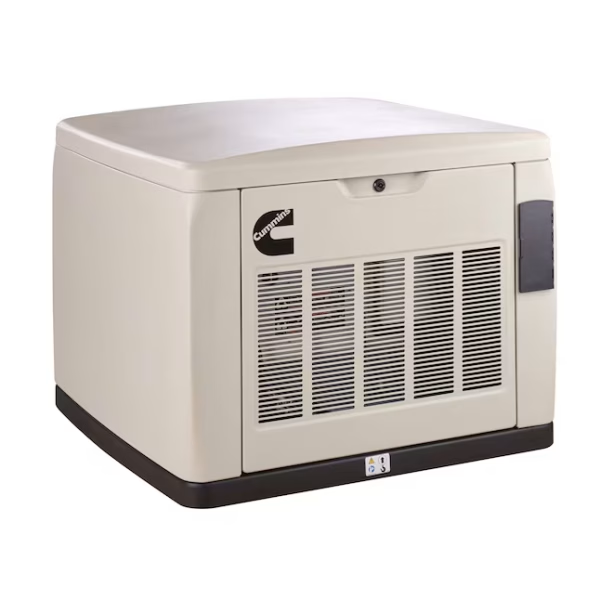
The lineups differ most at the top of the air-cooled range. Cummins lists three air-cooled Quiet Connect models on its official product finder: the RS13A, RS17A, and RS20A. Above that, the lineup jumps to liquid-cooled models starting with the RS25. Generac, by contrast, builds air-cooled units from 10kW through 28kW. According to Generac’s latest proxy statement, its Next Generation home standby generators began shipping in the second half of 2025, including the market’s first 28kW air-cooled unit. (Generac, 2026)
That gap matters for most whole-home buyers. A home that needs 22kW to 26kW for central air and electric appliances has several Generac air-cooled options. With Cummins, the same home must stretch a 20kW unit with load management. Otherwise, it steps up to a liquid-cooled model, which is larger and often costs more to install. Consequently, many Generac vs Cummins home standby comparisons are really decided by the size the house needs.

Air-Cooled Size Ladders Side by Side
The size ladders line up roughly one step apart. At the small end, the Generac 10kW and the Cummins RS13A both target essentials-focused homes. Notably, the RS13A delivers 13kW on either fuel, while the Generac 10kW drops to 9kW on natural gas.
In the middle, the Generac 14kW and 18kW sit against the Cummins RS17A and RS20A. At the top, only Generac offers 22kW, 24kW, 26kW, and 28kW air-cooled units. IB Lighting carries the Cummins RS13A and the Generac 7321 10kW for the small end of that ladder.
| Size tier | Generac | Cummins |
|---|---|---|
| Essentials | 10kW (10kW LP / 9kW NG) | RS13A (13kW LP / 13kW NG) |
| Most of the home | 14kW and 18kW | RS17A and RS20A |
| Whole home, larger HVAC | 22kW, 24kW, 26kW, 28kW | Liquid-cooled RS25 and up |
With the lineups mapped, the next question is whether the engines differ as much as the marketing implies.
Is Cummins Really More Commercial-Grade Than Generac?
What most guides get wrong: many comparisons describe Cummins residential generators as commercial-grade machines and Generac as a consumer brand. In the air-cooled class, the published specs tell a different story. Cummins lists the RS13A, RS17A, and RS20A with the QSJ999G, a 999cc air-cooled V-twin that runs at 3,600 rpm. Generac lists its 22 to 28kW Next Generation units with the G-Force 1000, a 997cc twin that also runs at 3,600 rpm.
In other words, the Generac vs Cummins home standby engine comparison in this class is close to even on paper. Both are purpose-built, air-cooled twins of nearly identical displacement and speed. Instead, the real differences show up in the details: enclosure design, controls, cold-start prep, and warranty terms. Of course, that does not make the brands identical. However, it does mean engine pedigree alone is a weak reason to pay more for either one. Review both engines in the Cummins RS13A to RS20A spec sheet and the Generac 22 to 28kW spec sheet.

Where Cummins Liquid-Cooled Models Pull Ahead
The commercial-grade reputation fits Cummins much better above 20kW. Its RS25, RS30, and RS36 models use a liquid-cooled 2.4-liter inline four-cylinder engine at 1,800 rpm, according to multiple Cummins distributors. Lower engine speed usually means less wear per hour and a deeper, quieter sound. These models are also marketed for cold starts down to -40°F.
Generac offers its own liquid-cooled line for large homes, so both brands compete there too. Still, if you already need a liquid-cooled generator, Cummins’ heavy-equipment heritage becomes a more meaningful factor. For homes in the 22 to 28kW range, by contrast, Generac’s air-cooled units avoid that step entirely. Our Generac 22kW to 28kW collection shows every option in that tier.
Because engines are close in the air-cooled class, warranty terms carry more weight than most buyers expect.
Which Brand Has the Better Warranty?
Neither warranty is better in every way; they protect different things. Both brands list a 5-year limited warranty on their air-cooled generators, but the coverage inside those five years differs. Generac’s air-cooled warranty covers parts, labor, and limited travel in years one and two, then parts only in year three. In years four and five, it covers major components only, meaning the engine short block and the alternator rotor and stator. Cummins, by comparison, covers parts for all five years or 2,000 hours, with labor and travel for the first two.
Transfer switch coverage flips the advantage. Generac’s spec sheet lists a 5-year limited warranty for both the generator and the transfer switch in bundled models. Meanwhile, Cummins RA-series transfer switches carry their own 2-year limited warranty, per product listings from authorized distributors such as Norwall. Therefore, compare the whole system, not just the generator. Read the terms directly in Generac’s 5-year air-cooled warranty and Norwall’s summary of Cummins warranty terms.
| Coverage | Generac air-cooled | Cummins air-cooled |
|---|---|---|
| Years 1 to 2 | Parts, labor, limited travel | Parts, labor, travel |
| Year 3 | Parts only | Parts only |
| Years 4 to 5 | Engine short block and alternator only | Parts (5 years or 2,000 hours) |
| Transfer switch | 5-year limited (bundled models) | 2-year limited (RA series) |
| Extended plans | Available through service providers | Available through service providers |

Comparing Generac and Cummins for your home right now?
Send us your load list, fuel type, and ZIP code. Our electrician-led team carries both brands and will match the right unit. Talk to IB Lighting.
Which Is Quieter and Better in Cold Weather?
Cummins holds a small edge on rated noise and a clearer edge on cold-weather options. Cummins rates the RS13A, RS17A, and RS20A at 65 dB(A) at 23 feet under normal load. Generac rates its 22 to 28kW Next Generation units at 67 dB(A) under the same conditions, while its 10kW model comes in at 61 dB(A). For weekly exercise, Generac offers a low-speed Quiet-Test mode at 55 dB(A). Cummins uses a patented crank-only mode that runs diagnostics without starting the engine.
In contrast, cold weather is where Cummins stands out. Distributors list the standard air-cooled Cummins models as ready to operate at 0°F, and the extreme-weather E models, such as the Cummins RS20AE, at -40°F. Generac, meanwhile, recommends its battery heater and oil heater accessories where temperatures regularly fall below 32°F. It also recommends a breather heater below 0°F. Both brands can work in cold climates, but Cummins packages the extreme-cold version as a distinct model.

Noise and cold matter daily, but big loads decide whether either Generac vs Cummins home standby option can do the job at all.
Which Handles Air Conditioning and Big Loads Better?
Both brands handle a 5-ton central AC in their 20kW class, but they document it differently. Cummins publishes motor starting capacity directly: 40 kVA for the RS20A, 34 kVA for the RS17A, and 26 kVA for the RS13A, each at a 30 percent voltage dip. Generac lists motor starting ability among its test criteria and uses displaced phase excitation to maximize motor starting. However, the Next Generation spec sheet does not publish a kVA figure.
Meanwhile, load management works much the same way on both sides today. Cummins builds intelligent load management logic into its air-cooled controllers for up to four loads, though distributors note the load control kits are sold separately. Likewise, Generac’s Next Generation transfer switch lists energy management as sold separately, using ecobee by Generac thermostats or Generac Load Managers. So plan the management hardware into your budget with either brand. For AC-specific sizing, see our best generator for 5 ton AC guide.

Pro tip: In any Generac vs Cummins home standby quote, ask the installer to show the load calculation, not just the kilowatt rating. A 20kW unit with load management can outperform a larger unit without it, and the calculation reveals which loads actually run together.
Beyond raw output, day-to-day ownership depends on how you monitor the system.
How Do Monitoring and Smart Home Features Compare?
Generac leads on built-in connectivity and smart home integration. Its Next Generation spec sheet lists cellular connectivity as standard, with Wi-Fi and Bluetooth capabilities, through the Mobile Link app. Cellular matters, since it keeps reporting even when your home internet goes down with the grid. Generac also ties its generators into a broader home energy ecosystem, including ecobee thermostats, PWRcell batteries, and an LP tank fuel monitor.
Cummins includes remote monitoring through its Cloud Connect app. Owners can check generator status, program exercise periods, and start or stop the unit remotely. For most homeowners, either system covers the essentials. However, if you want your generator, thermostat, battery storage, and propane level in one ecosystem, Generac offers the more integrated path. If you simply want status alerts and remote control, Cummins covers that well. So in the Generac vs Cummins home standby matchup, monitoring favors Generac only if you want the wider ecosystem.

Monitoring tells you when something is wrong. Service access decides how fast it gets fixed.
Why Service Access Decides Generac vs Cummins Home Standby
Service access often decides the Generac vs Cummins home standby question in practice. Both brands require warranty work through authorized service providers. Generac’s warranty states that repairs must be performed by an authorized service provider, and Cummins requires notifying a Cummins Power Generation distributor or service provider. So a generator is only as good as the nearest technician certified to fix it. As a result, service coverage in your area is a first-order factor, not an afterthought.
In fact, installers often report that Generac has the widest residential service network. Cummins service coverage is strong in some regions and thin in others. Before choosing, search each brand’s service locator for your ZIP code and note the drive time. Ask how quickly each service provider responds during regional outages, when demand peaks. Also note that Cummins warranty travel covers up to 300 miles and six hours round trip from the nearest service provider, per Norwall’s warranty summary. Distance still matters after year two.

With every factor on the table, a short framework brings the decision together.
The POWER Match for Choosing Your Brand
The POWER Match is IB Lighting’s five-point method for settling Generac vs Cummins home standby for a specific home. It weighs the factors that actually change the answer, in the order they matter. Our electrician-led team uses the same sequence when buyers ask us to compare both brands. Because we carry both, the framework favors whichever brand fits the house rather than a preferred label.
First, start with power, since it can rule out a brand at once. Next, weigh outdoor climate and warranty priorities. After that, consider the monitoring ecosystem you want. Finally, check repair access, which can override everything above it. When all five point the same way, the choice is clear. When they split, the interactive finder below weighs them for you. In our experience, most Generac vs Cummins home standby decisions settle by the third letter.
- Power: above 20kW air-cooled, only Generac offers a model.
- Outdoor climate: regular sub-zero winters favor Cummins extreme-weather models.
- Warranty: Cummins leads on late-term generator parts, Generac on the transfer switch.
- Ecosystem: Generac integrates cellular monitoring, thermostats, and batteries.
- Repair access: choose the brand with an authorized service provider near your home.

If you want the short version of Generac vs Cummins home standby, the lists below summarize when each brand wins.
When Should You Choose Generac or Cummins?
Choose Generac when your home needs more than 20kW air-cooled, when you want cellular monitoring and smart home integration, or when Cummins service is scarce near you. Choose Cummins when quiet operation and five-year parts coverage matter most, when you face regular sub-zero winters, or when a trusted Cummins service provider covers your area. Both brands install as close as 18 inches from the home, and both handle a 5-ton AC in their 20kW class.
Price is a separate conversation, because pricing varies by model, bundle, and installer. IB Lighting shows final pricing securely in cart, so compare complete systems rather than headline generator prices. Include the transfer switch, load management hardware, pad, and installation in each quote. Then weigh those totals against the warranty and service differences above. The best value is the system that fits your home and stays serviceable for 20 years.
Choose Generac when:
- Your home needs 22kW to 28kW without a liquid-cooled unit.
- You want cellular monitoring that works without home internet.
- You plan to add ecobee thermostats, batteries, or an LP tank monitor.
- Cummins-authorized service is far from your home.
Choose Cummins when:
- You want the quietest rated operation in the 13 to 20kW class.
- Your winters regularly fall below 0°F.
- You value generator parts coverage through year five.
- You want a published motor starting kVA rating before you buy.
Still torn between Generac and Cummins?
Call (800) 674-9019 with your load list and ZIP code. We carry both brands and will recommend the one that fits your home. Contact IB Lighting
Frequently Asked Questions
Is Cummins better than Generac for home standby?
Not across the board. In the Generac vs Cummins home standby comparison, Cummins leads on rated quiet, extreme-weather models, and five-year generator parts coverage. Generac leads on air-cooled sizes up to 28kW, a 5-year transfer switch warranty, standard cellular monitoring, and service network reach. The better choice depends on your home’s size, climate, and nearest authorized service provider.
Is a Cummins generator quieter than a Generac?
On published ratings, slightly. Cummins rates its RS13A, RS17A, and RS20A at 65 dB(A) at 23 feet under normal load. Generac rates its 22 to 28kW Next Generation units at 67 dB(A) and its 10kW at 61 dB(A). Installation location, walls, and landscaping often change the sound you actually hear more than those small differences do.
Does Cummins make an air-cooled generator larger than 20kW?
No. Cummins lists three air-cooled Quiet Connect models, the RS13A, RS17A, and RS20A. Above 20kW, the lineup moves to liquid-cooled models such as the RS25, RS30, and RS36, which use a 2.4-liter engine at 1,800 rpm. Generac, by contrast, offers air-cooled units at 22kW, 24kW, 26kW, and 28kW.
What warranty do Generac and Cummins offer?
Both offer a 5-year limited warranty on air-cooled generators. Generac covers parts, labor, and limited travel for two years, parts in year three, and only engine and alternator parts in years four and five. Cummins covers parts for five years or 2,000 hours, with labor and travel for two. Generac’s bundled switch carries five years; Cummins RA switches carry two.
Which brand is better for cold climates?
Cummins has the clearer cold-weather lineup. Its standard air-cooled models are listed as ready to operate at 0°F, and its extreme-weather E models, such as the RS20AE, are rated to -40°F. Generac units also run in cold climates, but Generac recommends battery, oil, and breather heater accessories for sustained low temperatures.
Can both Generac and Cummins run a 5-ton AC?
Yes, in their 20kW class and above. Cummins publishes 40 kVA of motor starting capacity for the RS20A at a 30 percent voltage dip. Generac tests motor starting ability and uses displaced phase excitation to maximize it. With either brand, load management helps when the AC shares the generator with other large loads.
Which generator brand fits my home?
Start with size in any Generac vs Cummins home standby decision: above 20kW air-cooled points to Generac. Then weigh climate, warranty priorities, monitoring preferences, and service access. Regular sub-zero winters and nearby Cummins service favor Cummins, while scarce Cummins service favors Generac. The interactive finder in this guide weighs all four factors and recommends a brand in under a minute.
Is Generac easier to service than Cummins?
In most areas, yes, because installers consistently report that Generac has the widest residential service network. Both brands require warranty repairs through authorized service providers, so the nearest certified technician matters. Search each brand’s service locator for your ZIP code and compare drive times before you buy.
When should I hire a professional to choose a standby generator?
Always involve a licensed electrician for load calculations, transfer switch selection, and permits, and a licensed gas contractor for fuel piping. Brand choice follows those numbers. IB Lighting’s electrician-led team carries both Generac and Cummins and can match either to your home. Contact our team for a recommendation.
Conclusion
Generac vs Cummins home standby has no universal winner. First, size decides many cases, since Cummins air-cooled models stop at 20kW while Generac runs to 28kW. Second, the warranties protect different things: Cummins covers more generator parts late in the term, and Generac covers the transfer switch longer. Third, Cummins leads on rated quiet and extreme-cold models, while Generac leads on cellular monitoring and service reach. Run the POWER Match, check service access in your ZIP code, and compare complete installed systems.
Ready to choose your home standby generator?
Shop Generac and Cummins with expert support before and after purchase. Free Freight Insurance Included. See your exclusive price in cart. Shop Home Standby Generators
🚚 Nationwide Delivery | 🛡️ Free Freight Insurance Included | 🏠 Family-Owned and Operated | 🔒 Secure Checkout. Final pricing available in cart due to manufacturer advertising policies.
This article was last reviewed and updated in {{UPDATED}} to reflect current Generac and Cummins specifications, warranty terms, and Generac vs Cummins home standby buying considerations. Explore our Expert Advice library, the IB Lighting shop, or the IB Lighting home page. Generac, Cummins, Quiet Connect, Mobile Link, and ecobee are trademarks of their respective owners. IB Lighting is an independent reseller.


