

















How Long Does a Standby Generator Last? A Reliable Expert Answer


How Long Does a Standby Generator Last? A Reliable Expert Answer
Key Takeaways A standby generator typically lasts 10,000 to 30,000 engine hours, or 20 to 40 years for most residential owners with proper maintenance. Generac's standard 5-year warranty...
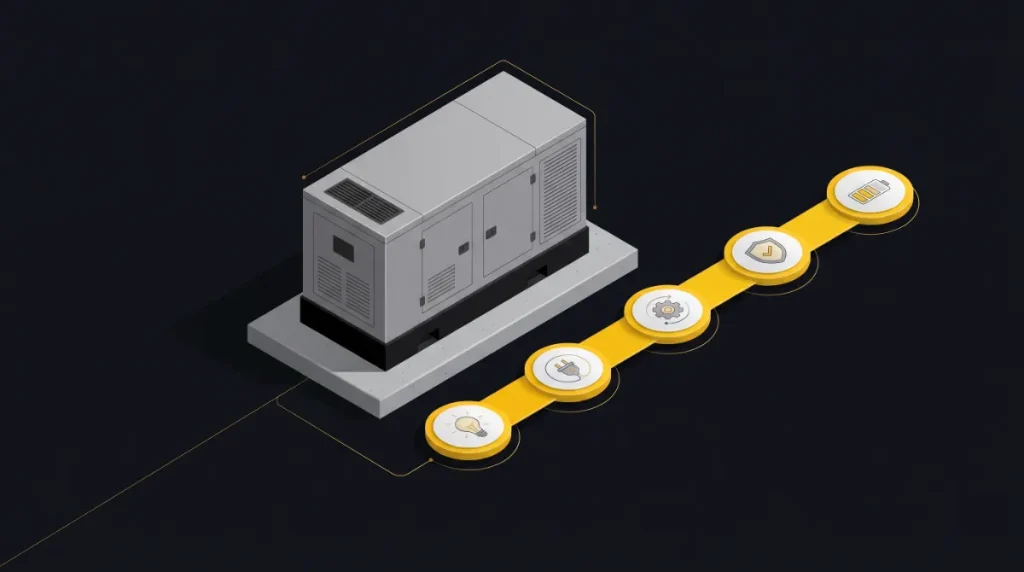
- A standby generator typically lasts 10,000 to 30,000 engine hours, or 20 to 40 years for most residential owners with proper maintenance.
- Generac’s standard 5-year warranty caps at 2,000 hours, which is roughly 20 to 40 years of normal residential exercise and outage use.
- Annual professional service plus the right maintenance kit at every 200-hour interval is the single biggest lifespan multiplier you have.
- Six end-of-life signs (hard starting, oil consumption, voltage drift, smoke, vibration, fault codes) tell you when replacement planning should start.
- Replacement on your own schedule costs less than emergency replacement during storm season when lead times stretch to several months.
A standby generator typically lasts 10,000 to 30,000 engine hours, which translates to 20 to 40 years for most residential owners running 25 to 100 hours per year between outages and weekly exercise mode. How long a standby generator lasts in practice depends on maintenance discipline more than any other factor.
Our founder, Imad Boussi, is a licensed Master Electrician who has specified, commissioned, and inspected standby generator installations for decades. After helping thousands of families through our Dearborn Heights warehouse, the single most common question we get after the cost question is the lifespan question. The honest answer is more useful than the popular one. This guide gives you the actual math, the manufacturer-data backbone, and the line-by-line decisions that determine whether your unit hits the high end or the low end of the range.
How Long Does a Standby Generator Last in Hours vs Years?
A standby generator lasts 10,000 to 30,000 engine hours, or 20 to 40 calendar years for typical residential use. The wide range exists because manufacturers measure lifespan in engine hours, but homeowners experience it in calendar years. The conversion between the two depends entirely on how many hours per year the unit actually runs.

Here is the math that resolves the confusion you see across most online guides. If your air-cooled 22kW Generac is rated for 10,000 engine hours and you run it for 50 hours per year (typical residential use, including weekly 12-minute exercise mode plus an annual outage or two), you get 200 years of theoretical lifespan. Obviously you do not live 200 years, and the unit will not either. Other factors retire it long before the engine itself does: corrosion, electronic component aging, vibration fatigue on mounting hardware, weather seal degradation.
The realistic ceiling is 20 to 40 calendar years for residential units, regardless of how many engine hours are technically left. Larger liquid-cooled units stretch the upper end of that range because their build quality, cast iron blocks, and serviceable component design are closer to commercial standards. Smaller air-cooled units sit lower in the range because plastic enclosures and aluminum components age out before the engine block does.
So when someone asks “how long does a standby generator last,” the most accurate answer is two numbers: 10,000 to 30,000 engine hours of mechanical life, and 20 to 40 years of practical residential service. Whichever ceiling you hit first determines retirement. For almost every residential owner, calendar years run out before engine hours do, and that is by design.
Next, the factors that decide which end of those ranges you actually hit.
What Actually Determines How Long a Standby Generator Lasts
Four variables explain almost all of the spread between a generator that fails at year 12 and one that runs strong at year 35. Build quality and engine type set the starting point. Annual run hours, maintenance discipline, and operating climate move the unit up or down from there.

Generator Build Quality and Engine Type
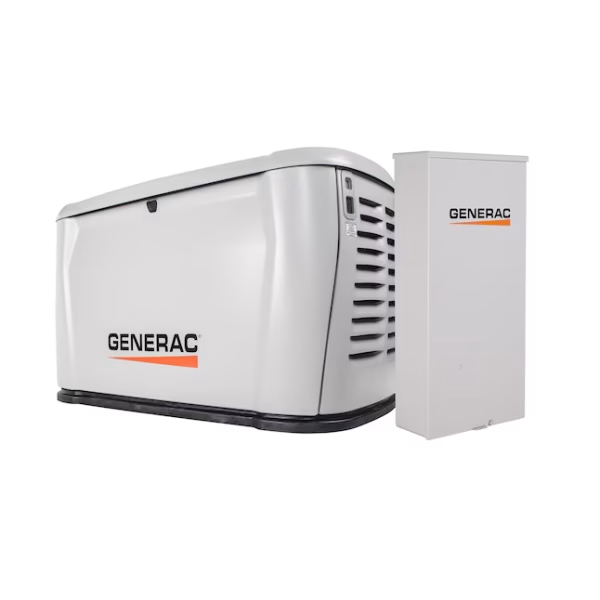
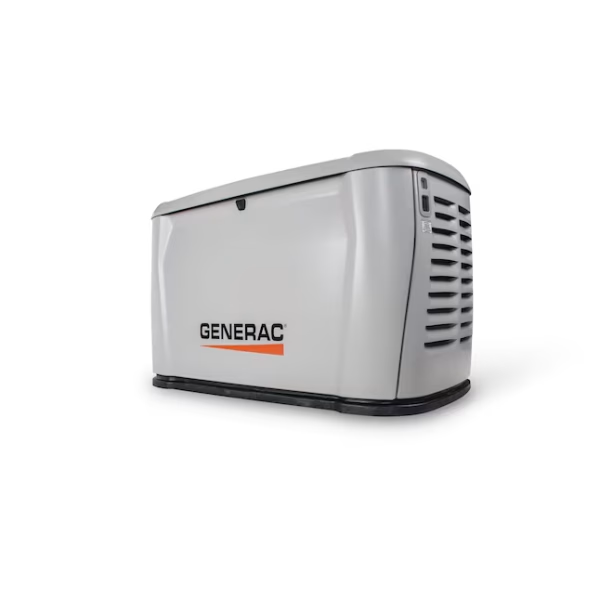
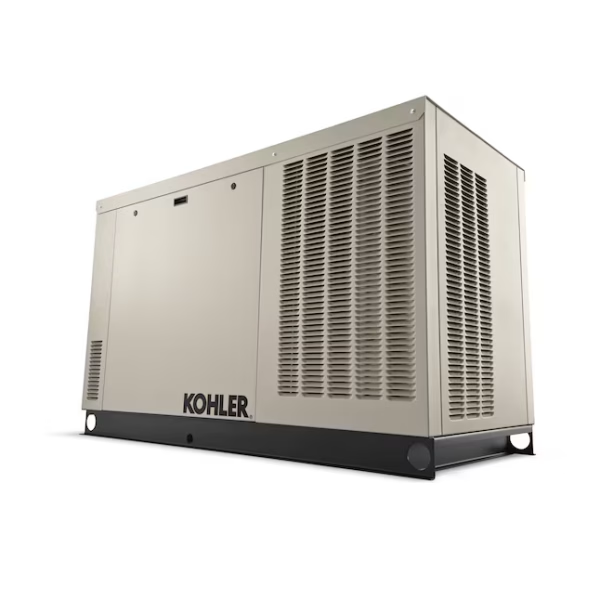
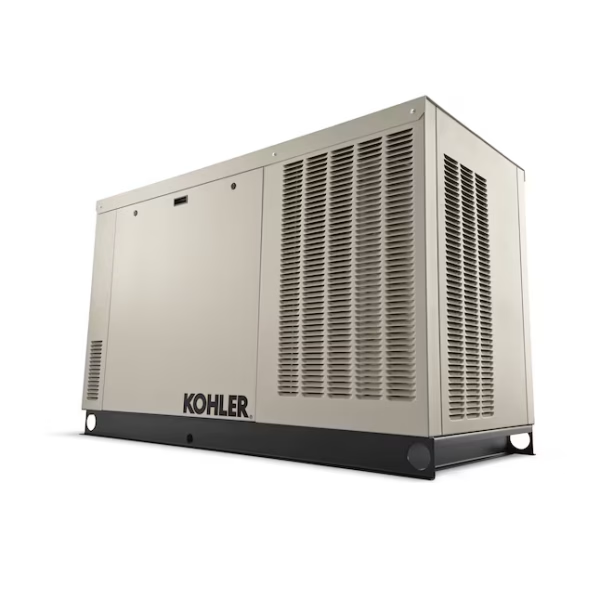
Air-cooled engines (Generac 8kW through 22kW residential, Kohler 14kW through 26kW residential) are the workhorses of the residential market. They use aluminum heads and steel cylinder sleeves on a V-twin or single-cylinder platform. Lifespan ceiling: roughly 10,000 to 15,000 engine hours. Liquid-cooled engines (Generac 24kW and above, Kohler 32kW and above, every Cummins QuietConnect, Generac Protector diesel line) use cast iron blocks, full coolant loops, and commercial-grade components. Lifespan ceiling: 20,000 to 30,000 engine hours and beyond. The price difference between air-cooled and liquid-cooled is meaningful, but the lifespan difference is too.
Annual Run Hours and Use Pattern
Most American homes experience 4 to 8 hours of utility outage per year on average, plus weekly exercise mode at 10 to 15 minutes per cycle. That adds up to 13 to 21 hours per year baseline. In hurricane and ice-storm regions, total annual run hours can climb to 100 or more. In frequent-outage rural zones it can reach 250 or higher. The math is straightforward: a generator with a 10,000-hour rating running 25 hours per year lasts 400 calendar years on the engine alone (calendar life retires it first), while the same generator running 250 hours per year hits its mechanical ceiling in 40 years.
Maintenance Discipline
Maintenance is the single largest controllable factor in standby generator lifespan, and it is the factor most homeowners underestimate. A unit on a professional annual service plan with the correct manufacturer maintenance kit at every 200-hour interval routinely hits 30 to 40 years. A unit that goes unmaintained for 3 to 5 years can fail outright in under 10 years total. The difference is not subtle. Warranty registration only stays valid with documented maintenance, which means the lifespan multiplier and the warranty multiplier are the same multiplier. We will spend a full section on the schedule that gets you to the upper end of the range.
Generac Warranty vs Generator Lifespan: The 2,000-Hour Cap Explained
Generac’s standard residential warranty is described as 5 years. The full terms tell a longer story. Per the manufacturer’s published warranty statement, coverage runs “five (5) years or two-thousand (2,000) hours, whichever occurs first.” Kohler’s residential warranty uses a similar dual cap. This number confuses homeowners until you put it next to the lifespan math.

At typical residential use of 25 to 100 hours per year, 2,000 hours equals 20 to 80 years of calendar time. The warranty hour cap will almost never be reached by a residential owner. The 5-year cap is the one that triggers in practice. Generac knows this. The hour cap exists to protect the manufacturer from commercial-use scenarios where someone runs a residential air-cooled unit as prime power for a job site or remote facility. The full Generac warranty terms spell out the conditions.
Extended warranty programs from Generac add 7-year and 10-year coverage windows. Both keep the 2,000-hour cap. For a residential owner, that means 10 years of full parts-and-labor coverage is genuinely realistic. Generac’s homeowner resources include extended warranty registration details. Extended coverage must be purchased within 12 months of initial activation.
Pro tip: The extended warranty is the closest thing to a true 10-year service contract you can get on a residential standby generator. The math: the extended cost is typically less than two unbudgeted out-of-warranty service calls would run. We have customers who skipped it and regretted it, and we have customers who bought it and never used it. Both are happy with their choice when we ask later.
The lifespan math sits well past the warranty math. The warranty covers years 1 through 5 (or 10 with extension). The lifespan stretches another 15 to 30 years past warranty expiration. That uncovered window is where maintenance discipline earns its weight.
The Standby Generator Maintenance Schedule That Actually Extends Lifespan
The standby generator maintenance schedule is not complicated, but it is non-negotiable if you want the upper end of the lifespan range. Here is the actual schedule that gets a Generac or Kohler residential unit to 30-plus years.

- Weekly (automatic): Exercise mode runs for 10 to 15 minutes. The Evolution or Nexus controller does this on its own. Confirm it is firing on schedule by checking the controller log monthly. A skipped exercise is the earliest warning that the battery, starter, or starter relay is failing.
- Monthly (visual): Walk-around inspection. Check for rodent nesting (very common, very destructive), oil drips, debris on the air intake screen, and battery terminal corrosion. Two minutes of attention per month prevents most premature failures.
- Every 200 engine hours or 2 years, whichever comes first: Full maintenance kit installation. Oil change, oil filter, air filter, spark plugs, pre-cleaner. The correct maintenance kit part number depends on your unit’s engine size: the Generac 6485 kit covers 20kW and 22kW units with the 999cc engine, the Generac 6176 kit covers 25kW to 30kW units with the 1.5L engine, and the Generac 6915 kit covers 80kW liquid-cooled units. Match the kit to your engine displacement and you can find every Generac maintenance kit in our Generac generator accessories and kits collection.
- Annually (professional service): Load bank test, transfer switch verification, controller firmware update, battery load test, fuel system inspection, all wiring connections torque-checked. Annual professional service typically costs $200 to $500. This is the single highest-ROI maintenance line item.
- Every 2 years (component refresh): Battery replacement. The Duracell SLI26R is the spec for most Generac residential units. A weak battery is the number one cause of failure-to-start during an outage. In cold climates, year 2 is a safer interval than year 3 for replacement.
- Every 3 to 5 years (cold weather kit verification): Engine block heater, battery warmer, oil heater. If your unit was installed without a cold weather kit and you live north of the Mason-Dixon line, this is worth retrofitting. The Generac 7088 cold weather kit handles 48kW 5.4L installs; smaller units use other part numbers, all available in our accessories and kits category. The wrong cold weather kit is worse than none, so part number match matters.
Run this schedule and your standby generator lifespan extends from “average” to “upper bracket.” Skip it and you accelerate end of life by years per missed interval.
Need the right maintenance kit but not sure which part number fits your generator?
Match by kW size and engine displacement. Our team will confirm the exact kit by model. Get a kit recommendation or call (800) 674-9019.
Six Signs Your Standby Generator Is Near End of Life
Generators rarely fail catastrophically without warning. They send signals first. Any one of these alone is not necessarily end of life. Two or more together is a clear signal to start the replacement planning conversation.

- Hard starting or extended crank time. A healthy standby generator fires within 3 to 5 seconds of crank initiation. A unit that takes 8 to 15 seconds, or that requires multiple crank attempts to start, has compression loss, ignition system wear, or starter relay degradation. Compression loss is age-related and not repairable on a residential unit.
- Oil consumption between service intervals. A healthy unit should not lose measurable oil between 200-hour intervals. If you are topping off oil at the dipstick or finding the level visibly below the full mark before the next service, internal seals are worn. Past a certain wear threshold, the repair cost approaches replacement cost.
- Voltage drift under load. A residential unit should hold 240V at the panel within plus or minus 2 percent under typical load. If your sensitive electronics are tripping more often, your inverter air conditioner is short-cycling, or the lights are dimming more than they used to when the AC kicks on, the AVR (automatic voltage regulator) or the alternator brushes are failing.
- Visible smoke at startup or under load. Blue smoke means oil burning past worn rings. White smoke means coolant intrusion (liquid-cooled units) or condensation that should have burned off but is not, indicating low operating temperature from a failing thermostat. Black smoke means rich-running carburetion or fuel system degradation. None of these are good signs at an aging unit.
- Increased vibration or new noises. Standby generators have a characteristic sound at idle and a different characteristic sound under load. New rattles, ticks, or vibration that was not there a year ago point to motor mount failure, valve train wear, or alternator bearing degradation. Bearings are often the first major component to fail mechanically.
- Frequent fault codes on the controller. Modern Evolution and Nexus controllers log faults. Occasional codes are normal. A growing pattern of low-oil-pressure warnings, RPM out-of-range errors, or AVR communication faults is the unit telling you it is wearing out faster than maintenance can keep up.
Pro tip: The controller hour meter is the single most useful data point you have. Note it during every annual service. Trend over time tells you when run hours are accelerating (more outages, more storms) versus when calendar-wear factors are dominating. Both matter for replacement planning, but they point to different timelines.
How to Make a Standby Generator Last Longer
Beyond the maintenance schedule, four ownership habits separate the 20-year units from the 35-year units.

Keep exercise mode running. The weekly 10-to-15-minute exercise is not optional. It circulates oil, warms the engine to operating temperature long enough to burn off condensation, keeps fuel system seals lubricated, and verifies the controller, transfer switch, battery, and starter are all functional. A unit that goes 3 months without exercise can struggle to start when called on. The full transfer sequence we cover in our standby generator operation guide only works if exercise mode has kept every component fresh.
Match maintenance kits to your engine. Generic auto-parts-store oil and filters are not the same specification as a Generac OEM maintenance kit. The OEM kit is engineered for the engine’s tolerances. Synthetic blend oil at the wrong viscosity, or an off-spec air filter, accelerates wear in ways that show up at year 12 instead of year 25. The cost difference is small. The lifespan difference is not. Stock the correct kit ahead of the service interval from our Generac accessories and kits collection.
Protect the unit from environmental wear. Coastal salt air is brutal on aluminum components. Northern winter cycling stresses seals. Rodents nest in stationary equipment year-round (chewed wiring is one of the top three causes of generator failure we see). A simple wildlife screen, a base wrap in cold climates, and a quarterly visual check head off most environmental damage. Read our piece on choosing a home standby generator for the climate-specific feature differences.
Document everything. Keep the hour meter reading, service date, and maintenance kit part number for every service. This documentation matters for warranty claims, resale value, and end-of-life decision making. A unit with 20 years of clean service records sells. A unit with no records does not. The same is true at insurance claim time after a storm-related failure.
Repair or Replace? The Decision Framework
The repair-versus-replace conversation happens at the intersection of three numbers: the unit's age, the repair quote, and the replacement cost.

The 50-percent rule applies here cleanly. If the repair quote exceeds 50 percent of fully installed replacement cost, replacement is the right call. The math behind it: a repair extends the unit by 2 to 4 years on average (the components around the repaired one are still aging at the same rate). A new unit gives you 20 to 40 fresh years. The cost per year of remaining life almost always favors replacement past that threshold.
There are two situations where repair still makes sense above 50 percent. The first is a one-time replacement of a major-but-isolated component (a controller board, an ATS, a starter assembly) when the rest of the unit is well inside its expected life. The second is when storm season is imminent and lead time on a new unit would leave you uncovered for the months that matter most. In those cases, repair as a bridge to a planned replacement is the right move.
For a full cost breakdown on new installations to compare against your repair quote, see our 2026 standby generator installation cost guide. The same MAP-pricing reality applies: equipment is shown securely in cart, and the install side is where the real budget variance lives.
Sitting between repair and replace right now?
Send us your unit's model number, hour meter reading, and the repair quote. Our Master Electrician-founded team will tell you honestly which side of the 50-percent line you are on. Reach out for a real recommendation, no sales pressure.
Frequently Asked Questions
How long does a Generac generator last?
A Generac standby generator typically lasts 10,000 to 30,000 engine hours, which equals 20 to 40 years for most residential owners who run the unit 25 to 100 hours per year between outages and exercise mode. With professional annual service and timely maintenance kit replacements, the upper end of that range is realistic.
How many hours will a standby generator last?
Most manufacturers rate residential standby generators at 10,000 to 30,000 engine hours over the unit's lifetime. Air-cooled units (10kW to 22kW) sit toward the lower end. Liquid-cooled commercial-grade units (36kW and above) sit toward the upper end. Maintenance discipline determines where in that range your specific unit lands.
Do standby generators need to be replaced?
Yes, every standby generator eventually needs replacement. The typical residential unit reaches end of life between year 20 and year 40 depending on size, run hours, and maintenance. Plan replacement on your own schedule rather than waiting for a failure, because emergency replacement during storm season can stretch lead times to several months.
How often should you service a standby generator?
Service a standby generator at least once per year regardless of run hours, plus an additional service every 200 engine hours of operation. For typical residential use (25 to 100 hours per year), annual professional service covers everything. For high-usage installs in frequent-outage zones, every 6 months is the safer interval.
What is the average life of a Generac generator?
The average life of a Generac standby generator is 20 to 30 years for residential air-cooled units (10kW to 22kW) and 25 to 40 years for liquid-cooled larger units. These numbers assume professional annual service, timely maintenance kit installation, and weekly exercise mode. Neglected units can fail in under 10 years.
How do I know if my standby generator is bad?
Six signs indicate a standby generator is reaching end of life: hard starting or extended crank time, oil consumption between services, voltage drift under load, visible smoke at startup, increased vibration or new noises, and frequent fault codes on the controller. Any two of these together warrant a professional inspection.
Can a standby generator last 30 years?
Yes, a standby generator can last 30 years and longer if it runs typical residential hours (25 to 100 per year), receives professional annual service, gets the correct maintenance kit installed at every interval, and operates in a sheltered, dry climate. Liquid-cooled units exceed 30 years more often than air-cooled units. NFPA 110, the standard for emergency and standby power systems, also addresses lifecycle service expectations.
How do I estimate how long my standby generator has left?
Estimate your standby generator's remaining lifespan by checking four inputs: the manufacturer hour rating (typically 10,000 to 30,000 hours), the current engine hour reading on the controller, your annual run hours, and your maintenance history. Divide remaining hours by annual hours for years left. Most residential air-cooled units run 25 to 100 hours per year, giving 20 to 30 years of useful life with discipline.
When should I hire a professional for standby generator service?
Hire a professional for the annual service, the 200-hour maintenance kit installation, and any time a fault code appears on the controller. DIY oil and filter changes are reasonable for hands-on owners. Anything involving the transfer switch, controller, or fuel system needs a licensed electrician. Reach out to our team to get a service recommendation.
Conclusion
How long does a standby generator last? The honest answer is 10,000 to 30,000 engine hours, which equals 20 to 40 years for most residential owners. Where in that range your unit lands depends on four things: build quality, annual run hours, climate, and maintenance discipline. The first two are set when you buy. The last two are set every single year you own it. Stay on the maintenance schedule, watch for the end-of-life signs, and plan replacement on your timeline rather than the storm's.
Ready to either extend your current generator or plan its replacement the honest way?
IB Lighting is a family-owned reseller founded by a licensed Master Electrician. We carry Generac and Kohler standby units, every maintenance kit part number, and the accessory ecosystem that keeps them running for decades. Free freight insurance on every order, nationwide US delivery. Browse Generac home standby generators 10kW to 28kW or talk to our team.