


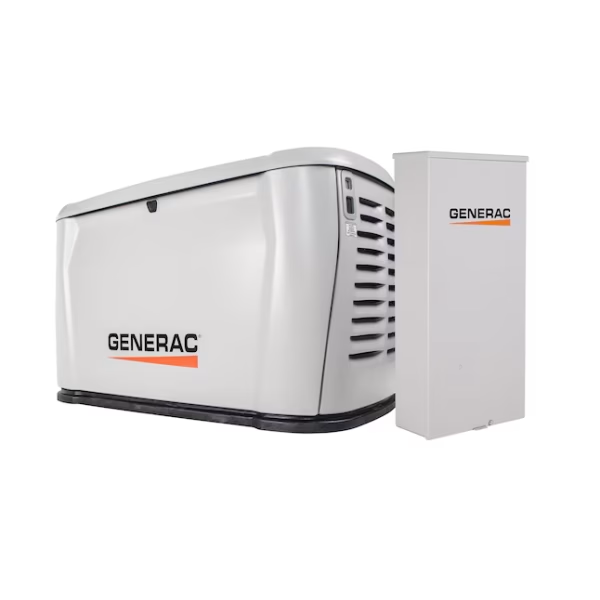
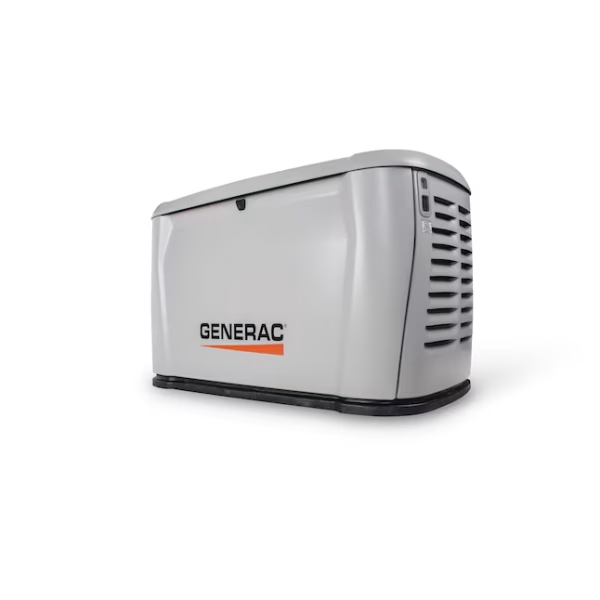


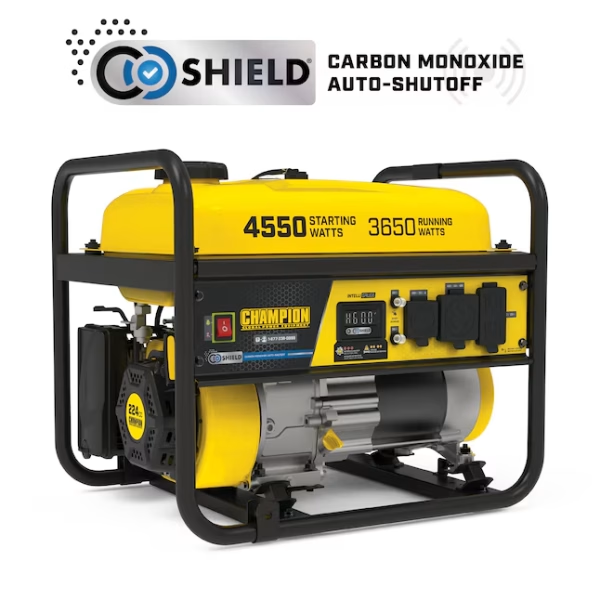
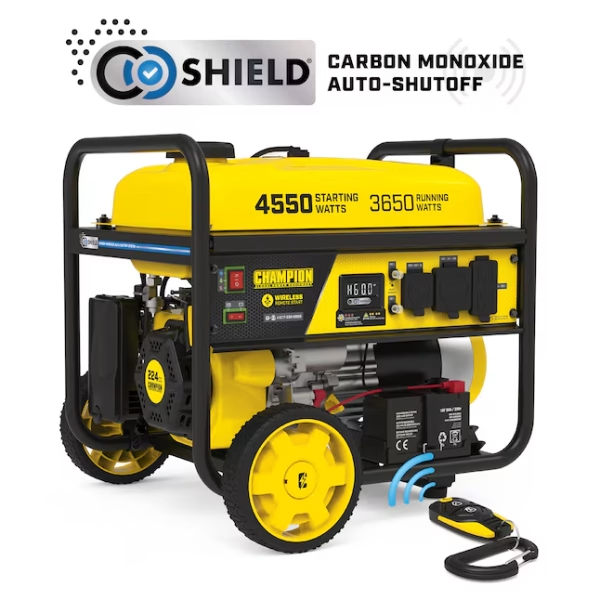






















Natural Gas vs Propane Generator: Honest 2026 Expert Guide


Natural Gas vs Propane Generator: Honest 2026 Expert Guide
Key Takeaways Natural gas wins on convenience and cost when utility gas is available, with no tank to refill and a simpler install footprint. Propane wins on output,...

- Natural gas wins on convenience and cost when utility gas is available, with no tank to refill and a simpler install footprint.
- Propane wins on output, energy independence, and storm resilience, with higher kilowatts per unit and indefinite shelf life.
- The same generator produces 5 to 10 percent less power on natural gas than propane, so size with the derate in mind.
- 2026 EIA data shows residential propane near $2.43 per gallon, while natural gas is typically cheaper per equivalent BTU delivered.
- NFPA 58 propane tank setback rules require 10 feet from buildings for 500-gallon tanks, which can disqualify some tight lots entirely.
Natural gas vs propane generator decisions usually come down to one question: does the property have an active utility gas connection at the meter. With gas service available, natural gas wins on cost and convenience. Without it, propane is the only realistic standby option. Everything else is detail layered on top of that single answer.
Our founder, Imad Boussi, is a licensed Master Electrician who has specified standby generators across the United States for decades. After helping thousands of families through our Dearborn Heights warehouse, we sell both natural gas and propane configurations from Generac and Kohler at MAP pricing. We have no incentive to push either fuel. That neutrality matters, because most online guides on this topic are written by HVAC contractors selling installs or propane suppliers selling fuel. The honest version is different.
Natural Gas vs Propane Generator: Which One Is Right for Your Home?
The natural gas vs propane generator question has a simple decision rule at its core. If your home is already connected to a natural gas utility line at the meter, natural gas is almost always the right call. If your home is not on the gas grid, propane is the only practical choice for a standby unit running for hours or days at a time. Properties that sit between these two extremes (gas at the street but not yet connected, existing propane tank for a fireplace, frequent multi-day outages) have more nuance to work through.
That decision rule produces the right answer for roughly 80 percent of residential buyers. The remaining 20 percent need to weigh four secondary factors: the natural gas power output derate, the total cost over a 10-year ownership window, the NFPA 58 propane tank setback geometry on the specific lot, and the storm resilience profile in their region. Each of these factors has its own section in this guide.
The two fuels are not interchangeable in their delivery, their power output, their installation, or their operating cost profile. Knowing where each shines is what gets you the right answer for your specific home.
How Each Fuel Reaches Your Standby Generator
Fuel delivery is where natural gas and propane part ways most clearly. The infrastructure on each side defines everything that comes after it: install cost, runtime, refill logistics, and emergency resilience.

Natural Gas: A Continuous Utility Connection
A natural gas standby generator connects to your existing residential gas line, the same one feeding your furnace, water heater, or range. Fuel flows continuously from the utility at line pressure of roughly 0.25 PSI (7 inches of water column) up to the generator’s regulator. You never store fuel on site. You never schedule a refill. As long as the utility is delivering gas, the generator runs. The downsides are that a major utility-disrupting event (an earthquake-zone main fracture, a regional infrastructure attack) could in theory cut your fuel supply at the same moment you need backup power. In practice this is extremely rare in the United States.
Propane: An On-Site Pressurized Tank
A propane standby generator draws from a liquid propane tank stored on your property. Tanks are sized between 120 gallons (small home, infrequent outages) and 1,000 gallons (large home, severe outage profile). The propane vaporizes through a regulator before reaching the generator’s gas train. Because the fuel is stored on site, you control the entire supply chain. You also accept responsibility for refill scheduling, tank inspection, and NFPA 58 placement compliance. Propane has indefinite shelf life when stored properly, unlike gasoline or diesel that degrade in months. For our customers in rural Michigan and across the Midwest, propane is often the only standby option that even exists.
The Natural Gas Power Output Derate Almost Nobody Explains
Standby generator manufacturers rate their units at two different power outputs depending on fuel: one number on propane, a lower number on natural gas. This derate is real, documented, and rarely discussed in homeowner-facing content.

The math is straightforward. Propane has a higher energy density per cubic foot than natural gas, so the engine produces more torque per intake stroke when running on propane. The result, per manufacturer-published spec sheets, is that a generator’s power output, when fueled by propane, might range between 7kW to 20kW. In contrast, that same generator, when running on natural gas, might only yield up to 18kW. The derate typically falls between 5 and 10 percent across the residential air-cooled product lines from Generac and Kohler. Briggs & Stratton’s published comparison documents this same gap and is the basis for their NGMax technology, which aims to close it.
Pro tip: If you sized the generator exactly to your home’s calculated load using propane numbers and then ran it on natural gas, you would be 1 to 2 kilowatts short of what you planned for. Always check the spec sheet for both fuel ratings before final sizing. Our team flags this on every quote where natural gas is the chosen fuel.
For most homes the derate does not change the buying decision. A 22kW propane unit puts out roughly 19.5kW on natural gas, which still covers a typical whole-home load with margin. The derate matters when sizing is tight, when central AC compressors are at the upper end of starting load, or when EV charging is added to the protected circuits. In those cases, you either step up one kW tier or you choose propane to keep the rated output. Our generator sizing guide walks through the calculation, and our backup wattage guide covers the appliance-by-appliance math.
Real 2026 Fuel Cost Math Side by Side
The natural gas vs propane generator cost comparison is the section everyone skims for first, and the section most online guides handle worst. Real 2026 numbers, from the U.S. Energy Information Administration and from manufacturer spec sheets, are the only honest basis for this math.

For a 22kW Generac residential air-cooled unit, the manufacturer publishes the following fuel consumption rates. At half load, propane consumption runs roughly 2.1 gallons per hour and natural gas consumption runs roughly 203 cubic feet per hour. At full load, propane consumption rises to roughly 3.6 gallons per hour and natural gas runs roughly 306 cubic feet per hour. These numbers come straight from Generac spec sheets and are confirmed across multiple authorized dealer publications.
| Fuel | Half Load (per hour) | Full Load (per hour) | Cost at 2026 Avg Pricing (full load) |
|---|---|---|---|
| Propane (LP) | 2.1 gallons | 3.6 gallons | $8.75 per hour (at $2.43/gal national avg) |
| Natural Gas (NG) | 203 cubic feet | 306 cubic feet | $3.30 per hour (at $11/MCF typical residential) |
At the most recent EIA Heating Oil and Propane Update, residential propane averaged $2.43 per gallon nationally with significant regional spread (East Coast over $3.25 per gallon, Midwest under $2.00 per gallon). Natural gas residential pricing varies by state but typically runs $0.90 to $1.30 per therm or roughly $9 to $13 per thousand cubic feet (MCF). At those rates, natural gas runs the generator at less than half the hourly cost of propane in most regions.
Over a typical 50-hour annual run profile (exercise mode plus a couple of multi-day outages), the propane operating cost is roughly $325 to $440 per year, the natural gas operating cost is roughly $125 to $165 per year. The propane fuel-cost premium is real, but in absolute dollars it averages $200 to $275 per year. For most owners, that premium does not change the decision when propane is the only available fuel. The EIA Short-Term Energy Outlook updates these prices monthly.
Installation Cost Differences for Natural Gas vs Propane Generator Setups
The natural gas vs propane generator install side of the conversation gets less attention than the fuel cost side, but it has bigger dollar swings. Equipment costs are similar (the same Generac or Kohler unit ships configured for either fuel, with a swap of the regulator or carburetor jet at commissioning). Where the costs diverge is in the fuel delivery infrastructure.

Natural gas installs add a gas line run from your existing meter or service entrance to the generator location. Cost typically falls between $500 and $1,500 for a short run with no trenching, scaling to $2,500 for runs that cross paved areas or require a meter upgrade. Some homes need a meter upgrade itself to handle the generator’s demand, which adds $500 to $1,200 depending on utility tariffs. A 22kW Generac needs approximately 306 cubic feet of natural gas per hour at full load, which dictates a minimum 1-inch supply line at typical residential pressure. Undersizing the gas line is the single most common reason a natural gas install nuisance-trips under load.
Propane installs add the tank, the regulator station, the supply line from tank to generator, and (for new tanks) the concrete pad or tank-bury work. A new 250-gallon aboveground tank install costs $800 to $1,500. A 500-gallon tank costs $1,000 to $2,000. A 1,000-gallon underground tank with full burial work can clear $3,500. Most propane suppliers offer rental tanks at $100 to $200 per year if you contract with them for fuel; owning the tank gives you supplier flexibility and skips the rental fee. Our 2026 standby generator installation cost guide breaks down the full line-item install side for both fuels.
Budgeting the install side right now?
Our Master Electrician-founded team will walk you through the equipment, fuel infrastructure, and permit lines specific to your property and fuel choice. Reach out for an itemized planning conversation or call (800) 674-9019.
NFPA 58 Site Eligibility Rules for Propane Tanks
NFPA 58, the Liquefied Petroleum Gas Code, governs every aboveground and underground propane tank installation in the United States. Its setback rules can quietly disqualify a property from propane before any other factor enters the conversation. This is the section homeowners learn about last when they should learn about it first.

The core NFPA 58 standard sets minimum distances from buildings, property lines, ignition sources, and other features. The rules vary by tank size:
- Tanks under 125 gallons: can be placed close to the building but must stay at least 5 feet from any building opening (window, door, vent) and at least 10 feet from any ignition source like an AC condenser or electrical panel.
- 125 to 500 gallon tanks: minimum 10 feet from the building, 10 feet from the property line, 10 feet from any ignition source. The fill valve and relief valve discharge must also stay 10 feet from building openings.
- 500 to 1,000 gallon tanks: minimum 10 feet from the building, 10 feet from the property line for residential applications. Larger commercial tanks expand to 25 feet from buildings.
- Tanks over 1,000 gallons: minimum 25 feet from buildings and property lines. Rare in residential applications.
For tight urban lots, these setbacks can disqualify propane outright. A narrow side yard between a house and a property line, an HVAC condenser placed near the back of the home, or a deck overhang above the proposed tank location all break NFPA 58 compliance. The Authority Having Jurisdiction has final say in interpretation, and local fire codes often add their own stricter amendments on top of NFPA 58.
Pro tip: Before committing to propane on a tight lot, walk the property with a tape measure and the NFPA 58 distance rules. If you cannot find a single spot that satisfies every distance simultaneously, propane is off the table. Natural gas becomes the default fuel by elimination. Our team has had this conversation with dozens of urban customers who assumed propane was always an option until the geometry said otherwise.
Reliability and Lifespan: Does Fuel Type Affect How Long Your Generator Lasts?
The natural gas vs propane generator question often includes a quiet sub-question: does one fuel make the engine last longer than the other. The honest answer is yes, but not by enough to flip the decision on its own.

Propane has a higher BTU content per cubic foot than natural gas (roughly 2,500 BTU/cf for propane vs 1,030 BTU/cf for natural gas), and it burns slightly hotter and cleaner in most residential air-cooled engines. The practical effect: engines running on propane tend to accumulate combustion residue more slowly, particularly on intake valves and spark plug electrodes. Some manufacturers and field technicians report propane-fueled units extending engine life by a small but measurable margin (often cited as 1 to 3 years on top of an already-long lifespan) compared to identical units running on natural gas.
The caveat is that this advantage only shows up when maintenance discipline is consistent. A propane unit that goes 5 years without service degrades faster than a natural gas unit on annual service. Fuel type is a small lifespan multiplier; maintenance is the large one. Our deep dive on how long a standby generator lasts walks through the manufacturer hour ratings (10,000 to 30,000 hours for residential units) and the maintenance schedule that determines where in that range any unit lands, regardless of fuel. Stock the matching maintenance kit from our Generac generator accessories and kits collection ahead of every service interval.
The Case for Dual Fuel Standby Generators
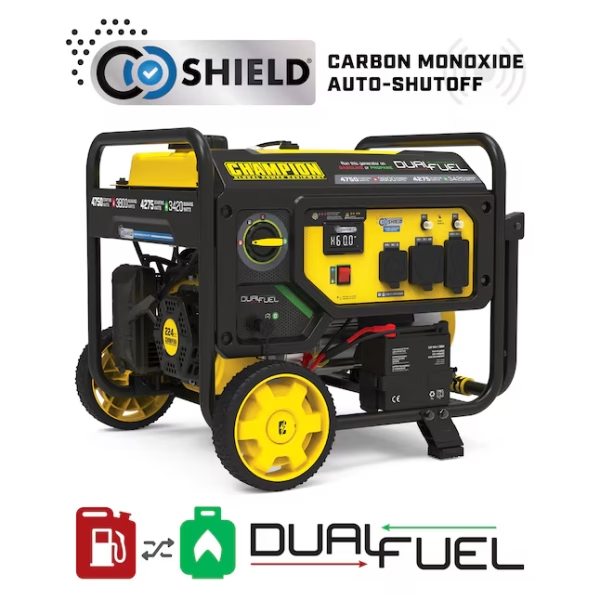
Some residential standby units are offered in dual fuel configurations, capable of running on either natural gas or propane and switching between them. For a small number of buyers, this is the right answer to the natural gas vs propane generator question.

Dual fuel makes sense for properties in three specific scenarios. First, properties that have natural gas at the meter but exist in a seismic zone where the utility could be disrupted during the same event that takes down electric power. Second, properties with existing propane infrastructure that also have natural gas service and want operating-cost optimization (running natural gas day to day, switching to propane during regional gas outages). Third, properties on the edge of natural gas service where utility delivery is unreliable enough that a propane backup gives meaningful redundancy.
For most American homes, dual fuel is overkill and adds install cost without adding much real-world reliability. Single-fuel installs cover 95 percent of buyer scenarios. Worth knowing the option exists, especially in California seismic zones or rural areas with intermittent gas service.
Still on the fence between natural gas and propane?
Send us your zip code, lot description, and outage history. Our Master Electrician-founded team will walk you through the fuel decision honestly for your specific property. Reach out for a real recommendation, no sales pressure.
Frequently Asked Questions
Is propane or natural gas better for a generator?
Natural gas is better when the property has utility gas service: lower operating cost, no tank to manage, simpler install. Propane is better when no gas service exists, when outages are severe and prolonged, or when full rated kilowatt output is critical. The property infrastructure usually decides the answer.
Is it cheaper to run a generator on natural gas or propane?
Cheaper on natural gas in most regions. Based on 2026 EIA data, residential propane averages $2.43 per gallon nationally while natural gas typically costs the equivalent of $0.90 to $1.30 per therm. For a 22kW generator at full load, that works out to roughly $8.75 per hour on propane versus $3.30 per hour on natural gas.
Which fuel is more efficient for a generator?
Propane is more energy-dense per unit volume (about 2,500 BTU per cubic foot for propane versus 1,030 BTU for natural gas), so the engine produces more torque per intake stroke. The same residential generator outputs 5 to 10 percent more kilowatts on propane than on natural gas. Natural gas wins on total system efficiency and operating cost, though.
Can a Generac generator run on both natural gas and propane?
Yes, every Generac residential standby generator is bi-fuel capable from the factory, configured at commissioning for one fuel or the other via a regulator or carburetor jet change. True dual fuel units that can switch between fuels during operation are a separate product category and less common in residential. Most Generac residential installs are committed to one fuel after install.
Does a propane generator last longer than a natural gas generator?
Slightly, on average. Propane burns cleaner and hotter than natural gas in residential air-cooled engines, accumulating combustion residue more slowly. Field reports cite 1 to 3 years of additional engine life on identical units. The difference is real but small. Maintenance discipline matters far more to lifespan than fuel type.
How much propane does a generator use per hour?
A 22kW residential standby generator uses roughly 2.1 gallons of propane per hour at half load and 3.6 gallons per hour at full load. Larger 38kW units consume around 3 gallons per hour at half load and 5.4 at full load. A standard 500-gallon propane tank (filled to 400 gallons usable) powers a 22kW unit for 5 to 8 days of typical outage use.
How much natural gas does a generator use per hour?
A 22kW residential standby generator consumes roughly 203 cubic feet of natural gas per hour at half load and 306 cubic feet per hour at full load. Because natural gas comes from the utility pipeline, runtime is effectively unlimited as long as utility service stays active. A typical 24-hour outage runs through 5,000 to 7,000 cubic feet.
Should I choose a natural gas or propane standby generator for my home?
Choose natural gas if you have an active utility connection at the property and want simpler installation with no fuel storage. Choose propane if you have no natural gas service, frequent multi-day outages, or already have a tank on site. Both fuels work well in the right setting; the property infrastructure usually decides the answer.
When should I hire a professional for natural gas vs propane generator decisions?
Hire a professional before final fuel commitment if your property has unusual layout, unclear gas service status, or NFPA 58 setback constraints that need walking. A licensed electrician will check meter capacity, gas line sizing, and tank siting geometry in one visit. Reach out to our Master Electrician-founded team to start the conversation.
Conclusion
Natural gas vs propane generator decisions almost always come back to the same starting point: what fuel infrastructure already exists at your property. With natural gas at the meter, the utility-connected fuel wins on cost, convenience, and install simplicity. Without gas service, propane is the practical choice and the only realistic one for multi-day outage coverage. The output derate, NFPA 58 setbacks, and lifespan differences are real but rarely flip the decision. Walk your property, run the math against 2026 fuel pricing, and the right answer usually announces itself.
Ready to lock in the right fuel and the right generator the honest way?
IB Lighting is a family-owned reseller founded by a licensed Master Electrician. Free freight insurance on every order, nationwide US delivery, and expert support before and after the sale. Browse Generac home standby generators 10kW to 28kW or talk to our team.