





















NEC Wire Derating in Attic: Complete 2026 Code Compliance Guide


NEC Wire Derating in Attic: Complete 2026 Code Compliance Guide
🕑 14 min read Updated: June 2026 Table of Contents The Fast Answer: NEC Wire Derating in Attic Why Attic Temperatures Require Wire Derating NEC 310.15(B): Ambient Temperature...

- NEC wire derating in attic requires applying ambient temperature correction factors from NEC 310.15(B) to conductor ampacity when attic temperatures exceed the NEC reference temperature of 30 degrees Celsius (86 degrees Fahrenheit), which is common in most residential attics during summer conditions across most US climate zones.
- NEC 334.80 requires NM-B (Romex) cable to use the 60 degree Celsius ampacity column from NEC Table 310.16 for ampacity calculations even though the individual conductor insulation may be rated higher, which combined with attic ambient temperature derating makes NM-B ampacity limits very restrictive in hot attics.
- THHN and THWN-2 conductors rated at 90 degrees Celsius provide significantly better derating performance in hot attic environments compared to NM-B cable, making individual conductors in conduit the preferred choice for attic installations in hot climates where NM-B would fail derating calculations.
- Attic temperatures can reach 130 to 150 degrees Fahrenheit (54 to 66 degrees Celsius) during summer in most US climate zones, with hot climate regions in the Southeast, Southwest, and Texas seeing the most extreme attic temperatures that most severely impact wire derating calculations.
- The interactive attic wire derating calculator below applies NEC 310.15(B) ambient temperature correction factors to conductor ampacity based on the specific wire size, insulation type, and estimated attic temperature, returning the derated ampacity and pass or fail status against typical circuit breaker sizes.
- Common attic installation scenarios where derating calculations are critical include HVAC air handler circuits, whole house fan installations, attic lighting circuits, and any residential branch circuit routing through the attic space above ceiling insulation where the conductors are exposed to full attic ambient temperature conditions.
NEC wire derating in attic applies ambient temperature correction factors from NEC 310.15(B) when attic temperatures exceed the reference 30 degrees Celsius (86 degrees Fahrenheit). Hot attic conditions can significantly reduce wire ampacity, especially for NM-B cable which is forced to use the 60 degree Celsius ampacity column per NEC 334.80. This article explains the derating requirements, provides interactive calculator for specific installations, includes correction factor tables for 60, 75, and 90 degree Celsius insulation types, addresses attic temperature estimation, compares NM-B versus THHN performance in attics, covers bundle derating considerations, and provides practical guidance for residential attic wire installations.
Across thousands of Southwire and Cerrowire orders shipped from IB Lighting nationwide, our electrician-led team helps buyers select appropriate wire types for challenging installation environments including hot attics where standard NM-B may fail derating calculations. Founded in 2013 by a licensed Master Electrician with field experience across DTE Energy and Consumers Energy projects in Michigan, IB Lighting resells the full Southwire and Cerrowire electrical wire and cable lineup.
This article explains NEC wire derating in attic requirements that we regularly discuss with buyers planning residential installations in hot climate regions, using citations from the current National Electrical Code (NFPA 70) and industry practice from the International Association of Electrical Inspectors.
The Fast Answer: NEC Wire Derating in Attic
NEC wire derating in attic requires multiplying the conductor base ampacity from NEC Table 310.16 by an ambient temperature correction factor from NEC 310.15(B) when attic ambient temperature exceeds the reference 30 degrees Celsius (86 degrees Fahrenheit). The correction factor depends on the actual attic temperature and the conductor insulation rating (60, 75, or 90 degrees Celsius). NM-B cable per NEC 334.80 must use the 60 degree Celsius ampacity column even though its insulation may be rated higher, making NM-B ampacity most severely reduced by attic temperatures.
Why derating matters in attics
Attic ambient temperatures during summer can reach 130 to 150 degrees Fahrenheit (54 to 66 degrees Celsius) in most US climate zones. At these temperatures, NEC 310.15(B) correction factors reduce wire ampacity by 20 to 60 percent depending on insulation type. Without proper derating, wire installations may fail inspection and create long-term reliability problems including insulation degradation and connection failures.
The three insulation temperature ratings
Wire insulation is rated at 60, 75, or 90 degrees Celsius maximum operating temperature. NM-B cable individual conductors may be rated higher but NEC 334.80 forces use of the 60 degree Celsius ampacity column. Individual THWN-2 conductors are rated at 75 or 90 degrees Celsius depending on the application column used. THHN conductors are rated at 90 degrees Celsius. Higher temperature ratings provide better derating performance in hot ambient conditions.
When derating is critical
NEC wire derating in attic becomes critical when attic conductors are exposed to summer temperatures exceeding 40 degrees Celsius (104 degrees Fahrenheit), which is common in most residential attics in Southern climate zones and increasingly common even in Northern climate zones during summer heat waves. For NM-B cable, derating becomes limiting at moderately elevated temperatures due to the 60 degree Celsius restriction.
Why Attic Temperatures Require Wire Derating
Attic spaces present unique thermal challenges that make wire derating calculations especially important for residential installations.
Attic thermal characteristics
Residential attic spaces above the ceiling insulation are subjected to solar heat gain through the roof, minimal air movement, and limited heat dissipation paths. Summer attic temperatures typically run 40 to 60 degrees Fahrenheit above outdoor ambient temperature. In hot climates with 95 degree Fahrenheit outdoor temperatures, attic temperatures commonly exceed 135 degrees Fahrenheit during peak afternoon hours.
Impact on wire insulation
Wire insulation performance decreases as operating temperature increases. Continuous operation at elevated temperatures accelerates insulation aging, potentially reducing service life from decades to years. NEC ambient temperature correction factors prevent conductor operation at temperatures that would degrade insulation faster than acceptable for reliable installations.
Heat generation from current load
Current flowing through a conductor generates heat within the conductor and insulation. The wire ampacity ratings assume 30 degree Celsius ambient plus the temperature rise from full-load current. When ambient temperature exceeds 30 degrees Celsius, the same current produces higher total conductor temperature, potentially exceeding insulation ratings. Derating reduces allowed current to compensate.
Long-term reliability concerns
Non-derated installations in hot attics may function acceptably during initial testing but experience progressive insulation degradation over years. This can lead to intermittent failures, short circuits, and potentially fire hazards. Proper derating during installation ensures reliable long-term performance that matches the design service life of the installation.
NEC 310.15(B): Ambient Temperature Correction Factors
NEC 310.15(B) provides the ambient temperature correction factors that reduce conductor ampacity when ambient temperature exceeds the NEC reference of 30 degrees Celsius.
What NEC 310.15(B) covers
NEC 310.15(B) specifies the correction factors that apply to the ampacity values in NEC Table 310.16 when the ambient temperature differs from the 30 degrees Celsius reference. The correction factor table provides multipliers based on the actual ambient temperature range and the conductor insulation temperature rating (60, 75, or 90 degrees Celsius).
Correction factors for 60 degree Celsius insulation
Approximate correction factors for 60 degree Celsius insulation: 41-45 degrees Celsius ambient reduces ampacity to 0.71, 46-50 degrees Celsius ambient reduces to 0.58, and 51-55 degrees Celsius ambient reduces to 0.41. Above 55 degrees Celsius, 60 degree Celsius insulation cannot be used at all. These are the values that apply to NM-B cable per NEC 334.80.
Correction factors for 75 degree Celsius insulation
Approximate correction factors for 75 degree Celsius insulation: 41-45 degrees Celsius ambient reduces ampacity to 0.82, 46-50 degrees Celsius ambient reduces to 0.75, 51-55 degrees Celsius ambient reduces to 0.67, 56-60 degrees Celsius ambient reduces to 0.58, and 61-65 degrees Celsius ambient reduces to 0.47. The 75 degree Celsius column applies to THWN-2 in typical residential terminations.
Correction factors for 90 degree Celsius insulation
Approximate correction factors for 90 degree Celsius insulation: 41-45 degrees Celsius ambient reduces ampacity to 0.87, 46-50 degrees Celsius ambient reduces to 0.82, 51-55 degrees Celsius ambient reduces to 0.76, 56-60 degrees Celsius ambient reduces to 0.71, 61-65 degrees Celsius ambient reduces to 0.65, and 66-70 degrees Celsius ambient reduces to 0.58. The 90 degree Celsius rating provides the best derating performance for hot ambient conditions like attics.
Understanding Insulation Temperature Ratings (60, 75, 90 Celsius)
Understanding the three insulation temperature ratings clarifies why wire type selection is critical for attic installations.
60 degree Celsius insulation types
60 degree Celsius insulation types include NM-B individual conductors (though the cable is often referenced by this rating), UF-B cable, and older TW insulation. These insulation types are the most restrictive for high ambient temperature applications and become increasingly limited as attic temperatures rise. The 60 degree Celsius column in NEC Table 310.16 shows base ampacity values that decrease rapidly with ambient temperature correction factors.
75 degree Celsius insulation types
75 degree Celsius insulation types include THWN-2 in wet locations, RHW, XHHW in wet locations, and USE. These insulation types provide moderate derating performance in hot ambient conditions. Most residential wire terminations at breakers and receptacles are rated at 75 degrees Celsius maximum, which sometimes limits the practical ampacity even when the wire itself has higher insulation rating.
90 degree Celsius insulation types
90 degree Celsius insulation types include THHN in dry locations, THWN-2 in dry locations, XHHW-2, and RHH. These insulation types provide the best derating performance in hot ambient conditions. THHN and THWN-2 are the most common 90 degree Celsius rated conductors used in residential and commercial installations where ambient temperature derating matters.
The termination temperature limitation
Even when using 90 degree Celsius rated conductors, the actual ampacity may be limited by the temperature rating of the termination equipment (typically 75 degrees Celsius for breakers rated up to 100 amps and 60 degrees Celsius for smaller equipment). This means the 90 degree Celsius column can be used for derating calculations but the final ampacity may still be limited by termination ratings. This is a complex NEC 110.14(C) consideration beyond the scope of typical attic derating.
NEC 334.80: The NM-B 60 Degree Ampacity Requirement
NEC 334.80 is the specific code section that severely restricts NM-B ampacity performance in hot attic installations.
What NEC 334.80 requires
NEC 334.80 requires that NM-B cable ampacity be determined using the 60 degree Celsius column of NEC Table 310.16 regardless of the actual insulation temperature rating of the individual conductors within the cable. This applies even though modern NM-B individual conductors may be rated at 90 degrees Celsius by the manufacturer.
Why NEC 334.80 exists
NEC 334.80 exists because NM-B cable jacket material and the paper wrap between conductors have historically been rated at 60 degrees Celsius. Even with higher-temperature individual conductor insulation, the cable assembly is limited by the least-heat-tolerant component. The 60 degree Celsius restriction ensures the entire cable operates within safe temperature limits.
Impact on attic installations
The NEC 334.80 restriction has significant impact on NM-B in attic installations. Combined with NEC 310.15(B) ambient temperature derating, the effective NM-B ampacity in hot attics can be very restrictive. In extreme cases, NM-B becomes unusable at attic temperatures above 55 degrees Celsius (131 degrees Fahrenheit).
Why individual conductors avoid this restriction
Individual THHN or THWN-2 conductors installed in conduit are governed by their own conductor insulation rating rather than the more restrictive NM-B cable assembly rating. This means THHN conductors can use the 90 degree Celsius column of NEC Table 310.16, providing significantly better derating performance in hot ambient conditions. This is why individual conductors in conduit are often preferred over NM-B for attic installations in hot climates.
Estimating Attic Temperatures for Derating Calculations
Accurate attic temperature estimation is critical for correct NEC wire derating in attic calculations.
Regional climate considerations
Attic temperatures correlate with regional climate patterns. Hot climate regions including the Southeast, Southwest, and Texas commonly see summer attic temperatures of 140-160 degrees Fahrenheit. Moderate climate regions including the Mid-Atlantic and Midwest typically see attic temperatures of 120-140 degrees Fahrenheit. Cool climate regions including the Pacific Northwest and New England typically see attic temperatures of 100-120 degrees Fahrenheit.
Attic ventilation impact
Attic ventilation significantly affects maximum attic temperatures. Well-ventilated attics with adequate ridge vents, soffit vents, and gable vents may run 20-30 degrees Fahrenheit cooler than poorly ventilated attics. Whole house fans and powered attic ventilators further reduce temperatures. For derating calculations, use the worst-case temperature the attic actually experiences.
Solar exposure and roof color
Roof color and solar exposure affect attic temperatures. Dark asphalt shingles in direct summer sunlight can push attic temperatures 30-50 degrees Fahrenheit above outdoor ambient. Light-colored roofing, reflective roof coatings, and shaded roof positions reduce solar heat gain and lower attic temperatures.
Conservative derating approach
When attic temperature is uncertain, use conservative estimates that account for worst-case summer conditions. Underestimating attic temperature leads to inadequate derating and potential long-term reliability problems. For most residential applications in the continental US, assuming 140 degrees Fahrenheit maximum attic temperature provides reasonable margin for derating calculations.
Practical Derating Examples for Common Attic Installations
Practical examples clarify how the NEC wire derating in attic requirements apply to typical residential installations.
Example 1: 12 AWG NM-B for 20A circuit in 130 F attic
12 AWG NM-B in 130 degree Fahrenheit (54 degree Celsius) attic: Base ampacity per NEC Table 310.16 60 degree Celsius column is 20 amps (limited by NEC 240.4(D) small conductor rule to 20 amp overcurrent protection). Ambient correction factor at 51-55 degrees Celsius for 60 degree Celsius insulation is approximately 0.41. Derated ampacity: 20 × 0.41 = 8.2 amps. FAILS for a 20 amp circuit. Wire type change to THHN or wire size upgrade required.
Example 2: 12 AWG THHN for 20A circuit in 130 F attic
12 AWG THHN in 130 degree Fahrenheit attic: Base ampacity per NEC Table 310.16 90 degree Celsius column is 30 amps (limited by NEC 240.4(D) to 20 amp overcurrent protection). Ambient correction factor at 51-55 degrees Celsius for 90 degree Celsius insulation is approximately 0.76. Derated ampacity: 30 × 0.76 = 22.8 amps, limited to 20 amps by NEC 240.4(D). PASSES for a 20 amp circuit with margin. THHN in conduit is the recommended approach.
Example 3: 10 AWG NM-B for 30A circuit in 130 F attic
10 AWG NM-B in 130 degree Fahrenheit attic: Base ampacity per NEC Table 310.16 60 degree Celsius column is 30 amps (also NEC 240.4(D) limit for 10 AWG). Correction factor 0.41. Derated ampacity: 30 × 0.41 = 12.3 amps. FAILS for a 30 amp circuit. Consider 10 AWG THHN or larger NM-B.
Example 4: 8 AWG THHN for 40A circuit in 130 F attic
8 AWG THHN in 130 degree Fahrenheit attic: Base ampacity per NEC Table 310.16 90 degree Celsius column is 55 amps. Correction factor at 51-55 degrees Celsius for 90 degree Celsius insulation is 0.76. Derated ampacity: 55 × 0.76 = 41.8 amps. PASSES for a 40 amp circuit with adequate margin. 8 AWG THHN handles typical central AC circuits in hot attics.
Why 90 Degree Celsius Insulation Helps in Attics
The advantages of 90 degree Celsius insulation for attic installations extend beyond just the higher temperature rating.
Better correction factor performance
At any given ambient temperature, 90 degree Celsius insulation has a higher correction factor than 75 or 60 degree Celsius insulation. At 51-55 degrees Celsius ambient, the 90 degree Celsius correction factor is 0.76 versus 0.67 for 75 degree Celsius and 0.41 for 60 degree Celsius. This means 90 degree Celsius insulation retains more of its base ampacity in hot conditions.
Higher base ampacity
The 90 degree Celsius column of NEC Table 310.16 shows higher base ampacity than the 75 or 60 degree Celsius columns. For 8 AWG copper: 60 degree Celsius column is 40 amps, 75 degree Celsius column is 50 amps, and 90 degree Celsius column is 55 amps. Combined with better correction factors, 90 degree Celsius conductors have substantially higher derated ampacity in hot ambient conditions.
Extended usability range
60 degree Celsius insulation cannot be used above 55 degrees Celsius ambient (131 degrees Fahrenheit), and its performance is severely degraded even below this limit. 90 degree Celsius insulation remains usable up to 75 degrees Celsius or higher ambient with meaningful ampacity. This extended usability range makes 90 degree Celsius conductors the preferred choice for the hottest attic installations.
Long-term reliability
Even when adequate ampacity is available with lower temperature insulation, operating conductors near their rated temperature accelerates insulation aging. 90 degree Celsius insulation provides more thermal headroom in typical operation, resulting in longer service life and better long-term reliability. This is particularly important for installations that will not be easily accessible for future maintenance or replacement.
NM-B vs THHN in Attic Installations
The choice between NM-B and THHN individual conductors in conduit is often driven by NEC wire derating in attic considerations.
NM-B advantages
NM-B is faster to install than individual conductors in conduit for typical residential branch circuit work. NM-B is less expensive than the combination of individual conductors, conduit, and fittings. NM-B is familiar to residential electricians and inspection authorities. For cool attic installations or short attic runs to reach a specific location, NM-B may be adequate.
THHN advantages
THHN provides significantly better derating performance in hot ambient conditions. THHN allows using the 90 degree Celsius column of NEC Table 310.16 rather than the restrictive 60 degree Celsius column. THHN in conduit provides better physical protection than NM-B in attics with foot traffic, rodent activity, or other physical hazards. THHN is required for wet or damp locations including some attic scenarios with condensation risk.
When to choose NM-B for attics
NM-B is acceptable for cool climate attic installations where maximum attic temperatures stay below 40 degrees Celsius (104 degrees Fahrenheit). NM-B works for short attic runs where the total circuit length in the attic is minimal. NM-B is acceptable when the specific derating calculation shows adequate ampacity for the circuit requirements.
When to choose THHN for attics
THHN is preferred for hot climate attic installations in the Southeast, Southwest, and Texas regions. THHN is preferred for long attic runs including main branch circuit routing through attics to serve multiple rooms. THHN is preferred for higher-amperage circuits including HVAC and appliance circuits where derating margins are important. THHN is required when derating calculations show NM-B ampacity would be inadequate.
Bundle Derating: NEC 310.15(C)(1) Considerations
In addition to ambient temperature derating, NEC 310.15(C)(1) may require additional derating when multiple current-carrying conductors are bundled together.
What NEC 310.15(C)(1) covers
NEC 310.15(C)(1) provides adjustment factors for more than three current-carrying conductors installed in raceway or cable, or bundled together for more than 24 inches. The adjustment factors reduce ampacity to compensate for mutual heating between bundled conductors. The adjustment is applied in addition to ambient temperature correction factors.
Bundle adjustment factors
Approximate NEC 310.15(C)(1) adjustment factors: 4-6 current-carrying conductors × 0.80, 7-9 conductors × 0.70, 10-20 conductors × 0.50, 21-30 conductors × 0.45. These adjustments are separate from and multiplied with ambient temperature correction factors from NEC 310.15(B).
Combined derating impact
When both ambient temperature derating and bundle derating apply, the combined effect can significantly reduce conductor ampacity. For example: 6 current-carrying conductors bundled in 130 degree Fahrenheit attic with 90 degree Celsius insulation would have combined derating of 0.80 × 0.76 = 0.61. This means 61 percent of base ampacity is available versus 100 percent under standard conditions.
Neutral conductor counting
NEC provides specific rules for whether neutral conductors count as current-carrying for bundle derating calculations. In most residential circuits, neutrals do not count as current-carrying because they only carry unbalanced current. However, in circuits supplying nonlinear loads (some LED lighting, computer equipment), neutrals may count. Consult NEC 310.15(E) for specific rules.
Common Attic Installation Scenarios
Understanding common attic installation scenarios helps identify where NEC wire derating in attic considerations are most critical.
HVAC air handler installations
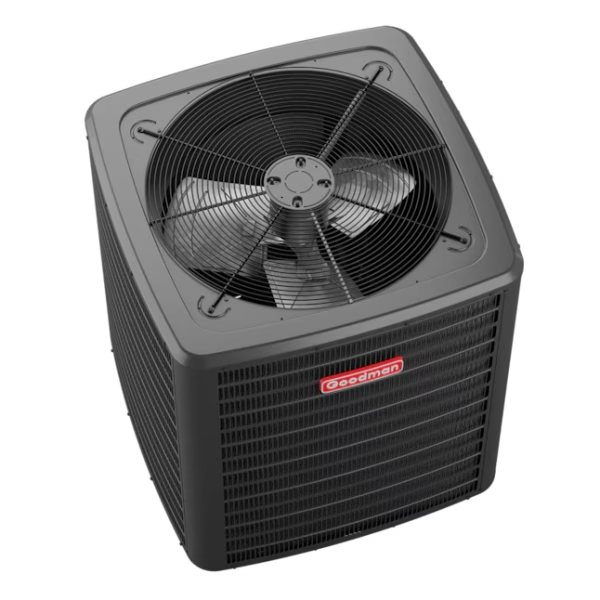
Central air conditioning air handlers are commonly installed in attic spaces. The electrical circuit serving the air handler experiences full attic ambient temperature. For our 4 ton central AC installation, the air handler circuit in a hot attic requires attention to derating calculations to ensure adequate ampacity for the installed load.
Whole house fan installations
Whole house fan installations combine high current motor loads with attic ambient temperatures. The motor circuits must be sized for both the continuous fan operation and the attic temperature derating. This makes wire type selection particularly important for reliable operation.
Attic lighting and outlets
Attic lighting circuits and workshop outlet circuits routed through attic spaces experience the full ambient temperature. These circuits are typically 15 or 20 amp branch circuits where NM-B may be adequate in cool climate installations but require THHN in hot climate installations.
Branch circuit routing through attics
Many residential main circuits route through the attic space to reach various rooms and appliances. This routing exposes long conductor runs to attic ambient temperatures. For homes in hot climates with extensive attic circuit routing, THHN in conduit throughout the attic may provide better reliability than NM-B despite the higher installation cost.
Product Selection for Attic Installations
Product selection for attic installations should account for derating requirements and long-term reliability considerations.
Southwire THHN for hot attic installations
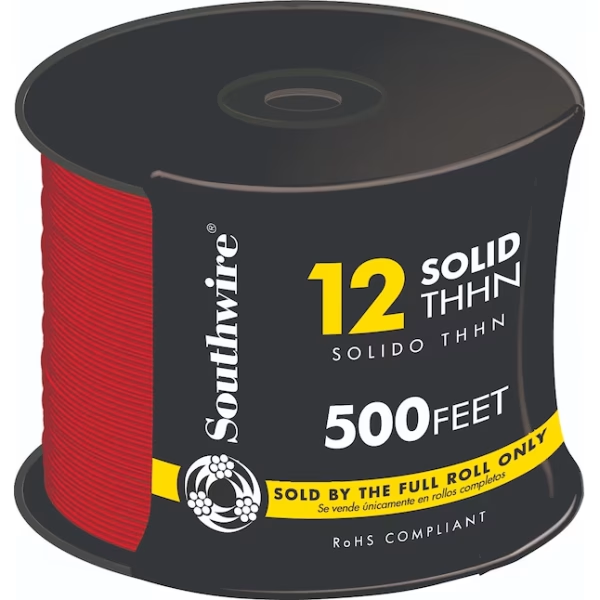
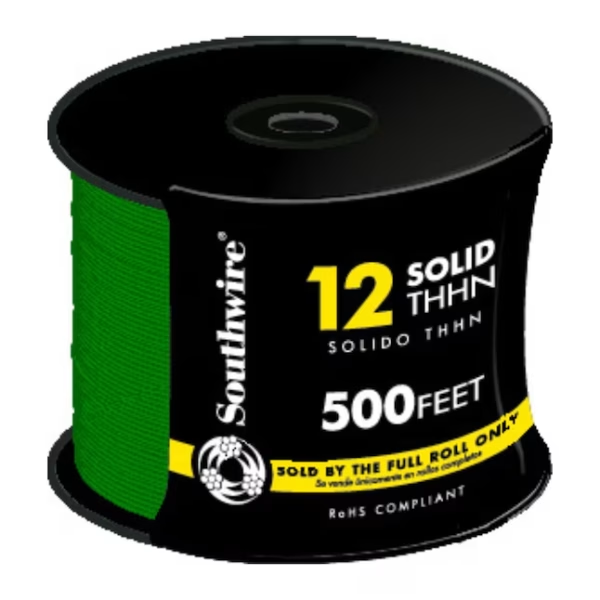
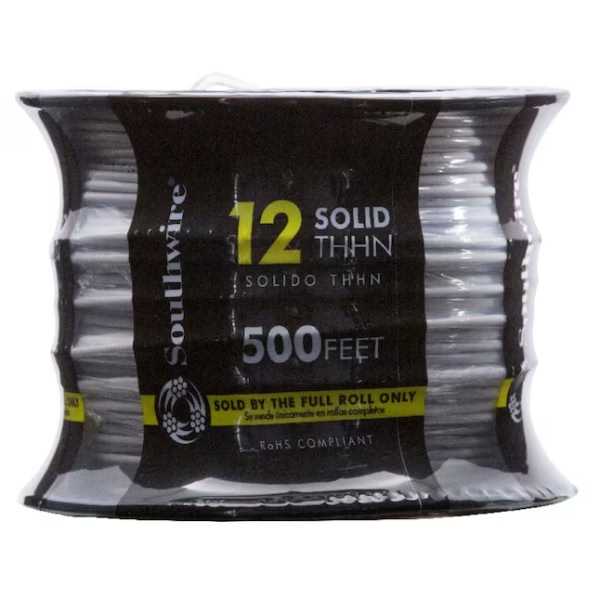
Southwire manufactures individual THHN conductors in all common sizes for attic installations requiring 90 degree Celsius insulation performance. THHN conductors provide the best derating performance and long-term reliability in hot ambient conditions. Standard color coding includes black (hot), red (second hot), white (neutral), and green (grounding).
Cerrowire THWN-2 for versatile applications
Cerrowire manufactures THWN-2 conductors rated for both wet and dry applications. THWN-2 provides 90 degree Celsius rating in dry locations and 75 degree Celsius rating in wet locations. This versatility makes THWN-2 a good choice for attic installations that may occasionally see condensation or humid conditions.
Conduit selection for attic THHN installations
EMT (Electrical Metallic Tubing) is common for indoor attic conduit installations. PVC conduit is sometimes used in attic installations when heat resistance is adequate. Verify the specific conduit rating for the maximum expected attic temperature. Most residential attic conduits use 1/2 inch or 3/4 inch trade size for typical branch circuit conductor counts.
NM-B selection for cool climate attics
For cool climate installations where derating calculations show NM-B is adequate, Southwire and Cerrowire NM-B in the appropriate size handles typical residential branch circuits. NM-B is available in 14/2, 12/2, 10/2, 8/2 configurations and larger for various circuit applications. The cost savings versus THHN in conduit can be substantial for large residential installations.
5 Common Mistakes with NEC Wire Derating in Attic
The mistakes below cause the most frequent NEC wire derating in attic compliance failures and long-term reliability problems.

Mistake 1: Ignoring ambient temperature correction entirely
The most common mistake is completely ignoring NEC 310.15(B) ambient temperature correction and using base NEC Table 310.16 ampacity values regardless of attic temperature. This produces optimistic ampacity calculations that may work initially but cause long-term reliability problems as conductor insulation degrades from operation above rated temperatures.
Mistake 2: Using NM-B in hot attics for continuous loads
NM-B in hot attics for continuous loads (HVAC, EV chargers, water heaters) creates the worst-case derating scenario. NM-B is forced to use the 60 degree Celsius column per NEC 334.80 and experiences the most severe temperature correction. Combined with continuous load 125 percent factors, NM-B often fails calculations. Use THHN in conduit for these applications.
Mistake 3: Forgetting bundle derating for multiple circuits
When multiple branch circuits route together through the attic, bundle derating per NEC 310.15(C)(1) applies in addition to ambient temperature derating. Some installers apply only ambient temperature correction and miss the bundle adjustment. The combined effect can produce significant additional derating requirements.
Mistake 4: Not accounting for regional climate differences
Attic temperatures vary significantly by regional climate. Assuming typical northern climate attic temperatures for a southern installation produces inadequate derating. Verify actual attic temperatures for the specific climate zone. Hot climate regions require conservative temperature estimates and appropriate wire type selection.
Mistake 5: Assuming attic conditions match building interior
Building interior circuits are typically at 20-25 degree Celsius ambient. Attic circuits are typically at 30-60 degree Celsius or higher ambient. Assuming attic circuits perform like interior circuits leads to inadequate derating. The attic environment must be evaluated separately from building interior conditions for accurate derating calculations.
Ready to order THHN or other wire types for your NEC-compliant attic installation?
IB Lighting resells the full Southwire and Cerrowire wire and cable lineup including THHN for hot attic installations meeting NEC 310.15(B) derating requirements. Call (800) 674-9019 or browse electrical wire and cable products.
Frequently Asked Questions
What is NEC wire derating in attic?
NEC wire derating in attic applies ambient temperature correction factors from NEC 310.15(B) to reduce conductor ampacity when attic ambient temperature exceeds the reference 30 degrees Celsius (86 degrees Fahrenheit). The correction factor depends on the specific attic temperature and the conductor insulation rating (60, 75, or 90 degrees Celsius). Higher temperature insulation provides better derating performance.
Why is NM-B restricted for attic installations?
NEC 334.80 requires NM-B cable ampacity to be determined using the 60 degree Celsius column of NEC Table 310.16 regardless of the actual conductor insulation rating. Combined with NEC 310.15(B) ambient temperature derating in hot attics, NM-B ampacity becomes very restrictive. In extreme cases, NM-B cannot be used at attic temperatures above 55 degrees Celsius (131 degrees Fahrenheit).
What temperature do residential attics reach?
Residential attic temperatures during summer commonly reach 130 to 150 degrees Fahrenheit (54 to 66 degrees Celsius) in hot climate regions. Moderate climate regions typically see 120 to 140 degrees Fahrenheit. Cool climate regions typically see 100 to 120 degrees Fahrenheit. Attic ventilation, roof color, and solar exposure significantly affect maximum attic temperatures.
Should I use NM-B or THHN in my attic?
For hot climate installations with attic temperatures above 40 degrees Celsius (104 degrees Fahrenheit), THHN individual conductors in conduit provide significantly better derating performance than NM-B. For cool climate installations with moderate attic temperatures, NM-B may be adequate. Perform derating calculations for the specific attic temperature to determine which cable type meets circuit requirements.
Does bundle derating apply to attic installations?
Yes. NEC 310.15(C)(1) requires additional derating when more than 3 current-carrying conductors are bundled together for more than 24 inches, which applies to many attic installations. The bundle derating factor is applied in addition to the ambient temperature correction from NEC 310.15(B). Combined derating can significantly reduce conductor ampacity in some installations.
How do I estimate my attic temperature for derating?
For conservative planning, use 130 to 140 degrees Fahrenheit (54 to 60 degrees Celsius) for most US residential attics. Hot climate regions may require assuming 150 degrees Fahrenheit or higher. Well-ventilated attics with light roofing may run cooler. When uncertain, use conservative estimates because underestimating temperature leads to inadequate derating and potential long-term reliability problems.
Can I use 12 AWG NM-B for a 20 amp circuit in a hot attic?
Often no. In a 130 degree Fahrenheit attic, 12 AWG NM-B derated ampacity is approximately 20 amps × 0.41 = 8.2 amps, which fails a 20 amp circuit. In such installations, 12 AWG THHN in conduit typically provides adequate ampacity: 30 amps × 0.76 = 22.8 amps (limited to 20 amps by NEC 240.4(D) small conductor rule) which passes.
Where can I buy NEC-compliant wire for hot attic installations?
Southwire and Cerrowire THHN and THWN-2 individual conductors for hot attic installations are available through resellers nationwide including IB Lighting. THHN with 90 degree Celsius rating provides the best derating performance in hot ambient conditions. Contact IB Lighting at (800) 674-9019 or through the electrical wire and cable collection.
Conclusion
NEC wire derating in attic applies ambient temperature correction factors from NEC 310.15(B) to conductor ampacity when attic temperatures exceed 30 degrees Celsius (86 degrees Fahrenheit). The correction factor depends on both the actual ambient temperature and the conductor insulation rating (60, 75, or 90 degrees Celsius). NM-B cable is most severely affected due to the NEC 334.80 requirement to use the 60 degree Celsius ampacity column, making NM-B difficult or impossible to use in hot attic installations.
THHN individual conductors in conduit provide significantly better derating performance in hot ambient conditions due to the 90 degree Celsius insulation rating and better correction factor performance. For hot climate residential installations in the Southeast, Southwest, and Texas regions, THHN in conduit is often the preferred choice for attic circuit installations. Bundle derating per NEC 310.15(C)(1) may apply in addition to ambient temperature derating when multiple circuits route together through the attic. Use the interactive attic wire derating calculator to verify specific installation combinations meet NEC requirements before purchasing wire.
Ready to order Southwire or Cerrowire THHN for your NEC-compliant hot attic installation?
IB Lighting resells the full electrical wire and cable lineup nationwide with free freight insurance included. Call (800) 674-9019 or browse electrical wire and cable products.
This article was last reviewed and updated in June 2026 to reflect current National Electrical Code requirements for ambient temperature derating including NEC 310.15(B), NEC 334.80, and NEC 310.15(C)(1). Specific correction factor values should be verified against the current code cycle applicable in your jurisdiction. For complex installations or when in doubt about compliance, consult a licensed electrician or your local electrical inspector. Attic temperature estimates should be based on actual measured conditions for critical installations rather than climate zone assumptions.