


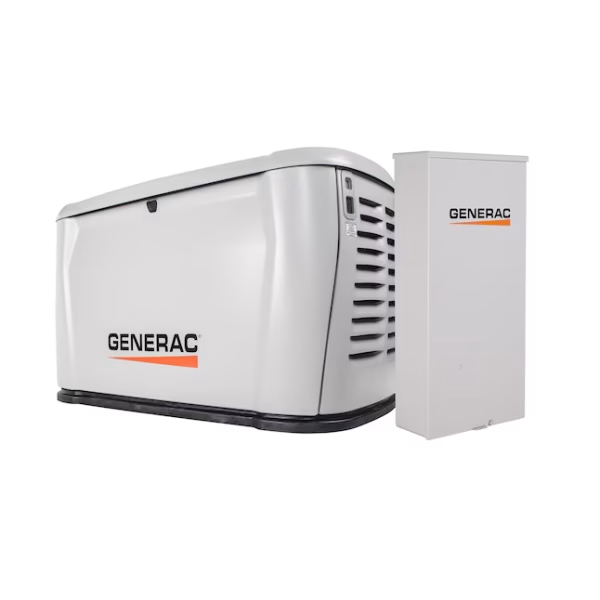
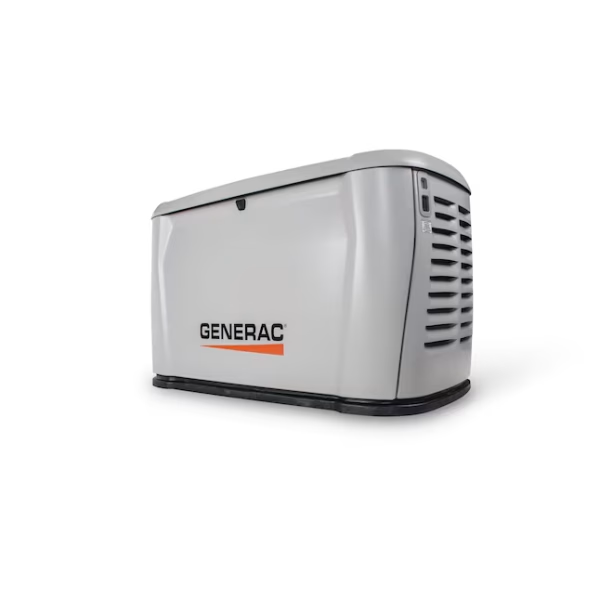














Propane Tank Size for 26kW Generac: Safe Expert 2026 Guide


Propane Tank Size for 26kW Generac: Safe Expert 2026 Guide
🕑 {{READ_TIME}} min read Updated: {{UPDATED}} Table of Contents Propane Tank Size for 26kW Generac: The Short Answer How Much Propane Does a 26kW Generac Use? Next Generation...
- The right propane tank size for 26kW Generac units is 500 gallons for most homes, and 1,000 gallons for long outages or severe cold.
- Generac rates the Next Generation 26kW at 2.05 gallons per hour at half load and 3.95 gallons per hour at full load.
- A 500-gallon tank holds 400 usable gallons, which is about eight days at half load and four days at full load.
- Vaporization, not storage, is the hidden limit: a 250-gallon tank cannot vaporize enough propane for full 26kW output in cold weather.
- NFPA 58 requires 10 feet of clearance for tanks up to 500 gallons and 25 feet above that, which often decides the size.
The right propane tank size for 26kW Generac backup is 500 gallons in most homes, or 1,000 gallons where outages run past a week. The Next Generation 26kW burns 2.05 gallons per hour at half load, so 400 usable gallons lasts about eight days. Cold weather and shared appliances can still force a larger tank.
Founded in 2013 by a licensed Master Electrician, IB Lighting ships Generac home standby generators nationwide. Questions about the propane tank size for 26kW Generac orders arrive almost weekly, and the numbers that matter are all published. Our AC compatibility guides already cover what the 26kW can run. This guide covers how long it can run, and what stops a tank from keeping up when the temperature drops.
Propane Tank Size for 26kW Generac: The Short Answer
The propane tank size for 26kW Generac units comes down to three numbers: gallons burned per hour, usable gallons in the tank, and vaporization capacity in winter. According to Generac’s Next Generation spec sheet, the 26kW burns 2.05 gallons per hour at half load and 3.95 gallons per hour at full load on propane. (Generac, Rev. D, August 2026) Propane tanks are filled to 80 percent, so a 500-gallon tank holds 400 usable gallons.
Divide those numbers and a 500-gallon tank supports roughly eight days at half load, which is why it is the default propane tank size for 26kW Generac installs. That covers the large majority of weather outages. Homes in week-long outage regions, homes with a propane furnace on the same tank, and homes in deep-freeze climates should plan on 1,000 gallons or two manifolded tanks. Moreover, vaporization can override the runtime math in winter. The table below shows where each size fits.
| Tank | Usable gallons | Half-load runtime | Best fit |
|---|---|---|---|
| 120 gallon | 96 | About 2 days | Rarely suitable; short outages only |
| 250 gallon | 200 | About 4 days | Mild climates, generator-only tanks |
| 500 gallon | 400 | About 8 days | The standard residential pick |
| 1,000 gallon | 800 | About 16 days | Rural, storm-prone, or shared with a furnace |
Next, the fuel rates deserve a closer look, because two different 26kW generators are still on the market.
How Much Propane Does a 26kW Generac Use?
A 26kW Generac uses roughly 2 gallons of propane per hour at half load and about 4 gallons per hour at full load. Generac publishes both figures. For the Next Generation 7327 and 7328, the spec sheet lists 74 cubic feet per hour at half load and 144 cubic feet per hour at full load, which equals 2.05 and 3.95 gallons per hour. Generac’s own conversion factor is 2,500 BTU per cubic foot of propane, so full load equals about 360,000 BTU per hour.
Half load is the realistic planning rate for most outages. A home running HVAC, refrigeration, a well pump, lighting, and electronics rarely holds a 26kW at nameplate for days. However, a heat wave with two AC systems running, or a winter outage with electric backup heat, can push consumption toward the full-load number. Plan at half load, then confirm the tank survives a stretch at full load. You can verify every figure on the Generac Next Generation 22 to 28kW spec sheet.

Next Generation vs Guardian Fuel Rates
Two 26kW generators are still sold, and their fuel curves differ. Both run the same G-Force 1000 engine family, yet their published rates are not identical. The Next Generation 7327 and 7328 burn 2.05 gallons per hour at half load and 3.95 at full load. Meanwhile, the older Guardian 7290 and 7291 burn 2.06 gallons per hour at half load and 3.63 at full load, per the Guardian 26kW spec sheet.
The difference looks small, yet it matters over a week. At full load, the Next Generation burns about eight more gallons per day. In exchange, it delivers 24kW on natural gas instead of 22.5kW. Either way, use the figures for the model you actually own. Not sure which one you have? Our guide to Generac model numbers 7325, 7327, 7328, and 7329 decodes the lineup.
With the burn rate settled, runtime becomes simple division.
Runtime by Tank Size, From 120 to 1,000 Gallons
First, runtime equals usable gallons divided by gallons burned per hour. Because tanks fill to 80 percent, the usable figure is always smaller than the number on the tank. A 250-gallon tank holds 200 usable gallons, a 500 holds 400, and a 1,000 holds 800. Applied to the Next Generation 26kW at 2.05 gallons per hour, a 500-gallon tank runs about 195 hours at half load. That is roughly eight days.
Full load changes the picture quickly. At 3.95 gallons per hour, the same tank lasts about 101 hours, or a little over four days. Therefore, treat the half-load column as your planning figure and the full-load column as your worst case. The table below covers every common residential size. Round down rather than up, since tanks are rarely delivered at a perfect 80 percent.
| Tank (water capacity) | Usable gallons | Half load, 2.05 gal/hr | Full load, 3.95 gal/hr |
|---|---|---|---|
| 120 gallon | 96 | 47 hours (2.0 days) | 24 hours (1.0 day) |
| 250 gallon | 200 | 98 hours (4.1 days) | 51 hours (2.1 days) |
| 330 gallon | 264 | 129 hours (5.4 days) | 67 hours (2.8 days) |
| 500 gallon | 400 | 195 hours (8.1 days) | 101 hours (4.2 days) |
| 1,000 gallon | 800 | 390 hours (16.3 days) | 203 hours (8.4 days) |

Why the 80 Percent Fill Rule Matters
Propane expands as it warms, so tanks are filled to about 80 percent of water capacity. That headspace lets the liquid expand safely on hot days instead of lifting the relief valve. It also means the label on your tank overstates the fuel you can actually use by a quarter.
Buyers who calculate runtime on the label number come up short by about 20 percent. On a 500-gallon tank at half load, that gap is roughly 1.7 days of generator operation. Consequently, always run the math on usable gallons. Also remember that propane companies rarely fill to exactly 80 percent in cold weather, since the liquid contracts and gauges read differently by temperature.
Storage is only half the question, though. The tank also has to turn that liquid into vapor fast enough.
Can Your Tank Vaporize Enough Propane in Winter?
What most guides get wrong: they size the propane tank size for 26kW Generac backup on storage alone. A generator burns vapor, not liquid, and the tank has to boil that liquid off through its wetted surface. Cold air slows the process, and a smaller tank has less surface to work with. NFPA 58 data reproduced in the propane technical pocket guide lists maximum intermittent withdrawal without frosting by tank size and temperature.
Now compare those figures with the 26kW’s demand. At full load, the generator needs about 360,000 BTU per hour. At half load, it needs about 185,000. A 250-gallon tank cannot meet full-load demand at any temperature in the table. Furthermore, a 500-gallon tank sits right at the line near 20°F and falls short at 0°F. That is the real reason cold-climate installers push 1,000-gallon tanks or paired tanks.
| Tank | 40°F | 20°F | 0°F | Covers 360,000 BTU/hr full load? |
|---|---|---|---|---|
| 150 gallon | 214,900 | 161,800 | 134,700 | No |
| 250 gallon | 288,100 | 216,800 | 180,600 | No |
| 500 gallon | 478,800 | 360,400 | 300,100 | Down to about 20°F |
| 1,000 gallon | 852,800 | 641,900 | 534,500 | Yes, through 0°F |

Fixing a Propane Tank Vaporization Shortfall
Fortunately, three fixes solve a vaporization shortfall, and none requires a bigger generator. First, move up a tank size, because wetted surface grows with the tank. Second, manifold two tanks together, which many installers prefer on tight lots since two 500-gallon tanks fit where a 1,000 will not.
Third, keep the tank fuller in winter. Vaporization depends on how much liquid touches the shell, so a tank at 60 percent outperforms the same tank at 20 percent. In practice, that means scheduling a top-off before storm season rather than waiting for the low-level alert. Load management also helps, since holding the generator nearer half load lowers the BTU demand it places on the tank.
One more factor shrinks the usable supply: everything else burning propane in the house.
Sharing the Tank With a Furnace and Water Heater
In practice, a shared tank changes both runtime and vaporization math. Many propane homes run a furnace, a water heater, a range, and sometimes a fireplace from the same tank that feeds the generator. During a winter outage, all of them work at once. The furnace runs because it is cold. The generator runs because the power is out. Together, they can draw far more than the generator alone.
So add the input ratings from every appliance nameplate, then add the generator’s demand. A typical furnace and water heater pair can add 100,000 to 200,000 BTU per hour on top of the 26kW’s 360,000. As a result, a propane tank size for 26kW Generac backup that looked adequate alone can fall short on both vapor and volume. In addition, the furnace has been burning from that tank all winter, so the starting level is rarely full.

Pro tip: Write your combined BTU total on the inside of the panel door: generator plus furnace plus water heater plus range. Your propane company can size the tank, the regulators, and the line from that single number in one phone call.
Even the right size on paper fails if the tank cannot legally sit in your yard.
NFPA 58 Placement Rules That Limit Tank Size
NFPA 58 sets minimum distances that often decide the tank size before runtime does. According to the Propane Education and Research Council, aboveground tanks from 125 to 500 gallons must sit at least 10 feet from any building and property line, while 1,000 to 2,000 gallon tanks need 25 feet. (PERC, 2025) Underground tanks up to 2,000 gallons need 10 feet regardless of size, which is why buried tanks solve so many tight-lot problems.
Other distances apply as well, and they catch buyers by surprise. PERC notes that the horizontal distance from an ASME tank relief valve to a building opening below it is 5 feet, that combustible material must stay 10 feet away, and that no part of an aboveground container may sit within 6 feet of the vertical plane beneath power lines above 600 volts. Meanwhile, the generator itself follows Generac’s instructions, which allow installation as close as 18 inches from a structure when kept away from doors, windows, and fresh air intakes.
| Tank | From buildings | From property line | Notes |
|---|---|---|---|
| Under 125 gallons, aboveground | Next to a building, with restrictions | Restrictions apply | Too small for 26kW backup |
| 125 to 500 gallons, aboveground | 10 feet | 10 feet | The usual residential range |
| 1,000 to 2,000 gallons, aboveground | 25 feet | 25 feet | Reducible to 10 feet in specific cases |
| Up to 2,000 gallons, underground | 10 feet | 10 feet | Recovers yard space |
Read the full placement guidance in PERC’s tank placement article, then confirm with your local authority having jurisdiction, which can add requirements.
Planning a 26kW install on propane right now?
Send us your outage history, winter lows, and appliance list. Our electrician-led team will map the tank and generator together. Talk to IB Lighting.
500 vs 1,000 Gallon Propane Tank Size for 26kW Generac
For most buyers, the propane tank size for 26kW Generac backup narrows to 500 versus 1,000 gallons. The 500 is the default because it fits the 10-foot clearance rule, covers about eight days at half load, and handles winter vaporization down to roughly 20°F. In other words, it clears all three tests most homes face. It also fits lots where a 16-foot tank never would. Most suburban installs stop here, and they should.
The 1,000-gallon tank wins on three specific profiles. It suits properties where restoration routinely takes more than a week, homes in deep-freeze climates where vaporization matters more than storage, and any tank shared with a propane furnace. The tradeoff is the 25-foot clearance, which many suburban lots cannot provide without going underground. Weigh the two against your own yard, not against a general rule. Your lot, your winters, and your appliance list decide the propane tank size for 26kW Generac backup.
- Pick 500 gallons for suburban lots, mild to moderate winters, and outages under five days.
- Step up to 1,000 gallons for rural properties, sub-zero winters, or a shared furnace load.
- Consider two manifolded 500-gallon tanks when you need capacity but lack room for one long tank.
- Go underground when clearance, not capacity, is the binding constraint.

A short checklist turns all of these factors into one answer.
The TANK Test for Sizing Your Propane Supply
The TANK Test is IB Lighting’s four-point method for setting the propane tank size for 26kW Generac installs. It moves in the order that matters, starting with fuel burned and ending with the reserve you keep on hand. Our electrician-led team walks buyers through the same four questions before an order ships. Each letter settles one variable, and the largest answer wins rather than the average. Because of that order, the test rarely needs a second pass.
Next, work the letters in sequence. Total daily burn sets the baseline. Anticipated outage length turns that into gallons. NFPA clearance caps what your lot can legally hold. Finally, the reserve you keep decides whether you start an outage at 80 percent or at 30 percent. When all four agree, confirm your propane tank size for 26kW Generac backup with the interactive finder below.
- Total daily burn: about 49 gallons per day at half load, 95 at full load.
- Anticipated outage: multiply daily burn by your longest realistic outage, then add half again.
- NFPA clearance: measure to buildings, property lines, and ignition sources before choosing a size.
- Keep a reserve: plan refills so the tank never drops below roughly 30 percent in storm season.

Whatever size you choose, the refill plan decides how much of it is available when the lights go out.
How Should You Plan Refills and Reserve Fuel?
Plan refills around storm season rather than around the low-fuel alarm. Whatever propane tank size for 26kW Generac backup you install, the starting level is what you actually get. A tank at 30 percent holds far less than the runtime table suggests, and it vaporizes less as well. Therefore, the routine is simple: top off before hurricane season or the first hard freeze, then schedule a second fill mid-season. Propane companies get overwhelmed after regional storms, so the delivery you count on may be days away.
Monitoring helps as well. Generac lists an LTE propane tank fuel level monitor among its accessories, which reports tank level through an app so you are not reading a dial in the rain. Many propane companies also offer keep-full programs that schedule deliveries automatically. In addition, note your tank percentage the day an outage starts. That single number, multiplied by usable capacity, tells you exactly how many days you have.

When Natural Gas Beats Any Propane Tank
By contrast, natural gas removes the tank question entirely, and it is the better answer when a gas main already serves your street. There is no storage limit, no refill schedule, and no vaporization concern. The tradeoffs are output and resilience. The Next Generation 26kW produces 24kW on natural gas instead of 26kW on propane, and a utility disruption takes your fuel with it. Propane, by contrast, sits in your yard regardless of what happens to the grid or the gas main.
Meanwhile, natural gas brings its own sizing homework. The 26kW draws 316 cubic feet per hour at full load, so the meter and piping must support that alongside your furnace, water heater, and range. Our natural gas vs propane generator comparison covers the fuel decision, and the generator gas line sizing chart covers pipe diameters for both fuels.
If propane is your path, the questions below cover what buyers ask most.
Still weighing 500 versus 1,000 gallons?
Call (800) 674-9019 with your winter low, outage history, and appliance list. We will size the tank and the generator together. Contact IB Lighting
Frequently Asked Questions
What size propane tank do I need for a 26kW Generac?
Most homes need a 500-gallon tank, which holds 400 usable gallons and runs a 26kW Generac about eight days at half load. Step up to 1,000 gallons for outages beyond a week, sub-zero winters, or a tank shared with a propane furnace. Yard clearance can override both answers.
How much propane does a 26kW Generac use per hour?
The Next Generation 26kW burns 2.05 gallons per hour at half load and 3.95 gallons per hour at full load, per Generac’s spec sheet. The older Guardian 26kW burns 2.06 and 3.63 gallons per hour. At half load, that works out to roughly 49 gallons in a full day of operation.
How long will a 500-gallon propane tank run a 26kW generator?
About 195 hours, or roughly eight days, at half load with 400 usable gallons. At full load, the same tank lasts about 101 hours, a little over four days. Start the math from the percentage showing on your gauge the day the outage begins, not from a theoretical full tank.
Is a 250-gallon tank big enough for a 26kW Generac?
Only in mild climates with short outages and no other propane appliances. A 250-gallon tank holds 200 usable gallons, about four days at half load. More importantly, its vaporization capacity falls below the 26kW’s full-load demand at every temperature in the NFPA 58 withdrawal table, so cold weather is a real limitation.
Why does cold weather affect propane generator runtime?
Cold slows vaporization, the process that turns liquid propane into the vapor the engine burns. A tank’s capacity depends on wetted surface area and temperature, so smaller and emptier tanks struggle first. Frost on the tank shell is the warning sign. Bigger tanks, paired tanks, or higher fill levels all restore capacity.
Can two propane tanks be connected to one generator?
Yes. Manifolding two tanks together is common practice, and it increases both storage and vaporization capacity. Two 500-gallon tanks often fit a lot where a single 1,000-gallon tank cannot meet the 25-foot clearance rule. A licensed propane contractor must size the regulators and piping for the combined demand.
How far does a propane tank have to be from a generator?
Follow NFPA 58 and your installer. PERC guidance places aboveground tanks from 125 to 500 gallons at least 10 feet from buildings and property lines, with 25 feet for tanks above 500 gallons. Relief valve discharge, ignition sources, and combustible material carry separate distances, and local authorities can require more.
Which propane tank size fits my property?
The right propane tank size for 26kW Generac backup depends on outage length, winter temperatures, shared appliances, and clearance. Short outages in mild climates can work on 250 gallons, while long outages, deep cold, or a propane furnace push toward 1,000. The interactive tank finder in this guide runs those four questions and returns a recommendation in under a minute.
When should I hire a professional for propane tank sizing?
Always involve a licensed propane contractor. Tank setting, regulators, line sizing, and permits are all regulated work, and vaporization calculations depend on your exact tank and climate. IB Lighting’s electrician-led team can match the generator side before you order. Contact our team for sizing help.
Conclusion
The right propane tank size for 26kW Generac backup is the one that covers your longest realistic outage, vaporizes enough fuel on your coldest night, and fits your yard under NFPA 58. For most homes, that is a 500-gallon tank, which delivers about eight days of 26kW Generac runtime at half load. Rural properties, sub-zero climates, and tanks shared with a furnace should plan on 1,000 gallons or two manifolded tanks. Tight lots solve the clearance problem underground. Run the TANK Test, confirm the numbers with your propane company, and keep the tank full before storm season.
Ready to pair the tank with the right 26kW unit?
Order the Generac 26kW with expert support before and after purchase. Free Freight Insurance Included. See your exclusive price in cart. View the Generac 7327 26kW
🚚 Nationwide Delivery | 🛡️ Free Freight Insurance Included | 🏠 Family-Owned and Operated | 🔒 Secure Checkout. Final pricing available in cart due to manufacturer advertising policies. Browse all home standby generators.
This article was last reviewed and updated in {{UPDATED}} to reflect current Generac fuel consumption data and propane tank size for 26kW Generac planning practices. Explore our Expert Advice library, the IB Lighting shop, or the IB Lighting home page. Generac and Guardian are trademarks of their respective owners. IB Lighting is an independent reseller.


