
















Southwire SIMpull Review: Honest 2026 Evaluation and Verdict


Southwire SIMpull Review: Honest 2026 Evaluation and Verdict
🕑 13 min read Updated: June 2026 Table of Contents The Verdict: Southwire SIMpull Review Summary Editorial Transparency Note What Is Southwire SIMpull? The SIMpull Product Line Breadth...

- This Southwire SIMpull review evaluates the proprietary reduced-friction cable technology across the product line including NM-B (Romex), THHN, THWN-2, MC cable, and SoloPull variants, with honest evaluation of when the technology earns its cost premium and when standard products provide better value for the specific installation scenario.
- SIMpull delivers on the core value proposition of reduced installation friction per Southwire product literature, enabling faster pulls, reducing installer fatigue, and often allowing single-person installation of pulls that would require two people with standard cable jackets, particularly valuable in retrofit installations and long attic or crawl space runs.
- The material cost premium of 10 to 25 percent per foot compared to standard equivalent products is the primary trade-off, with the premium easily justified for professional installations with long pulls or bundled cable installations while being difficult to justify for DIY installations or simple short-run projects.
- All SIMpull products maintain identical electrical performance and NEC compliance to their standard counterparts, with SIMpull NM-B remaining Type NM-B per NEC 334 with 60 degree Celsius ampacity limitation per NEC 334.80, and SIMpull THHN maintaining the 90 degree Celsius ampacity rating for hot ambient applications.
- SIMpull is recommended for professional electricians doing whole-house rewiring, retrofit branch circuit additions, attic and crawl space work, and any installation with long pulls through multiple obstacles or bundled cable pulls of 3 or more cables simultaneously.
- SIMpull is not recommended for DIY installations doing simple single-circuit projects, new construction pre-drywall pulls where friction challenges are minimal, small cost-focused installations, or accessible short runs where the labor savings do not accumulate enough to offset the material premium.
This Southwire SIMpull review evaluates the proprietary reduced-friction cable technology from Southwire including honest assessment of the pros and cons across the product line. SIMpull is available on multiple Southwire products including NM-B (Romex), THHN, THWN-2, MC cable, and SoloPull for large feeder applications. This review covers what SIMpull does well, where it falls short, cost-value assessment, application-specific recommendations, and provides a final verdict on when SIMpull is worth the material cost premium versus when standard products provide better economic value for the specific installation.
The Verdict: Southwire SIMpull Review Summary
Southwire SIMpull delivers meaningful installation labor savings for the specific applications that match its value proposition. The reduced-friction jacket technology reduces pulling force per Southwire product literature, enabling faster installations with less installer fatigue. However, the 10 to 25 percent material cost premium requires matching applications to justify the additional cost. For professional installations with long pulls, whole-house rewiring, retrofit branch circuit work, and bundled cable pulls, SIMpull earns its premium several times over through labor time savings. For DIY installations, simple projects, and new construction with open framing, standard products provide better economic value.
Recommendation summary
SIMpull is recommended for professional electricians doing high-volume installations, retrofit specialists, whole-house rewiring contractors, and installers frequently working in attic and crawl space environments. SIMpull is not recommended for DIY installations doing simple projects, small single-circuit work, cost-sensitive small projects, or new construction pre-drywall pulls where the friction challenges are minimal.
Key strengths and limitations
SIMpull key strengths include documented pulling force reduction, product line breadth allowing consistent technology across a project, identical NEC compliance to standard products, and enabling single-person installations of pulls that would require two people. Key limitations include material cost premium, diminishing returns on easy installations, same physical restrictions as base products (SIMpull NM-B is still indoor-only per NEC 334.12), and manufacturer-provided performance claims requiring independent verification.
Value assessment
The core Southwire SIMpull review value assessment depends entirely on matching the installation to the technology strengths. When installations feature long pulls, complex routing, bundled cables, or challenging access conditions, SIMpull labor savings quickly overcome the material premium. When installations feature easy pulling conditions, the labor savings are insufficient to justify the premium. Understanding this application-specific value is essential for cost-effective use of the product line.
Editorial Transparency Note
Editorial transparency is important for credible product evaluation, particularly when the reviewing organization also sells the product being reviewed.
IB Lighting as independent reseller
IB Lighting is an independent reseller of Southwire products including SIMpull NM-B, SIMpull THHN, SIMpull MC cable, and standard equivalents. IB Lighting does not have a formal dealership arrangement with Southwire, is not a Southwire brand representative, and does not have any manufacturer sponsorship relationship. This Southwire SIMpull review reflects our editorial evaluation based on product characteristics, manufacturer literature, and installer feedback rather than promotional considerations.
Review methodology
This review is based on Southwire product literature and specifications, technical characteristics documented in product data sheets, feedback from professional electricians familiar with the product line, and NEC compliance analysis. Pulling force reduction claims come from Southwire marketing materials and product documentation. Actual installation performance may vary based on specific installation conditions.
Honest pros and cons included
This review deliberately includes honest cons and trade-offs alongside the pros. A credible review requires balanced evaluation, and understanding where SIMpull is not worth the cost helps buyers make informed purchasing decisions. Both pros and cons sections are included with detailed analysis to help you evaluate whether SIMpull matches your specific installation scenario.
No promotional pricing claims
This Southwire SIMpull review does not make superlative pricing claims at any retailer including IB Lighting. Current specific pricing on SIMpull products at IB Lighting is shown on individual product pages. Retail pricing varies by location, quantity, market conditions, and specific retailer. Value assessment in this review focuses on the material premium versus labor savings framework rather than absolute pricing claims.
What Is Southwire SIMpull?
Understanding SIMpull technology provides the foundation for this Southwire SIMpull review and for evaluating whether the product line matches your installation requirements.
SIMpull as jacket technology
Southwire SIMpull is proprietary jacket technology, not a specific product. The technology applies specifically to the outer jacket of cables and the outer insulation of individual conductors, using a specialized formulation designed to reduce friction during installation. The internal conductors and insulation ratings remain the same as standard products.
Southwire brand ownership
Southwire is one of the largest electrical wire and cable manufacturers in North America, based in Carrollton, Georgia. Southwire developed SIMpull technology and owns the trademark. Southwire also owns the Romex trademark (acquired through the General Cable acquisition in 2018) and manufactures a comprehensive lineup of electrical wire products for residential, commercial, industrial, and utility applications.
Marketing claim: reduced pulling force
Southwire marketing materials indicate SIMpull technology reduces pulling force during cable installation. The specific reduction claimed varies by product type and installation configuration and is documented in Southwire product literature and technical specifications. These claims are manufacturer-provided rather than independent third-party testing.
Same electrical performance as standard products
Critically for this Southwire SIMpull review, the jacket technology affects only installation characteristics, not electrical performance. SIMpull NM-B has identical ampacity to standard NM-B per NEC 334.80. SIMpull THHN has identical ampacity to standard THHN per NEC Table 310.16. The choice between SIMpull and standard products is purely a labor economics decision, not an electrical performance decision.
The SIMpull Product Line Breadth
SIMpull technology applies across multiple Southwire product lines, providing consistency for installations using multiple wire types.
SIMpull NM-B (SIMpull Romex)
SIMpull NM-B, sometimes marketed as SIMpull Romex, is the SIMpull technology applied to Southwire Romex NM-B cable. Available in common residential sizes from 14/2 through 6/3 with ground, this product is used for indoor branch circuit installations. Same NEC 334 Type NM-B classification as standard Romex with same 60 degree Celsius ampacity limitation.
SIMpull THHN and THWN-2
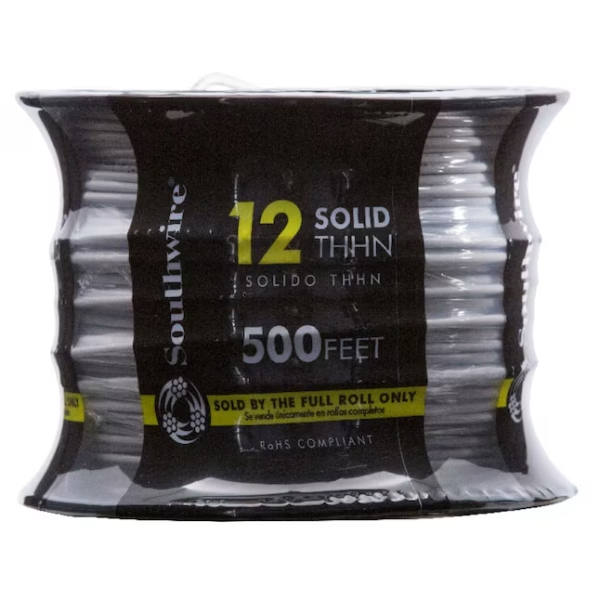
SIMpull THHN and THWN-2 are individual conductors for conduit installations. These products maintain the 90 degree Celsius insulation rating and higher ampacity performance of THHN/THWN-2 while adding the reduced-friction jacket. Particularly valuable for long conduit pulls where standard THHN would require significant pulling force.
SIMpull MC cable
SIMpull MC (Metal-Clad) cable combines the physical protection of metal-clad construction with reduced-friction jacket technology. MC cable is used in commercial installations and some residential applications requiring metal-clad construction. The SIMpull technology addresses pulling challenges specific to MC cable installations.
SIMpull SoloPull for large feeders
SIMpull SoloPull is designed for very long pulls of large feeder cables where extreme pulling force challenges exist. This variant is used in commercial and industrial installations where multiple large-gauge conductors must be pulled long distances through complex conduit systems. Not typically used in residential applications.
How SIMpull Technology Works
Understanding the technical mechanism behind SIMpull helps evaluate whether the technology addresses the specific challenges of your installation.
Reduced coefficient of friction
SIMpull jacket technology reduces the coefficient of friction between the cable surface and the surfaces it contacts during pulling. This includes framing lumber (joists and studs), drilled hole surfaces, conduit walls, and other cables in bundled pulls. The reduced friction requires less force to move the cable along the pull path.
Jacket formulation
The SIMpull jacket uses a specialized formulation developed by Southwire. The specific chemistry and additives are proprietary. The functional result is a jacket surface that slides more easily over contact surfaces compared to standard PVC jacket formulations used in traditional NM-B and cable products.
Physics of accumulated friction
Pulling force required increases with pull distance because friction accumulates at every contact point. On a long pull through multiple joists and studs, cumulative friction can require substantial force. SIMpull technology reduces friction at each contact point, resulting in exponentially reduced total pulling force on long complex pulls. This is why SIMpull benefits grow with pull length and complexity.
Direction change amplification
Direction changes in the cable path amplify friction significantly. Every bend around a joist or corner increases the force required to continue pulling. SIMpull technology reduces friction impact at each direction change, providing compounding benefits on installations with multiple direction changes such as retrofit routing around existing obstacles.
What SIMpull Does Well: The Pros
This Southwire SIMpull review section identifies specific strengths where the technology delivers real value to appropriate installations.
Documented reduced pulling force
Southwire product literature documents pulling force reduction compared to standard cable jackets. Professional electricians familiar with the product line generally confirm the reduction is noticeable in practical use, particularly on long complex pulls where the benefits compound. The reduction translates directly to less installer effort per pull.
Product line breadth
SIMpull technology across NM-B, THHN, THWN-2, MC cable, and SoloPull provides consistency for installations using multiple wire types. Professional installations often use different wire types for different portions of the same project (NM-B for branch circuits, THHN in conduit for hot ambient sections, MC for commercial applications). Consistent SIMpull technology across the product line simplifies inventory and procurement.
Same NEC compliance as standard products
SIMpull products maintain identical NEC compliance to their standard counterparts. SIMpull NM-B remains Type NM-B per NEC 334 with the same 60 degree Celsius ampacity limitation per NEC 334.80. SIMpull THHN maintains 90 degree Celsius rating for ambient temperature derating in hot installations. No code-related learning curve or additional compliance considerations.
Enables single-person pulls
Reduced pulling force enables single-person installation of pulls that would require two people with standard cable jackets. For solo electricians or small crews, this labor economics benefit is substantial. Each pull that can be completed by one person instead of two effectively doubles labor efficiency for that specific installation task.
Reduces installer fatigue
Reduced pulling effort translates to reduced installer fatigue over long work days. This becomes particularly valuable in attic and crawl space installations where installer positioning already amplifies fatigue. Reduced fatigue improves accuracy, reduces mistakes, and maintains productivity throughout the workday.
Reduces cable damage risk
Excessive pulling force can damage cable jackets, particularly at direction change points or through tight drilled holes. Reduced pulling force reduces this damage risk during installation. Less damage means less rework, fewer callbacks, and better long-term installation reliability.
Where SIMpull Falls Short: The Honest Cons
A credible Southwire SIMpull review must include honest cons and limitations. Understanding where SIMpull does not provide value helps buyers make informed decisions.
Material cost premium
SIMpull material cost premium of 10 to 25 percent per foot is the primary limitation. For installations that do not benefit substantially from reduced friction, this premium is difficult to justify. DIY installations, small projects, and easy pulls all represent scenarios where the premium provides limited value.
Diminishing returns on easy installations
SIMpull benefits diminish rapidly for easy installation conditions. New construction with open framing before drywall provides such easy pulling conditions that the SIMpull advantage is limited. Short pulls with few obstacles show minimal labor time savings. Simple accessible routing does not accumulate enough friction to benefit substantially from SIMpull technology.
Same physical restrictions as base products
SIMpull technology does not extend the applications where the base products can be used. SIMpull NM-B is still Type NM-B and remains restricted to indoor dry locations per NEC 334.12. SIMpull cannot be used underground, outdoors, or in wet locations any more than standard NM-B. The jacket technology addresses installation friction, not application scope.
Not a substitute for proper technique
SIMpull does not eliminate the need for proper installation technique. Cables must still be pulled with appropriate lubrication where needed, protected from damage, and installed with proper support and securing. Some installers may over-rely on SIMpull technology to compensate for poor technique, resulting in installation problems that the technology cannot solve.
Manufacturer-provided performance claims
The pulling force reduction claims are provided by Southwire based on manufacturer testing and specifications. Independent third-party verification of specific performance claims is limited. Actual performance in specific installations may vary from marketing claims based on specific conditions, installer technique, and cable configuration.
Availability may vary by market
SIMpull products may not be stocked in all sizes at all electrical retailers. Rural areas or specialty size requirements may require ordering rather than immediate availability. Standard NM-B and THHN products typically have wider immediate availability. This can affect project timelines when SIMpull products must be ordered specifically.
Requires understanding when to use vs when not to use
Effective SIMpull use requires understanding when the material premium is justified. Standardizing on SIMpull for all installations wastes money on projects that would work equally well with standard products. Standardizing on standard products for all installations misses labor savings opportunities on difficult installations. This decision-making complexity is itself a small limitation compared to using either product exclusively.
Performance in Real Installations
Real installation performance provides the practical context for the Southwire SIMpull review evaluation.
Long pull performance
Long pulls over 100 feet through multiple joists and studs show the most dramatic SIMpull benefits. Standard cable on these pulls often requires intermediate access points or pulling equipment. SIMpull enables continuous pulls that would be impractical with standard cable jackets. This is the clearest scenario where SIMpull earns its material premium.
Bundled cable performance
Bundled pulls of 3 or more cables simultaneously benefit substantially from SIMpull technology. Each cable contacts other cables in the bundle plus the pull path surfaces. Reduced friction on both cable-to-cable and cable-to-structure contacts provides compound benefits for bundled installations.
Retrofit installation performance
Retrofit installations through existing walls face severe friction challenges from drilled hole tightness, unseen obstacles, and complex routing around existing wiring and plumbing. SIMpull technology addresses these friction challenges directly, making retrofit installations substantially more manageable. Professional retrofit specialists often standardize on SIMpull.
New construction performance
New construction with open framing before drywall provides the easiest possible pulling conditions. SIMpull benefits are limited in this environment because friction challenges are minimal. Standard products perform well in new construction, and the SIMpull premium is difficult to justify. This is the scenario where SIMpull provides least value.
Cost-Value Assessment
The cost-value assessment brings together material premium and labor savings to provide the complete Southwire SIMpull review economic evaluation.
Material premium analysis
SIMpull material premium of 10 to 25 percent per foot compared to standard equivalent products represents the additional cost that must be recovered through labor savings for positive economic outcome. For a 250 foot roll of 12/2 with ground, the premium translates to a specific dollar amount that varies by wire size and market conditions.
Labor savings calculation
Labor savings depend on installer billing rate and time saved per pull. Professional electricians at $75 to $150 per hour billing rate calculating 5 minute savings per pull on 40 pulls per project results in approximately 3.3 hours of labor savings. Multiplied by the billing rate, this labor savings often exceeds the material premium for medium and large installations.
Break-even scenarios
Break-even scenarios occur when labor savings exactly offset material premium. Short pulls under 25 feet typically fall below break-even. Medium pulls of 50-75 feet through multiple obstacles typically reach break-even. Long pulls over 100 feet or bundled pulls typically exceed break-even substantially.
Value assessment for specific project types
Whole-house rewiring projects typically exceed break-even significantly, making SIMpull economically advantageous. Retrofit branch circuit additions typically exceed break-even due to friction challenges. New construction rarely reaches break-even. Small single-circuit projects rarely reach break-even due to limited absolute labor savings potential.
Who Southwire SIMpull Is Best For
Specific buyer profiles match the SIMpull value proposition, making the material premium easily justified.
Professional whole-house rewiring contractors
Professional contractors specializing in whole-house rewiring projects are the ideal SIMpull customer. These projects combine many long pulls with many bundled pulls through existing structure. Cumulative labor savings across an entire rewiring project typically exceed the material premium many times over. Standardizing on SIMpull for rewiring work is common professional practice.
Retrofit branch circuit specialists
Electricians specializing in retrofit branch circuit additions to existing homes face severe friction challenges routinely. SIMpull technology addresses these challenges directly, dramatically improving installation efficiency and reducing installer fatigue over long work days. The material premium is easily recovered through labor economics.
Attic and crawl space installers
Any installer routinely working in attic or crawl space environments benefits from SIMpull technology. The combination of difficult access conditions with typically long pull distances amplifies the SIMpull advantage. Reduced installer fatigue in these challenging environments has both economic and quality-of-work benefits.
Small crew installations
Small electrical contractors or solo electricians benefit from SIMpull enabling single-person pulls that would otherwise require two people. The effective labor efficiency doubling on these specific pulls provides substantial value for small crews where labor availability is limited.
Who Should Choose Standard Products Instead
Other buyer profiles do not match the SIMpull value proposition, making standard products the better economic choice.
DIY homeowners doing simple projects
DIY homeowners doing single-circuit additions or small projects should typically choose standard products. Without billed labor cost, the SIMpull material premium is difficult to justify. Standard Southwire products including standard Romex NM-B provide identical electrical performance at lower material cost for the specific projects DIY homeowners typically undertake.
New construction with open framing
New construction electrical installations before drywall provides such easy pulling conditions that SIMpull benefits are limited. Standard products perform well in this environment. New construction projects should typically use standard products for the majority of installations, potentially with selective SIMpull use for specific long or difficult sections.
Small single-circuit additions
Small projects like adding a single dedicated circuit for a specific appliance rarely justify SIMpull material premium. The total footage is small, so absolute cost difference is limited, but the labor savings are also limited due to short pull distances. Standard products provide the best economic value for small circuit additions.
Cost-sensitive small projects
Cost-sensitive projects where minimizing material cost is the primary priority favor standard products. This includes rental property maintenance, quick fixes, and any project where the electrical work is a small portion of a larger cost-focused project. Standard products provide identical electrical performance at lower material cost.
Alternatives to Southwire SIMpull
Understanding alternatives is a critical part of any Southwire SIMpull review and helps buyers evaluate whether SIMpull is truly the best choice or whether alternatives provide better value.
Standard Southwire products
Standard Southwire NM-B (Romex), THHN, THWN-2, and MC cable provide the primary alternative to SIMpull equivalents. Same manufacturer, same electrical performance, same NEC compliance, lower material cost. Standard products are the default choice when SIMpull benefits do not justify the premium.
Cerrowire alternatives
Cerrowire manufactures comparable NM-B and THHN products to Southwire. Both brands meet the same UL standards and NEC requirements. Cerrowire does not have a direct equivalent to SIMpull technology in the current product lineup, but Cerrowire standard products provide alternatives to standard Southwire products for buyers preferring different brand options.
Third-party lubricants for standard cable
Some installers use third-party wire pulling lubricants with standard cable products to achieve some of the friction reduction benefits at lower total cost. This approach requires additional application labor and may not provide equivalent friction reduction to SIMpull technology. For specific installations, this alternative may provide reasonable economic outcome.
Improved installation techniques
Improved installation techniques including proper hole sizing, cable positioning, and pull sequencing can reduce friction challenges without changing cable products. Professional training in efficient installation techniques provides value across all cable products and reduces the incremental value of SIMpull technology.
Product Selection Guide: SIMpull Variants and Sizes
Understanding the SIMpull product line variants and sizes helps match the specific product to your installation requirements.
SIMpull NM-B (Romex) sizes
SIMpull NM-B is available in common residential sizes including 14/2, 14/3, 12/2, 12/3, 10/2, 10/3, 8/2, 8/3, and 6/3 with ground. Standard reel lengths include 100 ft, 250 ft, 500 ft, and 1000 ft. Applications include indoor residential branch circuits for lighting, receptacles, and dedicated appliance circuits.
SIMpull THHN and THWN-2 sizes
SIMpull THHN and THWN-2 individual conductors are available in common sizes from 14 AWG through 500 kcmil for various residential and commercial applications. Standard color coding includes black, red, blue, yellow, white, and green in copper conductors. Aluminum SIMpull THHN is also available for larger feeder applications.
SIMpull MC cable configurations
SIMpull MC cable is available in common configurations for commercial and some residential applications. Sizes typically include 14 AWG through 4/0 depending on the specific application. MC cable installations use different pulling considerations than NM-B due to the metal-clad construction.
Reel length considerations
Reel length selection affects both material cost per foot and installation flexibility. Larger reels (500 ft and 1000 ft) provide better per-foot pricing but require more storage and handling. Smaller reels (100 ft) provide flexibility for smaller projects but higher per-foot cost. Match reel length to specific project requirements and inventory management preferences.
SIMpull Installation Tips and Best Practices
Getting the most from SIMpull technology requires proper installation techniques that work with the technology characteristics.
Take advantage of reduced friction
Plan installations to take advantage of the reduced friction. Longer continuous pulls that would be impractical with standard cable become practical with SIMpull. Consider reducing intermediate access points and completing longer continuous runs to maximize the labor time savings.
Use appropriate drill hole sizing
SIMpull reduces friction but does not eliminate the need for appropriate hole sizing. Drill joist and stud holes at the recommended size for the specific cable type. Overly small holes still cause friction issues even with SIMpull technology. Overly large holes waste structural material and may violate code depending on hole size relative to joist depth.
Consider single-person pull opportunities
Identify installation portions where SIMpull enables single-person pulls that would otherwise require two people. Plan crew scheduling to take advantage of these efficiency opportunities. Solo pulls also reduce coordination overhead and communication requirements during installation.
Combine with standard products strategically
Many professional installers optimize total cost by using SIMpull for difficult portions of an installation and standard products for easier portions. This strategic combination captures SIMpull benefits where they provide most value while avoiding the premium where standard products perform equivalently. Requires careful inventory management with both products stocked.
5 Common Mistakes with SIMpull Products
The mistakes below in this Southwire SIMpull review section cause the most frequent problems with SIMpull product use and can undermine the value proposition of the technology.

Mistake 1: Using SIMpull for simple installations that do not need it
The most common mistake is buying SIMpull for simple installations where the reduced friction provides minimal value. New construction with open framing, short pulls, and single-circuit additions all represent scenarios where standard products perform equivalently. The SIMpull premium is essentially wasted on these installations.
Mistake 2: Expecting SIMpull to compensate for poor installation technique
Some installers rely on SIMpull technology to overcome poor installation planning or technique. SIMpull reduces friction from the cable jacket but does not eliminate the need for proper hole sizing, appropriate cable routing, or careful pull technique. Over-reliance on the technology can lead to installation problems that the technology cannot solve.
Mistake 3: Standardizing on SIMpull for all projects
Some installers standardize on SIMpull for all installations to simplify inventory. This approach wastes money on projects that would work equally well with standard products. Effective SIMpull use requires selective application to the projects that benefit from the technology while using standard products where they perform equivalently.
Mistake 4: Assuming SIMpull extends application scope
SIMpull technology addresses installation friction, not application scope. Some installers incorrectly assume SIMpull NM-B can be used in wider applications than standard NM-B. This is incorrect. SIMpull NM-B is still Type NM-B per NEC 334 and still restricted to indoor dry locations per NEC 334.12. The technology does not extend where the product can be used.
Mistake 5: Not calculating actual labor savings
Some installers buy SIMpull based on general assumption of value without calculating actual labor savings for their specific projects. Break-even analysis for the specific installation characteristics provides accurate assessment of whether SIMpull material premium is recovered through labor savings. Skip this calculation at your own risk of poor purchase decisions.
Ready to order Southwire SIMpull products for your installation?
IB Lighting is an independent reseller of the complete Southwire electrical wire and cable lineup including SIMpull NM-B, SIMpull THHN, SIMpull MC cable, and standard equivalents. Call (800) 674-9019 or browse electrical wire and cable products.
Frequently Asked Questions
Is Southwire SIMpull worth the extra cost?
Southwire SIMpull is typically worth the extra cost for professional installations with long pulls, whole-house rewiring, retrofit through existing walls, and bundled cable pulls. For DIY installations, simple projects, and new construction with open framing, standard products provide better economic value. The specific answer depends on installation characteristics including pull length, complexity, and installer labor rate.
How much friction reduction does SIMpull actually provide?
Southwire product literature documents specific friction reduction claims for SIMpull technology compared to standard cable jackets. The actual reduction varies by installation configuration including pull length, direction changes, and bundled cable count. Professional electricians familiar with the product line generally confirm the reduction is noticeable in practical use, particularly on longer complex pulls.
Is SIMpull NM-B the same as SIMpull Romex?
Yes. SIMpull NM-B and SIMpull Romex refer to the same product. Both Romex (the traditional Southwire NM-B brand) and SIMpull (the reduced-friction jacket technology) are Southwire brands. When SIMpull technology is applied to Romex NM-B, the resulting product is marketed as either SIMpull NM-B or SIMpull Romex depending on the specific packaging and marketing materials.
Does SIMpull work with standard NM-B connectors and fittings?
Yes. SIMpull products use standard cable clamps, connectors, junction boxes, and installation hardware. The SIMpull jacket has the same physical dimensions as standard cable jackets for equivalent wire sizes, ensuring compatibility with all standard installation hardware. Terminal connections work identically because the internal conductors are the same as standard products.
Can SIMpull be used for direct burial or outdoor applications?
SIMpull NM-B cannot be used for direct burial or outdoor applications. NM-B is restricted to indoor dry locations per NEC 334.12 regardless of whether it uses standard or SIMpull jacket. For direct burial, use UF-B cable or individual THWN-2 conductors in PVC conduit. See our direct burial wire depth requirements article for underground installation guidance.
How does SIMpull compare to Cerrowire products?
Cerrowire manufactures comparable NM-B and THHN products meeting the same UL standards and NEC requirements as Southwire products. Cerrowire does not currently have a direct equivalent to SIMpull reduced-friction jacket technology. For installers preferring standard cable products without the reduced-friction premium, Cerrowire provides an alternative to standard Southwire products.
Should professional electricians standardize on SIMpull?
Complete standardization on SIMpull for all installations is typically not optimal. Better practice is selective use of SIMpull for installations that benefit from reduced friction (long pulls, retrofit work, bundled cables) while using standard products for installations that do not benefit (new construction, short pulls, simple projects). This mixed approach optimizes total project economics.
Where can I buy Southwire SIMpull products?
Southwire SIMpull products are available through electrical resellers nationwide including IB Lighting. Available product lines include SIMpull NM-B (Romex), SIMpull THHN, SIMpull THWN-2, and SIMpull MC cable in common sizes and configurations. Contact IB Lighting at (800) 674-9019 or through the electrical wire and cable collection.
Final Verdict and Rating
The Southwire SIMpull review final verdict provides a clear summary evaluation with specific recommendations for different buyer profiles.
Technology rating
SIMpull technology itself receives a strong rating for delivering on the core value proposition of reduced installation friction. The reduction is documented in Southwire literature and generally confirmed by professional installers in practical use. The technology addresses a real challenge in cable installation and provides real value for appropriate applications.
Product line rating
The SIMpull product line breadth across NM-B, THHN, THWN-2, MC cable, and SoloPull receives a strong rating for consistency and versatility. Professional installers benefit from consistent technology across all wire types used in their projects. The product line breadth allows standardization on the technology for installers who benefit from it.
Value rating (application-dependent)
The value rating for SIMpull depends entirely on the specific application. For professional whole-house rewiring, retrofit work, and long complex installations, SIMpull earns a strong value rating with material premium easily recovered through labor savings. For DIY work, simple projects, and easy new construction pulls, SIMpull earns a poor value rating due to insufficient labor savings to justify the premium.
Bottom line recommendation
The bottom line recommendation from this Southwire SIMpull review is selective use rather than universal adoption. Professional installers should use SIMpull for the installation types that match the value proposition (long pulls, retrofit work, bundled cables, whole-house rewiring) while using standard Southwire products for installations that do not benefit substantially. This selective approach optimizes total project economics while capturing SIMpull benefits where they provide the most value.
DIY installers doing simple residential projects should typically choose standard Southwire products including standard Romex NM-B and standard THHN. The material cost savings on standard products provide better economic value for the specific projects DIY installers typically undertake. Consider SIMpull only if you plan multiple future projects that would benefit from the technology.
Ready to order Southwire SIMpull or standard products for your installation?
IB Lighting resells the complete Southwire electrical wire and cable lineup nationwide with free freight insurance included. Call (800) 674-9019 or browse electrical wire and cable products.
This Southwire SIMpull review was last reviewed and updated in June 2026. Southwire, SIMpull, and Romex are registered trademarks of Southwire Company LLC. This review reflects editorial evaluation based on manufacturer product literature, technical specifications, and general installer feedback. IB Lighting is an independent reseller of Southwire products and does not have a manufacturer sponsorship, dealer authorization, or partnership relationship with Southwire. Product features, pricing, and availability are subject to change and may vary by region. Current specific pricing on Southwire SIMpull products is shown on individual product pages.