

















Standby Generator Installation Cost: An Honest Expert Guide for 2026


Standby Generator Installation Cost: An Honest Expert Guide for 2026
Key Takeaways Standby generator installation cost in 2026 runs $7,000 to $20,000 fully installed, with most homeowners paying $10,000 to $14,000 for a 22kW unit. Equipment from Generac...
- Standby generator installation cost in 2026 runs $7,000 to $20,000 fully installed, with most homeowners paying $10,000 to $14,000 for a 22kW unit.
- Equipment from Generac and Kohler is MAP-protected, so final pricing is shown securely in cart, not on listing pages or in third-party guides.
- Labor alone typically runs $4,000 to $7,000, covering permits, the concrete pad, the automatic transfer switch, conductors, fuel line, and AHJ inspections.
- Hidden costs that push installs higher include 100-amp to 200-amp panel upgrades, surge protection, load management, and yard trenching for fuel lines.
- NEC Article 702 and NFPA 37 govern every standby install, which is why DIY is illegal and why a licensed electrician is non-negotiable.
Standby generator installation cost in 2026 ranges from $7,000 to $20,000 fully installed, with most homeowners paying $10,000 to $14,000 for a 22kW whole-home unit. Equipment runs $4,500 to $8,000, professional installation adds $4,000 to $7,000, and permits, pad work, and panel upgrades add another $1,000 to $3,000 on top.
Our founder, Imad Boussi, is a licensed Master Electrician who has spent decades on the bench specifying generator installs across Michigan and beyond. After helping thousands of families through the IB Lighting warehouse in Dearborn Heights, I can tell you the single biggest reason buyers feel ambushed by their final quote is that nobody walks them through the line items honestly. This guide does. No vague ranges. No hype. Just the real 2026 numbers, line by line, from a family business that sells the equipment for a living.
How Much Does Standby Generator Installation Cost in 2026?
Standby generator installation cost in 2026 ranges from $7,000 to $20,000 fully installed for a typical residential unit. The middle of that range, $10,000 to $14,000, is where most 22kW whole-home installs land. That number covers everything: the generator itself, the automatic transfer switch, the concrete pad, the conductor run from generator to panel, the fuel line connection, permits, and the AHJ inspection.
The two reasons the range looks so wide come down to generator size and site complexity. A small 10kW unit feeding only essential circuits in a modern home with natural gas at the meter and a short conductor run can come in well under $10,000. A 26kW unit with a panel upgrade, a propane tank install, and 60 feet of trenching can clear $20,000 without breaking a sweat.
What never changes is the structure of the cost. Every standby generator installation cost in the country breaks down into the same line items: equipment, transfer switch, electrical labor, fuel hookup, pad, permits, and inspection. The dollar amount inside each line varies. The line items themselves do not. That is why an itemized quote is the only quote worth trusting, a point we will come back to repeatedly in this guide.
The next section explains why the equipment number you see online is often not the real one.
Why the Equipment Sticker Price You See Online Is Misleading
Generac and Kohler both enforce a Minimum Advertised Pricing policy across every reseller in the country. That is not optional. It is a written contract between the manufacturer and every legitimate reseller, and it is the single most misunderstood part of standby generator installation cost research.
Here is what MAP actually means. The price you see on a Generac or Kohler product page on any reseller’s website is the highest price that reseller is allowed to advertise. The actual price you pay is shown in the cart or quoted directly. Cost guides that publish a flat “the unit costs $5,000” number are quoting MAP, not what a real customer actually invoices. The real number is almost always meaningfully lower.

This matters for one practical reason. If you are budgeting a standby generator installation cost using sticker prices from random cost guides, you are budgeting too high on the equipment side and too low on the install side. The install side is where the real variables live, and the install side is where most homeowners get an unwelcome surprise.
Pro tip: If a competitor’s website shows a final Generac or Kohler price without requiring you to add it to the cart or call, they are either out of policy with the manufacturer or selling unauthorized inventory. Both are red flags. A reseller in good standing follows MAP and is transparent about why.
We explain the full mechanics in our guide to MAP pricing on generators, but the short version is: equipment cost is the easy part to budget honestly. Install cost is where attention should go.
Up next, the cost by generator size, with the line you can actually plan against.
Standby Generator Installation Cost by Generator Size
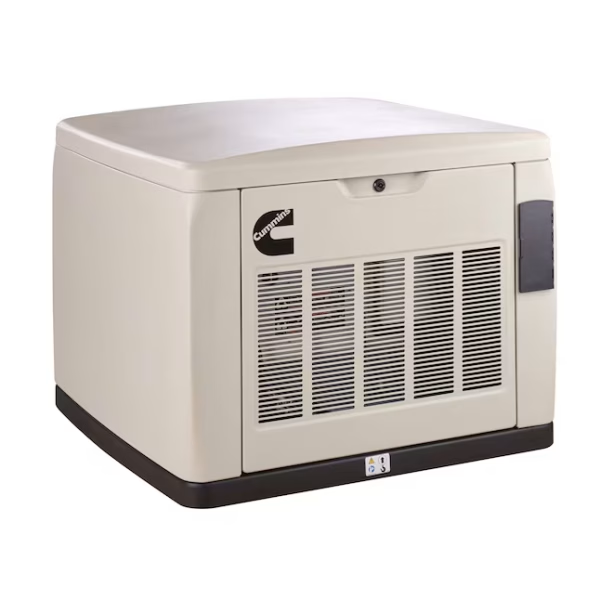
Generator size is the largest single driver of standby generator installation cost. Bigger units need heavier conductors, larger transfer switches, more gas flow, and sometimes a panel upgrade just to handle the input current. Every kilowatt up the chain adds dollars not just to the equipment line, but to almost every install line too.
Here is the 2026 cost matrix IB Lighting sees most often, gathered from real customer installs and quotes shared back with our sales team. Equipment ranges represent the typical out-the-door cost after MAP final pricing is applied, not the advertised number.

| Generator Size | Coverage | Equipment (Out the Door) | Typical Install Labor | Total Standby Generator Installation Cost |
|---|---|---|---|---|
| 10kW | Essential circuits | $2,500 to $3,500 | $4,000 to $5,500 | $7,000 to $9,500 |
| 14kW | Most lighting and small appliances | $3,200 to $4,200 | $4,500 to $6,000 | $8,500 to $10,500 |
| 18kW | Whole home minus AC | $4,200 to $5,200 | $5,000 to $7,000 | $10,000 to $12,500 |
| 22kW | Whole home with one central AC | $4,800 to $6,200 | $5,500 to $8,000 | $11,000 to $14,500 |
| 24kW | Whole home with one AC and well | $5,500 to $7,000 | $6,000 to $8,500 | $12,500 to $16,000 |
| 26kW to 28kW | Whole home with central AC and EV charging margin | $6,500 to $8,200 | $6,500 to $10,000 | $14,000 to $19,500 |
The 22kW row is where most American homes land. If you are not sure which size fits your home, our generator sizing guide walks through the load calculation, and our backup wattage guide covers the appliance-by-appliance math.
One thing to flag immediately. These ranges assume code-compliant work by a licensed electrician with a permit on file. Anyone quoting below the low end of these ranges is cutting a corner that will show up later, usually as a failed AHJ inspection, a voided warranty, or both.
Now the line items that make up the install side.
The Full Line-Item Install Breakdown a Master Electrician Actually Charges For
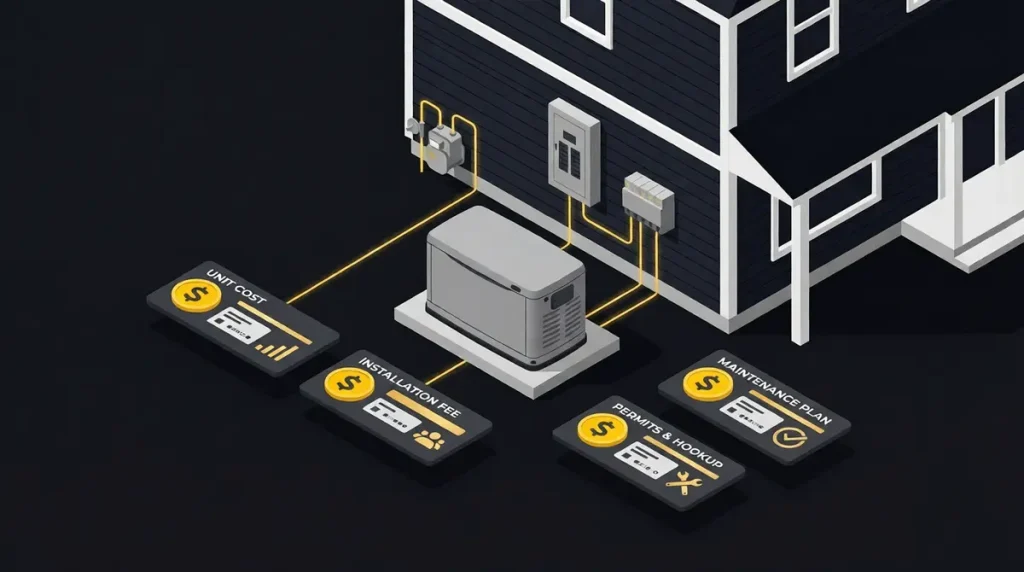
Installation labor is not one number. It is six discrete jobs, each with its own line on a clean quote. Any contractor handing you a one-line “installation: $7,000” is either being lazy or hoping you do not ask questions. Here is what an honest itemized standby generator installation cost quote actually contains.

Permits, Plan Review, and AHJ Inspections
Every standby install in the United States requires a permit. Most jurisdictions issue an electrical permit, a mechanical or gas permit, and sometimes a zoning permit for setback compliance. Permit fees run $100 to $500. The Authority Having Jurisdiction inspects the rough-in, the gas hookup, and the final commissioning. Plan review can take two to four weeks. This is the line item homeowners try to skip the most, and it is the worst one to skip. Operating an unpermitted generator can void homeowner insurance after a fire claim.
Concrete Pad and Site Preparation
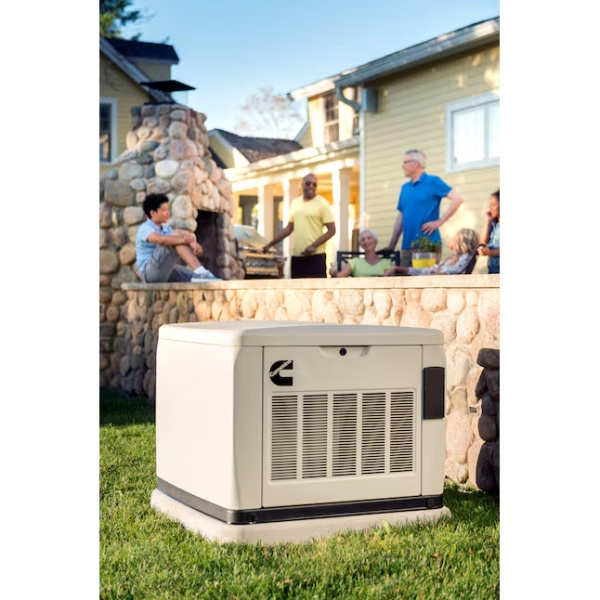
Standby generators sit on a level non-combustible pad, either poured concrete or a manufacturer-supplied composite pad. A 3-foot by 6-foot poured pad runs $400 to $1,200 depending on local concrete prices and whether the ground needs leveling first. Sloped sites, rocky soil, or tree root work add labor. The pad is not optional. The unit vibrates significantly during operation and a flat compacted base prevents settling that throws off conductor and gas line alignment.
Automatic Transfer Switch Installation
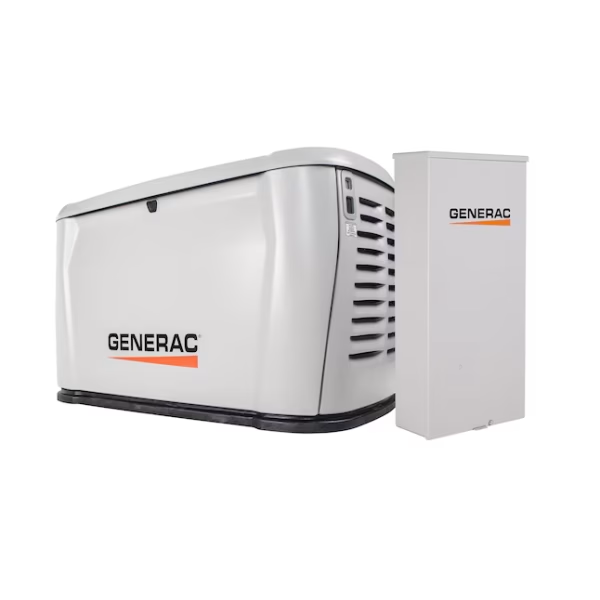
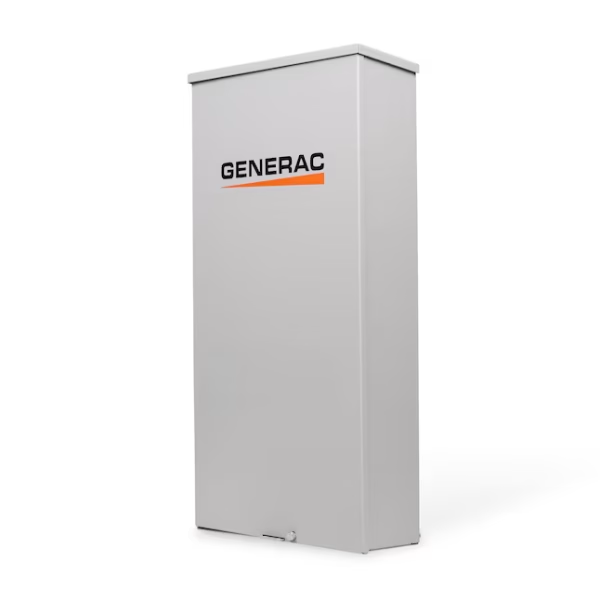
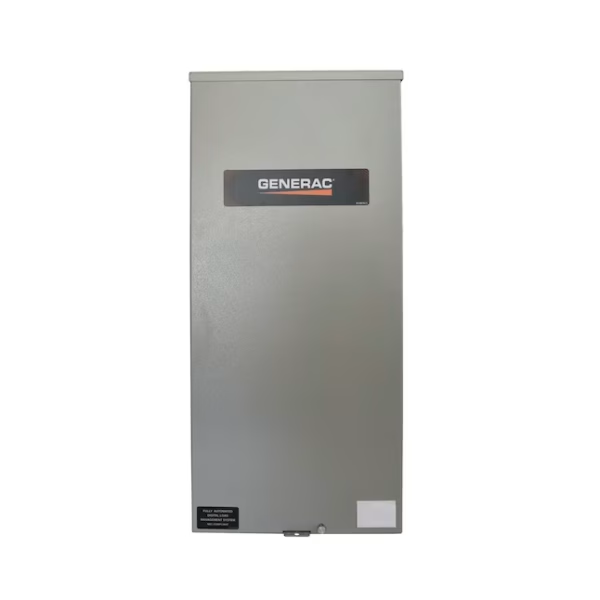
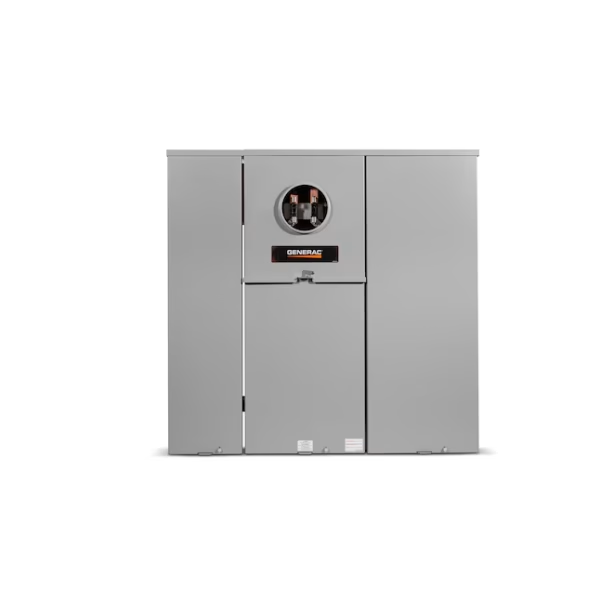
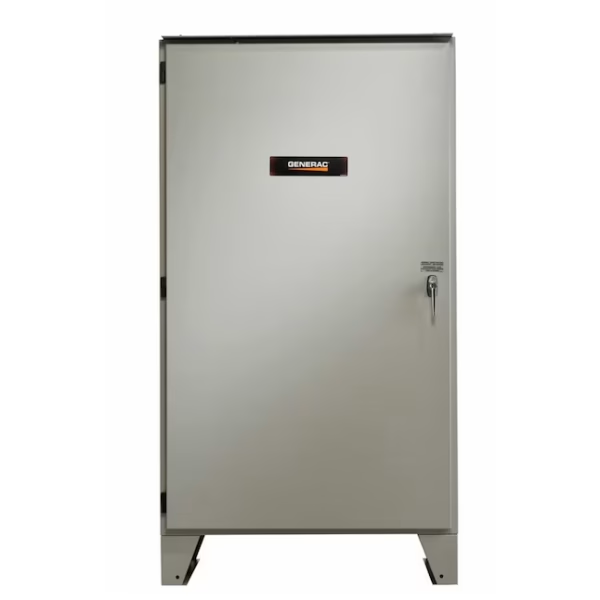
The automatic transfer switch (ATS) is the brain of the install. It senses utility loss, signals the generator to start, transfers your home’s load from grid to generator within seconds, then transfers back when utility returns. ATS installation runs $1,500 to $3,500 depending on whether it is a service-rated 200-amp unit, a smart switch with load management, or a smaller essential-circuits panel. Service-rated whole-home switches like the Generac RXSW200A3 cost more upfront but eliminate a separate main service disconnect. Our deep dive on 200-amp versus 100-amp transfer switches covers the sizing decision in detail.
Conductor Run, Conduit, and Bonding
Conductors from generator to ATS must be sized per NEC Table 310.16 and protected in raceway. For a 22kW unit running 240V single-phase, that typically means 3/0 AWG copper THHN in 2-inch rigid metal conduit for a service-rated ATS, plus a #4 AWG ground. Cost depends on run length: $40 to $90 per linear foot installed. Bonding and grounding follow NEC Article 250.30 if the generator is a separately derived system. A 25-foot run costs $1,000 to $2,250. A 60-foot run with trenching can clear $5,000 alone.
Natural Gas or Propane Fuel Line
A licensed gas fitter or plumber runs the fuel line from your gas meter or propane tank to the generator. Natural gas hookups cost $500 to $1,500 for a short run, scaling up to $2,500 for longer runs with trenching. Propane installs that need a new tank add $800 to $2,500 for a 250 or 500-gallon tank set. Gas line sizing matters more than people realize: an undersized line starves the engine and causes nuisance trips. A 22kW Generac needs roughly 326 cubic feet of natural gas per hour at full load, which dictates a minimum 1-inch line at typical residential pressure.
Commissioning, Load Test, and Final Inspection
The final line item covers startup, exercise programming, transfer testing under load, owner orientation, and the AHJ inspection. This runs $300 to $700. Skipping it is how you end up with a generator that runs beautifully in test mode and fails on the first real outage because the ATS was never load-tested against your actual circuit demand. Our how a standby generator works guide walks through the transfer sequence so you can verify it during commissioning.
That is the labor side of every honest standby generator installation cost. Six lines. No mystery.
Putting a budget together right now?
Our Master Electrician-founded team will walk you through equipment sizing, MAP pricing on Generac and Kohler, and the install line items above. No pressure. Reach out for honest sizing and pricing guidance or call (800) 674-9019.
What NEC Article 702 and NFPA 37 Actually Require
Most cost guides skip the code conversation entirely, which is a mistake. The reason your standby generator installation cost looks the way it does is that two national standards dictate the work: NEC Article 702 (Optional Standby Systems) and NFPA 37 (Standard for the Installation and Use of Stationary Combustion Engines and Gas Turbines). Knowing what these standards require tells you why each line item exists.

NFPA 37, Section 4.1.4 defaults the generator setback to a minimum of 5 feet from any operable window, door, vent, or combustible wall. This rule keeps exhaust away from anywhere it could reenter the home as carbon monoxide. The full NFPA 37 standard covers stationary engine installations in detail. Here is the practical catch: Generac and Kohler both publish manufacturer installation manuals that, when followed in full, allow tighter clearances (Generac permits 18 inches at the rear of certain units). The Authority Having Jurisdiction always has the final word.
NEC Article 702, the section that governs residential standby systems, requires the generator to be wired through a listed transfer switch, conductors sized per NEC Table 310.16, overcurrent protection per NEC Article 240, and grounding per NEC 250.30 if the generator is a separately derived system. The full NEC (NFPA 70) is the parent standard. Article 445 covers the generator itself, including the required listing under NEC 445.6 for stationary units rated 600V or less.
Pro tip: If your install quote does not mention conductor sizing, bonding per NEC 250.30, or the transfer switch listing, the electrician has not actually engineered the install. They have priced a guess. Ask for those specifications in writing before signing.
Manufacturer literature matters here too. Generac publishes its own installation guides with unit-specific clearance and gas pressure data. The shorter clearance that Generac permits in some configurations is not a code violation, it is a manufacturer’s listed condition that the AHJ may accept. This is exactly why a licensed electrician walks the site instead of guessing from a desk.
Up next, the hidden costs that the code does not always force, but the real world does.
Hidden Costs That Push Standby Generator Installation Cost Higher
The line items above cover what every install needs. The line items below cover what specific installs need. Whether they apply to you depends on your home, your panel, your yard, and what your electrician finds when they walk the property.

- Main panel upgrade from 100-amp to 200-amp service: $2,000 to $4,500. Homes built before 1990 often have 100-amp service, which cannot handle a 22kW or larger generator output. Upgrading to a 200-amp panel involves a new meter base, new main breaker, possibly new service conductors from the utility drop, and a utility coordination day. This is the single biggest budget surprise we see.
- Surge protection device at the panel: $250 to $600. Both Generac and Kohler strongly recommend whole-home SPDs to protect sensitive electronics during the transfer event and during nearby lightning. Some smart transfer switches include SPDs; standard ATS units do not. The warranty implications of skipping surge protection are real.
- Load management module: $200 to $700. Smaller generators (18kW and below) cannot run every circuit simultaneously. A load management module sheds non-essential loads automatically when essentials demand power. The alternative is sizing up the unit, which usually costs more than the module.
- Trenching for fuel line or conductor run: $10 to $25 per linear foot. Cross-yard runs to reach a buried natural gas meter or a remote propane tank scale fast. A 50-foot trench through landscaped yard with manual restoration can clear $1,500.
- Propane tank purchase or rental: $800 to $2,500 for a 250 or 500-gallon tank. Some propane suppliers will rent tanks at $100 to $200 per year if you contract with them for fuel delivery. Owning the tank gives you flexibility on supplier choice; renting reduces upfront cost.
- Cold weather kit for northern climates: $250 to $600. Engine block heaters and battery warmers are required by code in many cold climates and recommended everywhere north of the Mason-Dixon line. Without one, the generator may fail to start on the coldest mornings, which is exactly when you need it.
- Mobile Link or remote monitoring: $150 to $400. Generac Mobile Link and Kohler OnCue let you monitor the generator from a phone, including exercise alerts, fault codes, and fuel level. Not strictly required but borderline mandatory for second homes or anyone who travels.
- Tree removal, landscaping restoration, or fence access cut: variable, typically $300 to $1,500. NFPA 37 clearance and OEM installation manuals require clear airflow around the unit. If a hedge has to come out, that is real cost. If the only access is through a fence, that is a panel that has to come off and go back on.
None of these are gotchas if your electrician walks the site before quoting. All of them are gotchas if they do not. This is why same-day phone quotes for standby generator installation cost are worse than useless.
Generac vs Kohler Installation Cost Differences
Both Generac and Kohler are MAP-protected, so final equipment pricing for both brands lands in a similar window once the cart pricing reveals. The differences show up in the install rather than the box.

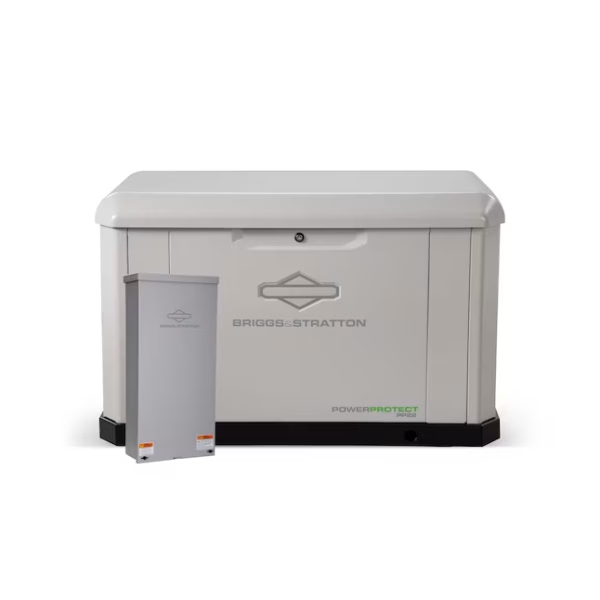
Generac installs tend to come in slightly lower on the labor side, mostly because Generac’s footprint dominates the residential market, more electricians have installed them before, and the parts ecosystem (ATS, cold weather kits, maintenance kits) is broader. Generac’s RXSW and RXSC transfer switch lines integrate cleanly. Generac also permits tighter clearance under certain unit-specific listings, which can save trenching dollars on tight side yards.
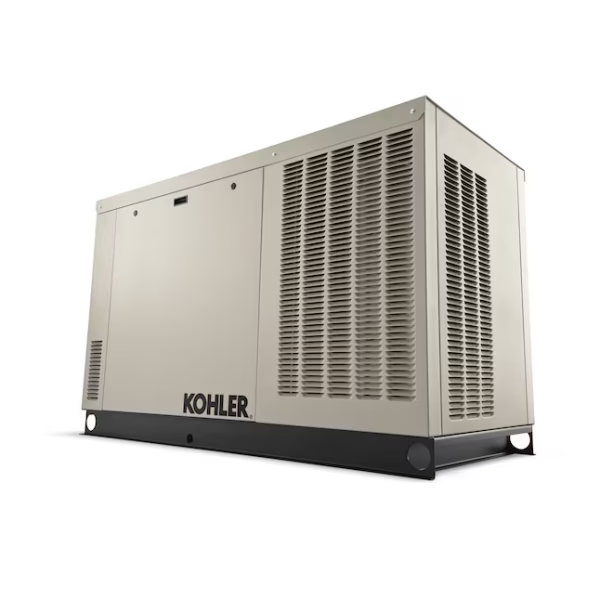
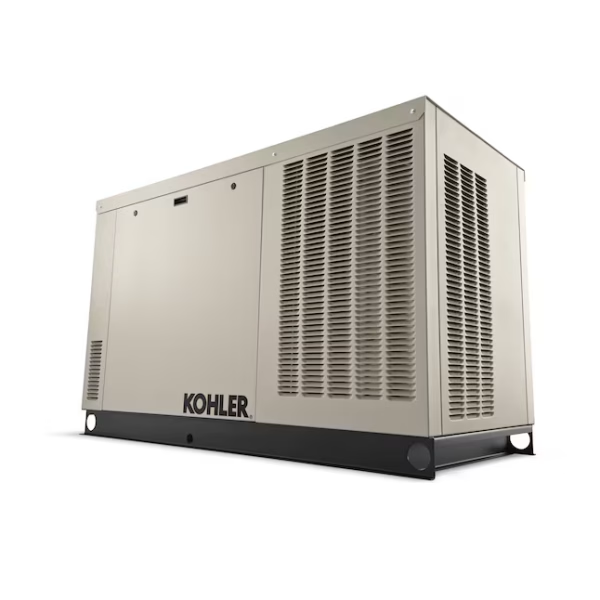
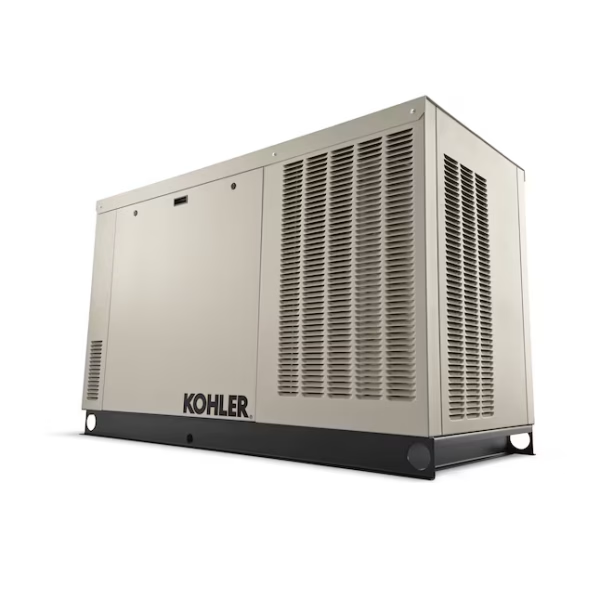
Kohler installs trend slightly higher on equipment for comparable kW output, but the build quality on the engine block side is widely respected and the OnCue platform is mature. For homes that already have a Kohler generator and need a service upgrade, sticking in-family makes sense.
The full breakdown is in our Generac vs Kohler comparison guide. For most buyers, the brand decision comes after the size decision, and the install cost difference between the two is small enough that it rarely changes the brand pick.
Now, the part where you take what you have learned and apply it to your own home.
How to Get an Honest Standby Generator Installation Quote
Most homeowners ask the wrong question first. They ask "how much will this cost." The better question is "can you put it in writing line by line."

Here is what a clean standby generator installation cost quote should contain. Equipment model and exact part number (so you can verify it matches what gets delivered). Transfer switch model and amperage. A conductor schedule with size, type, and length. Pad type and dimensions. Fuel line size and total length. Permit cost broken out. Labor cost broken out per phase. Commissioning and load test cost. Manufacturer warranty registration confirmation.
Pro tip: Ask your electrician to print the conductor sizing reference (NEC Table 310.16 row) on the quote. A licensed Master Electrician will know exactly where to find it and will be happy to include it. Anyone who balks is the wrong contractor for the job.
One other quiet truth: the cheapest quote is almost never the right quote. We have seen installs where the bid was $2,000 under the next-closest competitor and the homeowner discovered later that the contractor skipped the permit, used undersized conductors, and rough-poured the pad without a frost footing. The "savings" turned into a tear-out and reinstall the following spring at three times the original margin. Buying with a real warranty and a real install is the only model that holds up.
Still figuring out if this fits your home and budget?
IB Lighting was founded by a licensed Master Electrician for exactly this conversation. We will help you size the unit, explain MAP pricing on Generac and Kohler, and walk you through the install line items so your local electrician's quote makes sense. Free freight insurance on every generator order, nationwide US delivery, and expert support before and after the sale. Reach out for honest guidance or call (800) 674-9019.
Frequently Asked Questions
How much does it cost to install a 22kW Generac generator?
Installing a 22kW Generac generator typically costs $11,000 to $14,000 in 2026, fully installed. Generac equipment is MAP-protected, which means final pricing is shown securely in cart. Installation labor runs $4,000 to $7,000 depending on panel work, gas line distance, and pad preparation.
Why are Generac generators so expensive to install?
Generac generators are expensive to install because the work requires a licensed electrician, a permit, a poured concrete pad, an automatic transfer switch wired into the main panel, a fuel line from your gas meter or propane tank, and AHJ inspections. Each of these line items is non-negotiable under NEC Article 702.
Is a whole house generator worth the cost?
A whole house generator is worth the cost in areas with frequent or long outages, for homes with medical equipment, well pumps, or sump pumps, and for any homeowner who cannot tolerate spoiled food or frozen pipes. The unit also adds resale value and may lower homeowner insurance in storm-prone regions.
How long does it take to install a standby generator?
Standby generator installation takes one to two days of physical labor once permits are approved. Permitting itself takes two to four weeks in most jurisdictions. Plan for four to six weeks total from signed quote to commissioning, longer in busy storm seasons or rural counties with slower AHJ turnaround.
Do you need a permit to install a standby generator?
Yes, every jurisdiction in the United States requires a permit to install a standby generator. You typically need electrical, mechanical or gas, and sometimes zoning permits. Permit fees range from $100 to $500. The Authority Having Jurisdiction inspects rough-in, gas hookup, and final commissioning.
Can I install a standby generator myself?
No, you cannot legally install a standby generator yourself in the United States. NEC Article 702 and NFPA 37 require a licensed electrician for the transfer switch, conductor sizing, and grounding. A licensed plumber or gas fitter is required for the fuel line. DIY installs void the manufacturer warranty and fail AHJ inspection.
Does installing a generator increase home value?
Yes, installing a standby generator increases home value, typically by three to five percent in outage-prone regions. In hurricane and ice storm zones, buyers view standby generators as essential infrastructure rather than a luxury. Appraisers credit the cost when the unit is professionally installed, permitted, and warranty-backed.
How much does a 200-amp automatic transfer switch cost installed?
A 200-amp automatic transfer switch costs $1,500 to $3,500 installed in 2026. Service-rated whole-home switches like the Generac RXSW200A3 sit at the upper end but eliminate the need for a separate service disconnect. Smart switches with load management cost more upfront but enable smaller, less expensive generators.
When should I hire a professional for standby generator installation?
Always. NEC Article 702, NFPA 37, and every state electrical code require a licensed electrician for any permanently installed standby generator. IB Lighting's Master Electrician founder can help you size, specify, and source the unit, then coordinate with your local installer to get a code-compliant install at a fair price. Reach out to our team to start.
Conclusion
Standby generator installation cost in 2026 lands between $7,000 and $20,000, with $10,000 to $14,000 covering most 22kW whole-home installs. The three numbers that decide where in that range you sit are generator size, panel age, and site complexity. The three documents that should govern the work are the manufacturer's listed installation manual, NEC Article 702, and NFPA 37. The single most important thing you can do as a buyer is insist on a line-itemed quote. Vague ranges are how installers hide margin. Honest ranges are how IB Lighting earns trust.
Ready to size, specify, and budget your standby generator install the honest way?
IB Lighting is a family-owned reseller founded by a licensed Master Electrician. We carry every Generac and Kohler size you need, with free freight insurance and nationwide US delivery. Browse Generac home standby generators 10kW to 28kW or talk to our team.