















UF-B Wire vs THHN in Conduit: Complete 2026 Comparison Guide


UF-B Wire vs THHN in Conduit: Complete 2026 Comparison Guide
🕑 14 min read Updated: June 2026 Table of Contents The Fast Answer: UF-B Wire vs THHN in Conduit What Is UF-B Cable? What Is THHN in Conduit?...

- The UF-B wire vs THHN in conduit decision comes down to three primary factors: hot ambient temperature performance (THHN wins with 90 degree Celsius insulation vs UF-B forced to 60 degree Celsius per NEC 340.80), direct burial depth requirements (UF-B requires 24 inches while THHN in PVC requires 18 inches per NEC Table 300.5(A)), and future modification flexibility (THHN in conduit allows future wire replacement without excavation).
- UF-B cable wins for cool climate installations, shorter runs where labor cost matters most, straightforward routing without future modifications, and cost-sensitive residential projects where standard branch circuit amperage is adequate and the 24 inch trenching depth is not a critical constraint.
- THHN or THWN-2 individual conductors in PVC conduit win for hot climate installations where NEC 310.15(B) ambient temperature derating requires 90 degree Celsius insulation, long runs where future circuit modifications are likely, rocky soil requiring physical protection, and higher-ampacity feeder circuits where the 90 degree Celsius ampacity column matters.
- Cost comparison between UF-B wire vs THHN in conduit installations depends on total project cost including material (UF-B cable typically lower cost per foot than THHN plus PVC plus fittings) plus installation labor (UF-B requires deeper trenching while THHN requires conduit assembly and wire pulling), with total costs often similar for typical residential runs.
- Application-specific recommendations include: UF-B for standard well pump circuits and short garage subpanel feeders in cool climates, THHN in conduit for hot climate installations, long distance runs, EV charger circuits with future upgrade potential, and any installation where the electrical panel or terminations experience elevated ambient temperatures requiring 90 degree Celsius insulation for derating margin.
- The interactive UF-B vs THHN decision tool below evaluates your specific installation scenario across the key decision factors including installation environment, circuit type, cost priorities, and future modification needs, returning a recommendation for your project with the rationale for the specific choice.
UF-B wire vs THHN in conduit is one of the most common wire type decisions for residential outdoor and underground electrical installations. UF-B cable is designed for direct burial without conduit protection and requires 24 inches minimum burial depth per NEC Table 300.5(A) Column 1, while THHN or THWN-2 conductors in PVC conduit listed for direct burial requires only 18 inches minimum per Column 3. This article compares UF-B wire vs THHN in conduit across all key decision factors including NEC requirements, ampacity, cost, installation complexity, physical protection, hot climate performance, and future modification flexibility to help you make the right choice for your specific installation scenario.
Across thousands of Southwire and Cerrowire orders shipped from IB Lighting nationwide, our electrician-led team helps buyers make the UF-B wire vs THHN in conduit decision for outdoor circuit installations including garage subpanel feeders, well pump circuits, hot tub installations, EV charger routing, and outdoor lighting circuits. Founded in 2013 by a licensed Master Electrician with field experience across DTE Energy and Consumers Energy projects in Michigan, IB Lighting resells the full Southwire and Cerrowire electrical wire and cable lineup including UF-B cable and individual THWN-2 conductors for PVC conduit installations.
This article covers the complete UF-B wire vs THHN in conduit comparison that we regularly discuss with buyers planning outdoor electrical installations, using citations from the current National Electrical Code (NFPA 70) and industry practice from the International Association of Electrical Inspectors.
The Fast Answer: UF-B Wire vs THHN in Conduit
The UF-B wire vs THHN in conduit decision depends on three primary factors. Choose UF-B cable for cool climate installations with shorter runs where cost and installation speed matter most and no future modifications are planned. Choose THHN or THWN-2 in PVC conduit for hot climate installations where 90 degree Celsius insulation is needed for ambient temperature derating, long runs where future circuit changes are likely, higher-ampacity feeders, and installations requiring maximum physical protection from rocky soil or future excavation activity.
The three key factors
The three factors driving the UF-B wire vs THHN in conduit decision are ambient temperature performance (THHN allows 90 degree Celsius ampacity column while UF-B is limited to 60 degree Celsius per NEC 340.80), burial depth requirements (UF-B needs 24 inches while THHN in PVC needs 18 inches per NEC Table 300.5(A)), and future modification flexibility (conduit installations allow pulling new wires without new excavation).
The typical decision pattern
Most residential installations fall into a predictable pattern. Short straightforward runs in cool climates for standard branch circuits typically use UF-B cable for simplicity and cost. Longer runs, hot climate installations, higher-ampacity feeders, and installations with likely future modifications typically use THHN or THWN-2 in PVC conduit for the performance and flexibility benefits.
Cost consideration
Material costs favor UF-B (single cable versus conductors plus conduit plus fittings), while installation labor may favor THHN in conduit (18 inch trench versus 24 inch trench requires less excavation). Total installed costs are often similar for typical residential runs, so the decision usually comes down to technical performance requirements rather than pure cost.
What Is UF-B Cable?
Understanding UF-B cable construction and characteristics establishes the baseline for the UF-B wire vs THHN in conduit comparison.
UF-B cable construction
UF-B (Underground Feeder-B) cable is a multi-conductor cable with individual insulated conductors bundled together and encased in a solid outer jacket. The outer jacket is typically gray colored solid PVC that provides moisture resistance, sunlight resistance when marked, and physical protection for the individual conductors. UF-B is manufactured specifically for direct burial applications without conduit protection.
UF-B versus NM-B distinction
UF-B is often confused with NM-B (Non-Metallic Sheathed, also called Romex) because both are multi-conductor cables with similar appearance. However, they are completely different products. NM-B is manufactured for indoor dry location installations only and cannot be used outdoors or underground per NEC 334.12. UF-B is manufactured for direct burial applications with weather-resistant construction. Substituting one for the other is a serious code violation.
Available UF-B sizes and configurations
UF-B cable is available in common residential sizes from 14/2 through 6/3 with ground and larger. Standard configurations include 14/2, 12/2, 10/2, 8/2, 6/2, 8/3, 6/3, and 4/3 with ground. The number-slash-number designation indicates conductor size and number of insulated conductors (with the ground conductor included but not counted in the number after the slash).
UF-B applications
UF-B is used for outdoor branch circuits, feeder circuits to detached structures, well pump circuits, hot tub circuits, outdoor lighting circuits, and any direct burial application within the capability of the available cable sizes. UF-B is the default choice for many residential outdoor circuits due to its simplicity and reliability when installation environment matches the cable capabilities.
What Is THHN in Conduit?
Understanding THHN in conduit installations completes the baseline for comparing UF-B wire vs THHN in conduit approaches.
THHN conductor characteristics
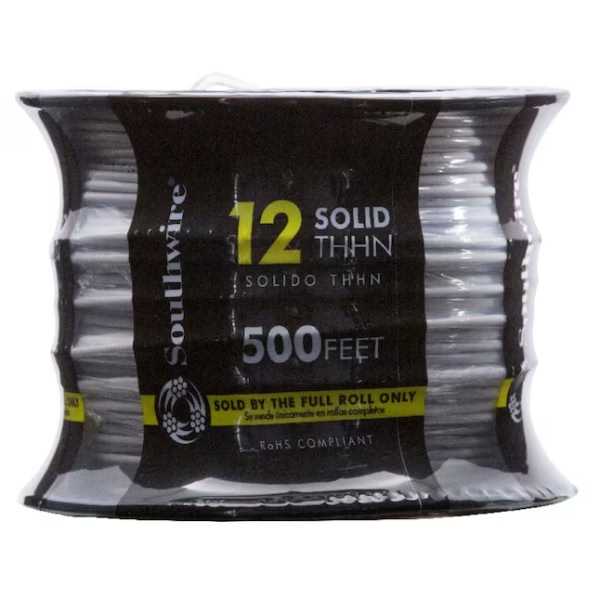
THHN (Thermoplastic High Heat-resistant Nylon-coated) is an individual conductor with 90 degree Celsius insulation temperature rating. The conductor is a single insulated wire (not bundled with other conductors) that must be installed in appropriate protective raceway or cable assembly. THHN is a single-conductor product, meaning each circuit conductor is a separate physical wire.
THWN-2 versatility
Many manufacturers now produce dual-rated THHN/THWN-2 conductors that meet the specifications for both dry location THHN and wet location THWN-2 applications. THWN-2 has 90 degree Celsius rating in wet locations, providing the same rating in both wet and dry applications. This dual-rated product is often preferred because it can be used in any application without concerns about wet or dry designation.
Conduit types for THHN installations
THHN and THWN-2 must be installed in appropriate raceway. Common options include PVC (Polyvinyl Chloride) conduit per NEC 352 for outdoor and direct burial installations, EMT (Electrical Metallic Tubing) per NEC 358 for indoor and above-ground installations, RMC (Rigid Metal Conduit) per NEC 344 for maximum physical protection, and IMC (Intermediate Metal Conduit) per NEC 342 as a lighter-weight metal alternative.
THHN in conduit applications
THHN in conduit is used for feeder circuits requiring higher ampacity, installations in hot ambient environments where 90 degree Celsius rating provides derating margin, long distance runs where future modifications are possible, complex routing requiring multiple bends, and any installation where the physical protection of the conduit provides value beyond cable-only installation.
NEC Requirements: UF-B vs THHN
The specific NEC requirements governing UF-B and THHN installations create the compliance framework for the UF-B wire vs THHN in conduit decision.
NEC 340 covers UF cable
NEC 340 is the primary code article governing Type UF Underground Feeder Cable installations. This article specifies where UF-B can be used, installation methods, protection requirements, and specific limitations. NEC 340 works with NEC 300.5 (Underground Installations) to establish the complete UF-B installation requirements including burial depths and protection from damage.
NEC 340.80 ampacity restriction
NEC 340.80 requires UF-B cable ampacity to be determined using the 60 degree Celsius column of NEC Table 310.16 regardless of the individual conductor insulation rating. This restriction parallels NEC 334.80 for NM-B cable. Even though modern UF-B individual conductors may be rated at 90 degrees Celsius, the cable assembly is limited by the least-heat-tolerant component and must use the 60 degree Celsius ampacity values.
THHN installation via NEC 310 and conduit articles
THHN and THWN-2 conductor installations are governed by NEC 310 (Conductors for General Wiring) for the conductor specifications and by the appropriate conduit article (NEC 352 for PVC, NEC 358 for EMT, NEC 344 for RMC) for the raceway requirements. This dual-article compliance framework provides more flexibility but requires understanding multiple NEC sections.
NEC 300.5 applies to both
Both UF-B direct burial and THHN in conduit direct burial installations must comply with NEC 300.5 requirements for underground installations. This includes minimum cover requirements per NEC Table 300.5(A), protection from damage at grade per NEC 300.5(D), splice requirements per NEC 300.5(E), backfill requirements per NEC 300.5(F), and other underground installation requirements. See our direct burial wire depth requirements article for complete NEC 300.5 guidance.
Ampacity Comparison: 60 vs 90 Degree Celsius Columns
The ampacity difference between UF-B (60 degree Celsius column) and THHN (90 degree Celsius column) is one of the most significant technical distinctions in the UF-B wire vs THHN in conduit comparison.
60 degree Celsius column values
The 60 degree Celsius column of NEC Table 310.16 shows base ampacity values that UF-B must use. Common values include: 14 AWG copper = 15 amps, 12 AWG = 20 amps, 10 AWG = 30 amps, 8 AWG = 40 amps, 6 AWG = 55 amps, 4 AWG = 70 amps. These are the maximum ampacity values before any derating for ambient temperature or bundling.
90 degree Celsius column values
The 90 degree Celsius column of NEC Table 310.16 shows higher base ampacity values that THHN can use. Common values include: 14 AWG copper = 25 amps, 12 AWG = 30 amps, 10 AWG = 40 amps, 8 AWG = 55 amps, 6 AWG = 75 amps, 4 AWG = 95 amps. These higher values provide better performance in derating calculations.
Terminal temperature limitation
Even when using 90 degree Celsius rated THHN, the actual usable ampacity may be limited by the temperature rating of the termination equipment (typically 75 degrees Celsius for equipment rated over 100 amps, 60 degrees Celsius for smaller equipment) per NEC 110.14(C). This means the full 90 degree Celsius ampacity may not always be usable, though the 90 degree Celsius rating still provides significant derating advantages.
NEC 240.4(D) small conductor rule
For 14, 12, and 10 AWG conductors, NEC 240.4(D) small conductor rule limits maximum overcurrent protection to 15, 20, and 30 amps respectively regardless of the base ampacity values. This means both UF-B and THHN in these sizes are limited to the same maximum breaker sizes at the small conductor rule limit, though THHN still has better derating headroom.
Direct Burial Depth Comparison (24 vs 18 Inches)
The direct burial depth difference is one of the most tangible practical differences in the UF-B wire vs THHN in conduit comparison.
UF-B 24 inch requirement
UF-B cable requires 24 inches minimum burial depth per NEC Table 300.5(A) Column 1 for typical residential yard installations. This depth places the cable well below typical yard work activities including shovel work for planting, aerating, and general landscaping. The 24 inch depth is the standard requirement for all direct buried cable installations.
PVC conduit 18 inch requirement
THHN or THWN-2 in PVC conduit listed for direct burial requires only 18 inches minimum burial depth per NEC Table 300.5(A) Column 3. The 6 inch depth reduction reflects the physical protection provided by the PVC conduit walls that protect the conductors from typical excavation damage.
Trenching labor difference
The 6 inch depth difference translates to real trenching labor for typical residential installations. For a 100 foot trench, the difference between 18 and 24 inch depth is approximately 50 cubic feet of additional excavation for the UF-B installation. In rocky soil or difficult digging conditions, this labor difference becomes significant and may offset the material cost advantage of UF-B.
Location modifier considerations
Both installation types have location modifiers per NEC Table 300.5(A). Under residential driveways, minimum depth typically increases to 18 inches for both approaches (eliminating the depth advantage of PVC conduit). Under streets and roads, both typically require 24 inches minimum. See our direct burial wire depth requirements article for complete location modifier guidance.
Cost Comparison: Material and Installation
Understanding the true cost comparison between UF-B wire vs THHN in conduit requires accounting for both material and installation labor.
Material cost comparison
UF-B cable typically has lower material cost per foot than the combination of individual THWN-2 conductors plus PVC conduit plus fittings. For a typical 60 amp feeder, UF-B 6/3 with ground costs less per foot than 4 individual 6 AWG THWN-2 conductors plus 1 inch PVC conduit plus couplings and elbows.
Installation labor considerations
UF-B installations require deeper trenching (24 inches versus 18 inches) which adds excavation labor. THHN in conduit requires additional installation steps including conduit assembly with solvent-cement joints and wire pulling through the conduit. The net labor difference depends on soil conditions, trench length, and installer efficiency with both installation methods.
Fitting and accessory costs
THHN in conduit installations require additional components including conduit couplings, elbows, LB fittings for direction changes, expansion fittings for long straight runs, and PVC solvent cement. UF-B installations require minimal additional components beyond the cable itself and connections at each end.
Long-term cost considerations
Total lifecycle cost comparison should account for potential future modifications. UF-B installations require new excavation for any circuit changes or upgrades. THHN in conduit installations allow pulling new or larger wires through existing conduit for future changes. For installations where future modifications are likely, THHN in conduit provides significant long-term cost advantages.
Installation Time and Complexity
Installation time and complexity differences affect both installer preferences and total project timelines.
UF-B installation simplicity
UF-B installations are relatively simple: dig trench to 24 inch depth, lay cable in trench, connect at each end, add backfill with warning tape at 12 inch depth, and finish grade. The single cable handling and minimal fitting requirements make UF-B installations faster than conduit installations for typical residential runs.
THHN in conduit installation steps
THHN in conduit installations require multiple steps: dig trench to 18 inch depth, assemble PVC conduit sections with solvent-cement joints, install conduit in trench with fittings at direction changes, pull conductors through conduit using fish tape or wire lubricant, connect at each end, add backfill and warning tape, and finish grade. Each step adds installation time.
Long straight runs
For long straight runs without direction changes, the installation time difference decreases. Conduit assembly is faster for straight runs, and wire pulling through straight conduit is efficient. The installation time advantage of UF-B is greatest for shorter runs where the additional steps of conduit installation have relatively more impact.
Complex routing installations
For installations with multiple direction changes or complex routing, conduit installations become relatively more complex than UF-B. Each direction change requires appropriate conduit fittings and may require pull points for wire pulling. UF-B can typically be routed around obstacles more directly than rigid conduit assemblies.
Physical Protection and Long-Term Durability
Physical protection differences between the two approaches affect long-term reliability and maintenance requirements.
UF-B protection level
UF-B cable relies solely on the cable jacket for physical protection. The jacket provides good protection against typical soil conditions and moisture but limited protection against direct physical damage from tools or sharp objects during future excavation. Warning tape helps prevent accidental damage but cannot provide the physical protection of a conduit.
Conduit protection level
PVC conduit provides substantial physical protection for the conductors inside. The PVC walls resist damage from shovels and hand tools, and can withstand significant impact without allowing damage to the internal conductors. This physical protection becomes valuable in rocky soil conditions, areas with frequent future excavation activity, or installations where physical protection is a priority.
Rodent and pest protection
Both UF-B and PVC conduit provide some protection against rodent damage in typical residential installations. In areas with significant rodent activity, PVC conduit provides better long-term protection than UF-B cable jacket. Metal conduit (RMC or IMC) provides the maximum rodent protection but adds significant cost.
Freeze protection
In freeze-prone climates, PVC conduit provides some protection against freeze damage to the internal conductors. UF-B cable is more susceptible to freeze damage if water intrudes into the cable jacket through damage points. This freeze protection consideration may favor PVC conduit installations in cold climate regions.
Hot Climate and Ambient Temperature Performance
Hot climate performance is one of the most decisive factors in the UF-B wire vs THHN in conduit comparison.
The NEC 340.80 restriction impact
NEC 340.80 forces UF-B to use the 60 degree Celsius ampacity column regardless of the actual insulation rating. Combined with NEC 310.15(B) ambient temperature derating in hot environments, UF-B ampacity becomes severely limited in hot climate installations. In extreme cases, UF-B cannot be used at all in very hot ambient environments.
THHN 90 degree Celsius advantage
THHN uses the 90 degree Celsius ampacity column providing significantly better derating performance. The correction factors in NEC 310.15(B) at hot ambient temperatures are much more favorable for 90 degree Celsius insulation. This translates to more usable ampacity in the same hot ambient environment.
Attic installations
Attic installations are the most extreme hot ambient environments in typical residential applications. Summer attic temperatures can reach 130 to 150 degrees Fahrenheit or higher. For attic installations, THHN in conduit is essentially required because UF-B derating factors make the cable unusable in these conditions. See our NEC wire derating in attic article for complete attic derating guidance.
Regional climate considerations
Regional climate significantly affects the UF-B wire vs THHN in conduit decision. Hot climate regions in the Southeast, Southwest, and Texas commonly experience conditions where THHN provides essential performance margin. Cool climate regions in the Pacific Northwest and New England typically have adequate margin with either wire type. Verify actual conditions for your specific installation location.
Future Modification and Circuit Flexibility
Future modification and circuit flexibility considerations often justify the additional cost and complexity of THHN in conduit installations.
UF-B modification limitations
UF-B installations are essentially permanent. Any future circuit modification requires new excavation to install different or additional cables. Upgrading from a 60 amp to 100 amp feeder requires digging up and replacing the entire UF-B run. This creates significant future flexibility limitations for installations that may need upgrades.
THHN in conduit modification advantages
THHN in conduit installations allow future modifications without new excavation. Additional wires can be pulled through existing conduit up to the NEC Chapter 9 conduit fill limits. Existing wires can be pulled out and replaced with larger conductors for capacity upgrades. This flexibility becomes valuable for installations that may need future modifications.
Common future modification scenarios
Common scenarios where future modification flexibility matters include EV charger upgrades to higher amperage models, workshop electrical capacity increases as tools are added, additional outbuilding circuits routed through existing conduit paths, and technology upgrades that may require additional communication or control conductors.
Planning for future needs
When planning installations with potential future needs, install conduit larger than immediately required to allow future expansion. A 1 inch conduit that could handle current requirements at 1/2 inch provides flexibility for future circuit additions. This modest upfront investment provides significant long-term flexibility for typical residential installations.
Splicing and Termination Differences
Splicing and termination requirements differ between UF-B and THHN in conduit installations.
UF-B splicing requirements
UF-B splices require either connectors specifically listed for direct burial per NEC 300.5(E) or splice location in an accessible above-grade junction box. Direct burial listed splices use specialized connectors and sealing materials designed to withstand moisture, chemicals, and physical stress of underground service. Standard wire nuts are not acceptable for direct buried splices.
THHN in conduit splicing
THHN in conduit installations should include pull boxes at direction changes and long straight runs to facilitate wire pulling. These pull boxes also serve as accessible splice locations if splices become necessary. Standard wire nuts or pressure connectors can be used in accessible pull boxes without the specialized direct-burial listed requirements.
Termination requirements
Both installation types require appropriate terminations at each end. UF-B typically terminates in standard boxes with cable clamps sized for the UF-B cable diameter. THHN terminations use standard box connectors or conduit terminations depending on the specific installation configuration. Grounding conductor terminations follow standard requirements for both types.
Above-ground portions
Where either installation type transitions from underground to above ground, NEC 300.5(D) requires protection from damage at grade. This typically involves a PVC conduit sleeve extending from below-ground to the connection point. UF-B often uses a PVC conduit sleeve at the transition point even for otherwise direct-buried installations.
Application-Specific Recommendations
Application-specific recommendations help clarify the UF-B wire vs THHN in conduit decision for common residential installation scenarios.
Detached garage subpanel feeders
For detached garage subpanel feeders, both UF-B and THHN in conduit are common approaches. UF-B works well for shorter runs (under 100 feet) in cool climates. THHN in conduit is preferred for longer runs, hot climates, larger amperages, or installations with likely future workshop expansion. See our 100 amp garage subpanel wire sizing article for feeder-specific guidance.
Well pump circuits
Well pump circuits typically use UF-B or specialized submersible pump cable for the direct-buried horizontal run to the well head. THHN in conduit may be preferred for longer runs or where physical protection is important. See our well pump wire sizing article for well pump specific requirements.
Hot tub circuits
Hot tub circuits require dedicated 50 amp GFCI protected wiring. UF-B 6/3 with ground works for standard hot tub installations in cool climates. THHN in conduit may be preferred for longer routing distances or hot climate installations. See our hot tub 50 amp wire sizing article for complete hot tub circuit requirements.
EV charger circuits
EV charger circuits benefit from THHN in conduit for several reasons: future upgrade potential from 32 or 40 amp to 48 amp chargers requires larger wire, hot ambient conditions near driveway installations may require 90 degree Celsius insulation, and physical protection is valuable in driveway environments. See our Level 2 EV charger 48 amp wire sizing article for EV charger installation details.
Product Selection for Both Approaches
Product selection for both UF-B and THHN in conduit installations follows established patterns for reliable installations.
Southwire UF-B selection
Southwire manufactures UF-B cable in all common sizes for direct burial applications. Common configurations include 14/2, 12/2, 10/2, 8/2, 6/2, 8/3, 6/3, and 4/3 with ground. Southwire UF-B is listed for direct burial and meets NEC 340 requirements. Standard reel lengths include 100 ft, 250 ft, and 500 ft.
Cerrowire UF-B alternatives
Cerrowire manufactures comparable UF-B cable in the same size configurations. Both Southwire and Cerrowire UF-B products are electrically equivalent and meet the same UL standards for direct burial applications. Both brands are widely accepted by electrical inspectors nationwide.
Individual THHN/THWN-2 conductor selection
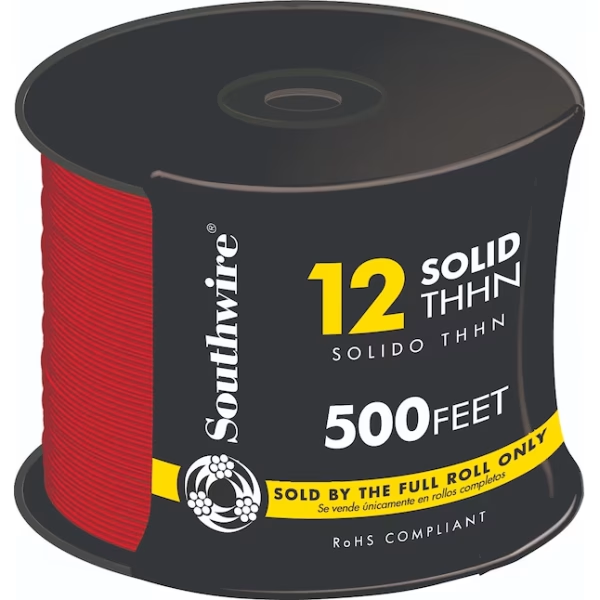
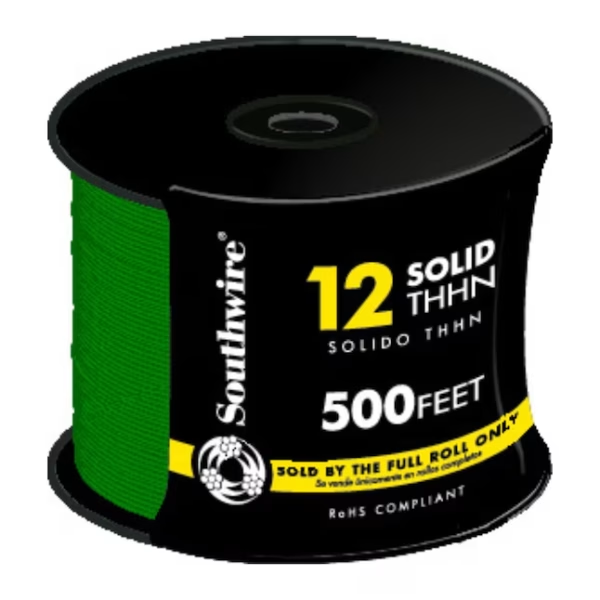
For THHN in conduit installations, individual Southwire or Cerrowire THWN-2 conductors provide the standard choice. Dual-rated THHN/THWN-2 works for both dry and wet locations. Standard color coding includes black (hot), red (second hot), white (neutral), and green (grounding). Conductor sizes match the specific circuit ampacity requirements.
PVC conduit and fittings
Schedule 40 PVC conduit in trade sizes from 1/2 inch through 2 inch handles most residential direct burial THHN installations. Standard PVC fittings including couplings, elbows, LB conduit bodies, and adapters complete the installation. Verify PVC is listed for direct burial per NEC Table 300.5(A) Column 3 requirements.
5 Common Mistakes with UF-B Wire vs THHN in Conduit Decisions
The mistakes below cause the most frequent problems when installers select the wrong approach for their specific installation.

Mistake 1: Using UF-B in hot attic installations
The most common mistake is using UF-B in attic installations where the 60 degree Celsius ampacity restriction combined with hot attic ambient temperature makes the derated ampacity inadequate. UF-B in 130 degree Fahrenheit attic ambient has correction factor 0.41, reducing 20 amp ampacity to 8.2 amps. Use THHN in conduit for all attic installations in hot climate regions.
Mistake 2: Choosing UF-B for installations with likely future modifications
Another common mistake is choosing UF-B for installations that will likely need future modifications. Upgrading a UF-B feeder requires complete excavation and replacement. Installations that may need future upgrades (EV charger upgrades, workshop expansions, additional circuits) should use THHN in conduit with adequate conduit size for future flexibility.
Mistake 3: Confusing UF-B with NM-B (Romex)
Some installers confuse UF-B with NM-B (Romex) and attempt to use NM-B for direct burial. NM-B is indoor dry location only per NEC 334.12 and cannot be used underground or outdoors. UF-B and NM-B are different products despite similar appearance. Only UF-B is listed for direct burial applications.
Mistake 4: Forgetting NEC 340.80 ampacity restrictions
Some installers assume UF-B uses the 90 degree Celsius ampacity column because modern UF-B individual conductors may be rated at 90 degrees Celsius. NEC 340.80 requires use of the 60 degree Celsius column regardless of the individual conductor rating. This restriction significantly reduces UF-B ampacity compared to what installers might expect.
Mistake 5: Undersized conduit for THHN installations
When choosing THHN in conduit, some installers undersize the conduit for the specific conductor combination. NEC Chapter 9 Table 1 limits conduit fill to 40 percent for 3 or more conductors. Undersized conduit prevents future wire pulling and may cause installation damage during initial wire pulling. See our conduit fill 40 percent rule article for complete conduit fill guidance.
Ready to order UF-B cable or THWN-2 conductors and PVC conduit for your installation?
IB Lighting resells the full Southwire and Cerrowire electrical wire and cable lineup including UF-B cable in all common sizes and individual THWN-2 conductors for PVC conduit installations. Call (800) 674-9019 or browse electrical wire and cable products.
Frequently Asked Questions
What is the difference between UF-B and THHN in conduit installations?
UF-B is a multi-conductor cable rated for direct burial without conduit protection using the 60 degree Celsius ampacity column per NEC 340.80. THHN is an individual conductor installed in appropriate conduit using the 90 degree Celsius ampacity column. UF-B requires 24 inches burial depth while THHN in PVC conduit requires only 18 inches per NEC Table 300.5(A).
When should I use UF-B cable instead of THHN in conduit?
Use UF-B cable for cool climate installations, shorter runs, standard branch circuit amperages, cost-sensitive projects, and installations without likely future modifications. UF-B provides simpler installation with lower material cost and faster installation time when its capability limits are adequate for the specific installation requirements.
When is THHN in conduit better than UF-B?
THHN in conduit is better for hot climate installations requiring 90 degree Celsius insulation for ambient temperature derating, long runs where future modifications are possible, larger feeder circuits needing higher ampacity, rocky soil requiring physical protection, and any installation where the flexibility to pull additional wires through existing conduit provides value.
Can I use NM-B (Romex) instead of UF-B for direct burial?
No. NM-B (Romex) is manufactured for indoor dry location installations only and cannot be used for direct burial or outdoor applications per NEC 334.12. Only UF-B or USE cables are listed for direct burial without conduit protection. Using NM-B for direct burial is a serious code violation regardless of the specific installation depth.
Which is cheaper, UF-B or THHN in conduit?
UF-B material cost is typically lower than the combination of THHN conductors plus PVC conduit plus fittings. However, UF-B requires deeper trenching (24 inches versus 18 inches) which adds excavation labor. Total installed cost for typical residential runs is often similar between the two approaches, with the decision usually driven by technical requirements rather than pure cost.
What ampacity column does UF-B use?
UF-B uses the 60 degree Celsius column of NEC Table 310.16 per NEC 340.80 regardless of the individual conductor insulation rating. This parallels NEC 334.80 for NM-B cable. The 60 degree Celsius restriction significantly limits UF-B ampacity performance compared to the 90 degree Celsius column that THHN can use.
Can I splice UF-B cable underground?
Only with connectors specifically listed for direct burial per NEC 300.5(E), or by placing the splice in an accessible above-grade junction box. Standard wire nuts are not acceptable for underground splices. THHN in conduit installations allow standard splicing methods in accessible pull boxes, providing more flexibility for splice locations.
Where can I buy UF-B cable and THWN-2 conductors for my installation?
Southwire and Cerrowire UF-B cable and THWN-2 individual conductors are available through resellers nationwide including IB Lighting. Both product lines are available in all common sizes for residential and commercial installations. Contact IB Lighting at (800) 674-9019 or through the electrical wire and cable collection.
Conclusion
The UF-B wire vs THHN in conduit decision depends on three primary factors: hot ambient temperature performance (THHN wins with 90 degree Celsius insulation), direct burial depth requirements (THHN in PVC requires only 18 inches versus 24 inches for UF-B), and future modification flexibility (conduit installations allow future wire pulling without excavation). Choose UF-B for cool climate installations, shorter runs, standard branch circuit amperages, and cost-sensitive projects. Choose THHN or THWN-2 in PVC conduit for hot climate installations, longer runs, higher-ampacity feeders, and installations with likely future modifications.
Both approaches are widely used in residential and commercial installations with predictable patterns for when each fits best. NEC compliance for both approaches follows established requirements including NEC Table 300.5(A) burial depths, NEC 340 for UF-B specifically, NEC 310 for THHN conductors, and NEC 344 or 352 for the specific conduit type. Use the interactive UF-B vs THHN decision tool above to identify the recommended approach for your specific installation scenario based on environment, circuit type, and priority considerations.
Ready to order Southwire or Cerrowire UF-B cable or THWN-2 conductors and PVC conduit for your NEC-compliant installation?
IB Lighting resells the full electrical wire and cable lineup nationwide with free freight insurance included. Call (800) 674-9019 or browse electrical wire and cable products.
This article was last reviewed and updated in June 2026 to reflect current National Electrical Code requirements for UF-B cable installations (NEC 340) and THHN in conduit installations (NEC 310 plus applicable conduit article). Specific values should be verified against the current code cycle applicable in your jurisdiction. For complex installations or when in doubt about the appropriate wire type selection, consult a licensed electrician. Both UF-B and THHN in conduit are valid installation approaches for residential outdoor circuits when properly matched to the specific installation requirements.